As electronic products continuously evolve towards high-speed transmission and miniaturized design, the stability and anti-interference ability of signals have become key factors determining equipment performance. In application fields such as high-resolution display modules, cameras, 5G terminals, and automotive electronic systems, micro coaxial cable (micro coaxial cable) is gradually replacing traditional harnesses and becoming the preferred solution for engineers. So, how does the micro coaxial cable perform in signal interference control? What key points should be paid attention to when selecting?
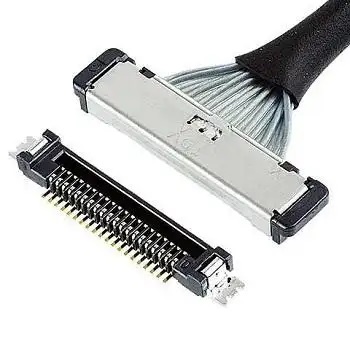
What is signal interference?
So-called signal interference refers to the impact or disruption caused by external electromagnetic waves or adjacent signal sources on the data transmission process. In complex electronic systems, common types of interference include:
• EMI (Electromagnetic Interference): Electromagnetic radiation from other electronic devices or high-frequency components that may disrupt signal integrity.
RFI (Radio Frequency Interference): Originated from high-frequency radio frequency devices such as wireless signals, WiFi, Bluetooth, etc.
Crosstalk: Electromagnetic coupling between adjacent signal lines causes signal interference.
After interference occurs, there may be minor issues such as distorted images and noise interference, or more severe problems like system crashes or signal loss, especially in high-speed and high-precision equipment where the problems are particularly prominent.
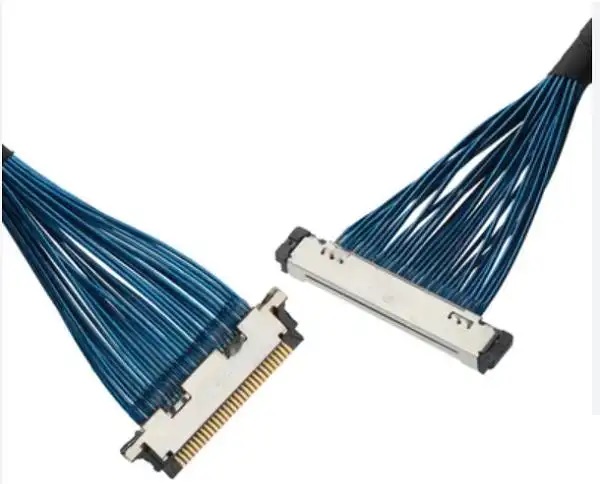
What is a micro coaxial cable (Micro Coaxial Cable)?
A super-fine coaxial cable is a high-performance signal transmission cable with a structure similar to traditional coaxial cables, but with smaller size and higher flexibility.
It consists of a multi-layer structure composed of a central conductor, an insulating layer, a metal braid shielding layer, and an outer sheath, which can effectively block external electromagnetic and radio frequency interference, ensuring high-speed and stable transmission of signals.
Compared with traditional wiring harnesses, the advantages of Micro Coaxial Cable include:
Support higher data transmission rates
Excellent anti-interference ability
③ Smaller wire diameter, suitable for precision wiring in narrow spaces
Good flexibility, meets complex routing and dynamic application requirements
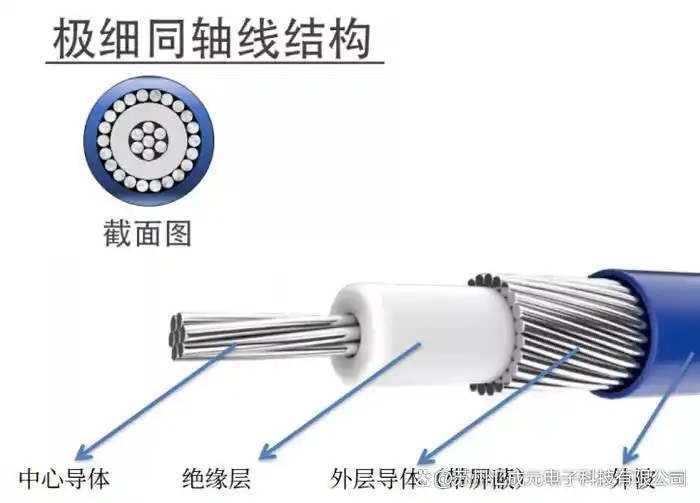
How does a super thin coaxial cable resist signal interference?
Extremely thin coaxial cables are constructed with multi-layer protection and structural optimization, establishing a powerful signal "protection wall" to ensure pure and reliable data transmission. The main measures include:
360°metal woven shielding layer: High-density metal mesh shields external electromagnetic waves, significantly reducing EMI effects.
Coaxial structure design: The central conductor and the shielding layer are coaxially symmetrical to reduce the crosstalk effect between signals.
High-quality insulating material: Using materials with low dielectric constant to reduce signal attenuation and enhance RFI protection capability.
Precision impedance control: Maintain system impedance matching, prevent signal reflection and waveform distortion.
Due to these design advantages, micro coaxial cable is widely used in high-definition video signal, camera module connections, 5G射频 modules, high-resolution display screens, and other applications with extremely high requirements for anti-interference.
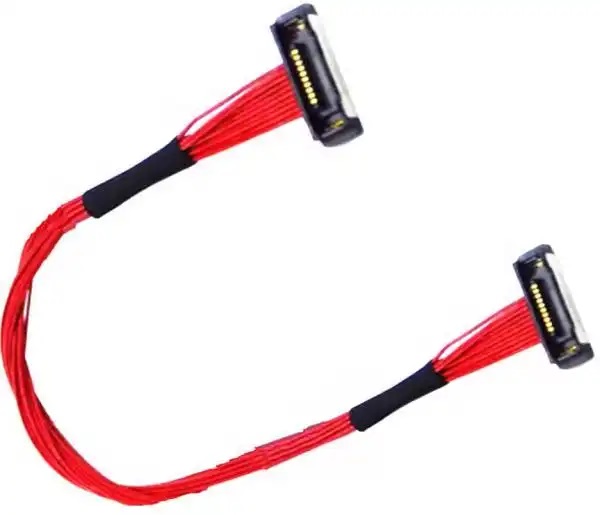
Introduction to I-PEX 20373-R20T-06 connector
Product Information
• Model: 20373-R20T-06
• Series: CABLINE®-SS series Micro-coaxial Socket/Receptacle Shell Components
• Stitch count and spacing: 20 stitches, 0.40 mm spacing
Structure form: 90° right angle stacking design
Structure and Performance Highlights
Ultra-thin structure design: Suitable for spaces through micro hinges or precision mechanisms, ideal for internal use in ultra-thin terminal devices.
W-Point contact structure: I-PEX's unique W-shaped double-point elastic contact sheet significantly improves contact reliability and avoids contact failure caused by foreign objects.
Support for multi-specification ultra-fine coaxial cables: supports AWG #42–#34 wire gauge, standard 50Ω impedance, fully meets the requirements for high-speed signal transmission.
High-speed protocol support: compatible with USB 3.1 Gen1 (5 Gbps), eDP HBR3 (8.1 Gbps), HDMI 2.0 (6 Gbps), MIPI, V-By-One and other high-speed interface standards.
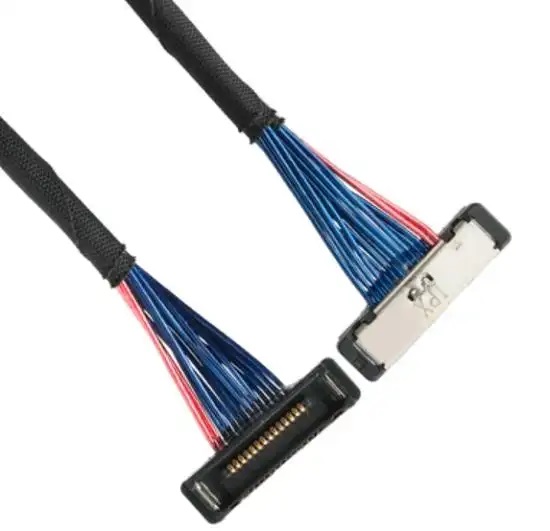
With excellent signal integrity and anti-interference performance, Micro Coaxial Cable is becoming the core transmission solution for high-end electronic equipment. When paired with the I-PEX 20373-R20T-06 connector, it can fully exploit its high-speed and stable advantages, providing reliable connection support for various high-performance systems.
We have been focusing on the design and customization of high-speed cable harnesses and ultra-thin coaxial cables for a long time, committed to providing stable and reliable high-speed interconnection solutions. If you have any related needs or would like to learn more, please contact: Manager Zhang.
18913228573 (WeChat number).