


Categorization:Harness Component
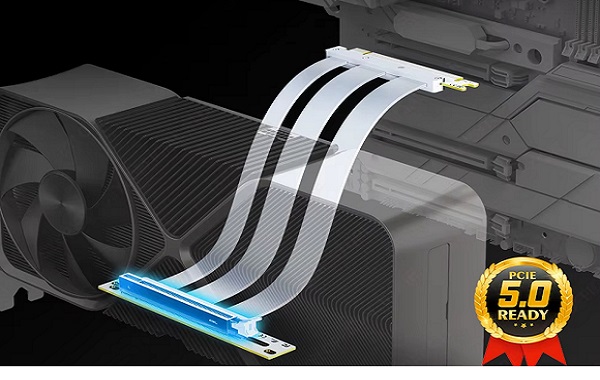
Why PCIe high-speed signals require extremely thin coaxial cable bundles
PCIe signals are high-speed differential signals with frequencies up to tens of GHz. When the rate exceeds 16Gbps, any impedance mismatch or poor shielding can lead to signal reflection, eye diagram collapse, and increased error rates. Extremely fine coaxial cable bundles have each conductor with an independent shielding layer, providing excellent electromagnetic interference isolation (EMI performance), and maintaining strict geometric consistency to keep the differential impedance stable within the 100Ω or 90Ω range. This design ensures the synchronization and integrity of high-speed signals in multi-channel, multi-interface environments, making it very suitable for PCIe Gen4/5/6 applications.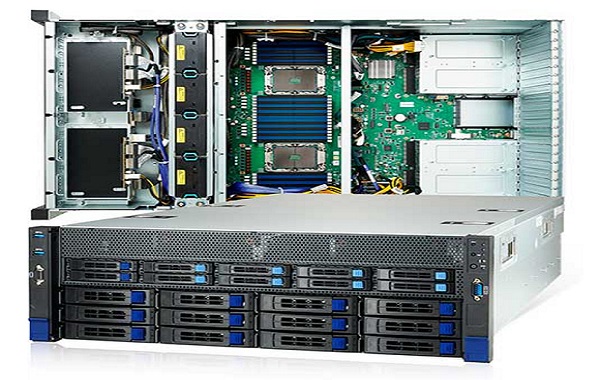
Part 2: The Harness Challenges Brought by PCIe High-Speed Technology
With the rate increasing to 32Gbps and above, the signal frequency enters the tens of GHz range, posing high requirements for attenuation, crosstalk, insertion loss, and return loss. Traditional twisted pair cables, FFC, or FPC are difficult to balance high bandwidth and compact wiring. However, ultra-thin coaxial cable bundles, with independent shielding and precise impedance control, effectively reduce signal reflection and loss. At the same time, their high flexibility design is suitable for complex structures such as high-density AI servers, GPU modules, and FPGA expansion boards, meeting the dual needs of high-speed transmission and wiring flexibility.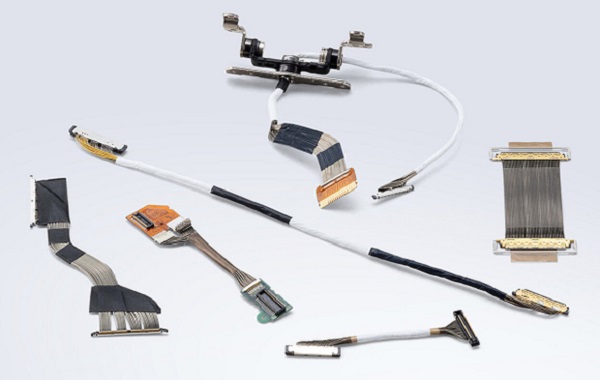
Thermal Management of High-Speed Signal Lines in PCIe Systems
In AI servers, edge computing equipment, and GPU expansion systems, ultra-fine coaxial cable bundles are widely used for PCIe extenders, backplane interconnects, adapter modules, and FPGA test interfaces. For example, in GPU multi-card interconnects or PCIe expansion boxes, the cable length can reach 30~50cm, but still needs to ensure low loss and low error rate at speeds above 32Gbps. Micro coax with silver-plated copper conductors, woven shielding, and high-frequency dielectric materials (such as PTFE, ePTFE) can achieve a signal bandwidth of up to 40GHz and stable transmission, meeting the high-speed interconnect needs of complex application scenarios.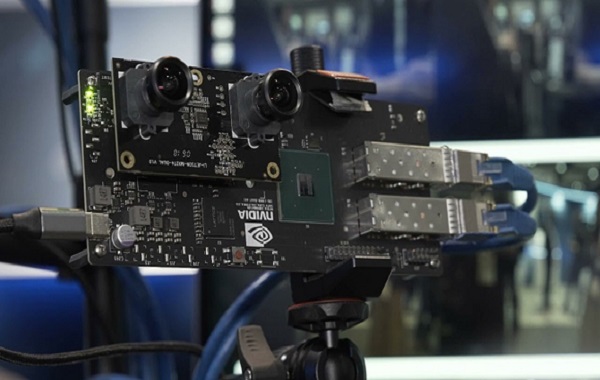
“Without the consent or authorization of this site, no one shall reproduce, reprint, distribute, cite, change, broadcast or publish the content in whole or in part in any form, nor shall there be any other violation of the copyright of this site.