


Categorization:Harness Component
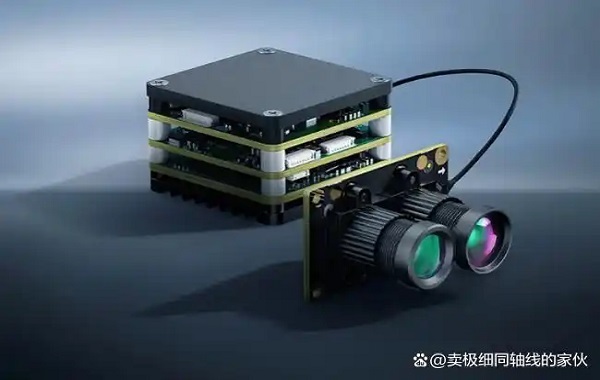
The interconnection challenges brought by the growth of AI image data
AI camera modules need to continuously transmit high-speed image data at rates of several Gbps even up to more than ten Gbps during operation. Under high-frequency conditions, traditional wiring or flexible FPC are more prone to crosstalk, reflection, and signal attenuation, which can lead to image delay, noise, or reduced stability. AI algorithms have extremely high requirements for real-time performance, and in applications such as autonomous driving and industrial inspection, even slight transmission delays can affect recognition accuracy and system response capabilities, which poses higher requirements for the signal chain.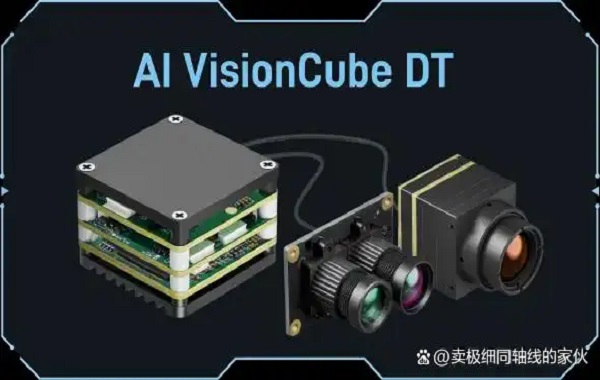
The performance advantages of ultra-fine coaxial beam
The extremely thin coaxial cable bundle consists of a central conductor, insulation layer, shielding layer, and outer sheath, and can maintain a stable characteristic impedance and good signal integrity during high-speed transmission. Its multi-layer shielding structure can effectively suppress external electromagnetic interference and is suitable for stable operation in complex electromagnetic environments. At the same time, the extremely thin wire diameter and good flexibility make it meet the high-density wiring requirements inside camera modules with limited space, and maintain a reliable service life in high-frequency bending or motion scenarios, compatible with various high-speed interfaces such as MIPI, LVDS, and eDP.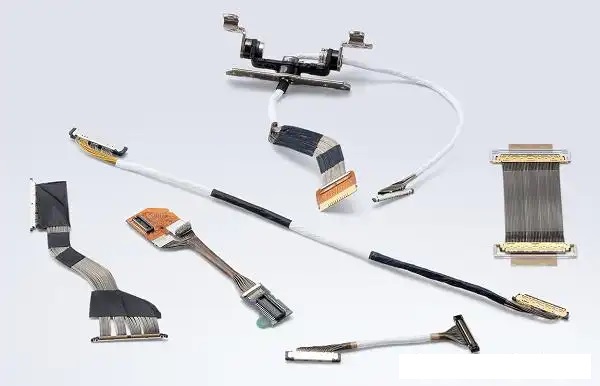
Chapter 3: The Continuous Evolution of AI Camera Modules
With the continuous improvement of AI algorithm and image processing chip computing power, camera modules are developing towards high resolution, multi-lens, and multi-channel synchronous directions. 8K imaging, 3D perception, and deep vision applications further increase the requirements for bandwidth and signal integrity. Extremely thin coaxial cables, with their high bandwidth, low loss, and high reliability, have been widely used in AI camera module, ToF depth camera, binocular vision, and infrared imaging systems, becoming a key component of AI vision architecture.
“Without the consent or authorization of this site, no one shall reproduce, reprint, distribute, cite, change, broadcast or publish the content in whole or in part in any form, nor shall there be any other violation of the copyright of this site.