


Categorization:Harness Component
For laptops, tablets, high-speed display modules, VR/AR devices, and other electronic products with limited space, extremely thin coaxial cable bundles often need to be bent, routed, and assembled in confined spaces. Therefore, "how long is the bendability life" is a very important issue for engineers when selecting types, and it is also an important indicator for purchasers to judge the quality of cables and the manufacturing capabilities of suppliers. However, it needs to be clarified that there is no fixed number of bend cycles that can be directly applied without testing conditions for extremely thin coaxial cables. Bend radius, bend angle, movement speed, load, bending direction, cable structure, shielding layer, termination area, and actual operating environment will all affect the ultimate lifespan. I-PEX tests the bend/flexibility performance of Micro-Coaxial Cable using ±90° bends and tests the S-parameters after different cycles, while also checking for any mechanical failures such as broken wires. This indicates that evaluating the "bendability life" cannot only be based on appearance, but should also focus on whether the mechanical integrity and high-speed electrical performance remain stable.
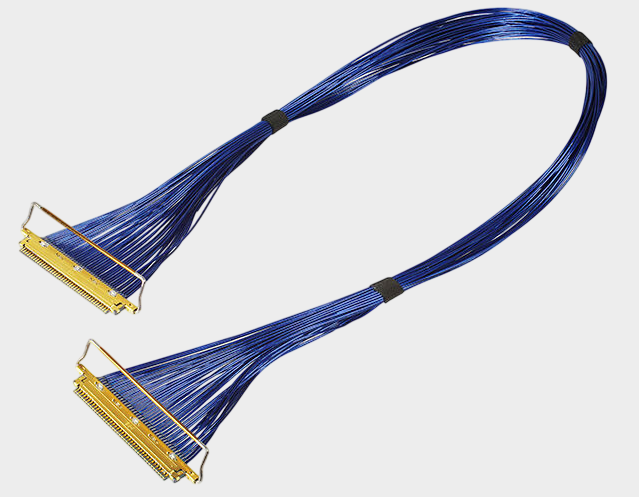
The corresponding product model is I-PEX 82992-100B-01-D, which belongs to the CABLINE®-CA II series 50Pin ultra-thin coaxial cable assembly, using 40AWG Micro-Coaxial Cable, 100mm in length, and a 1-1 dual-end connection structure. The mating cable end connector main model is 20680-050T-01, with a connector of 50PIN and 0.4MM Pitch high-density structure. CABLINE®-CA II uses 0.4mm ultra-fine spacing, horizontal insertion and extraction, ZenShield® full shielding, and mechanical locking clip design, positioning for internal connections of high-speed, miniaturized electronic equipment. For such 50PIN ultra-thin coaxial cable assemblies, the bending resistance cannot be simply understood as "the wire does not break is qualified". During the repeated bending process, the center conductor, insulation layer, shielding layer, and termination area may all experience periodic mechanical stress; once the structure fatigue occurs, even if there is no obvious damage visible to the naked eye, it may further manifest as impedance change, increased insertion loss, deteriorated return loss, or reduced high-speed signal integrity. Therefore, in actual projects, it is recommended that engineers verify bending life, minimum bending radius, and S-parameters/conduction performance after bending as a whole, rather than pursuing a single "million times" type of promotional number. I-PEX also explicitly points out that Micro-Coaxial Cable achieves high-speed signal transmission and noise resistance through the center conductor, dielectric layer, metal shielding layer, and other structures.
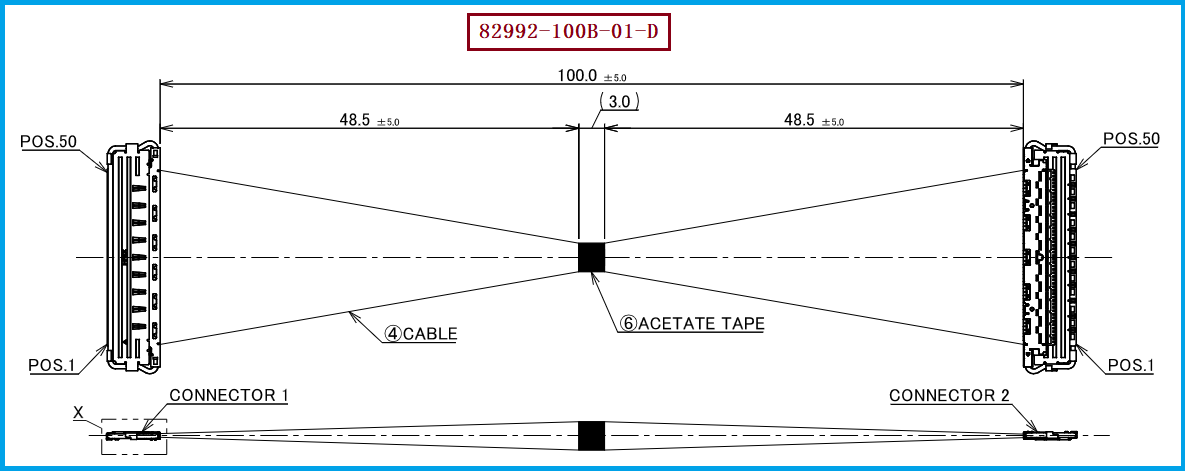
Engineers, when inquiring about "how many bends can it withstand" to cable suppliers, recommend further confirmation of bend radius, bend angle, loading conditions, cyclic frequency, test quantity, and electrical performance changes before and after testing. For example, the bend/flexibility test data publicly released by I-PEX shows significant differences in test results for Micro-Coaxial Cables under different bend radii, indicating that bend radius has a direct impact on lifespan; the same material can withstand greater mechanical strain under a smaller bend radius, and its durability cannot be simply equated to that under a larger bend radius. For purchasers, this is particularly important: the "bendability" provided by suppliers must correspond to clear testing methods and evaluation criteria to have comparative value. For high-speed ultra-fine coaxial cable bundles, a more reasonable acceptance approach is to combine appearance/strand break inspection + continuity test + impedance/S parameter test + high-speed signal verification after bending. In other words, the truly valuable bendability lifespan is when the cable, after specified repeated bending, can still meet the project's requirements for mechanical reliability and electrical performance, rather than merely pursuing a large-looking cyclic number.
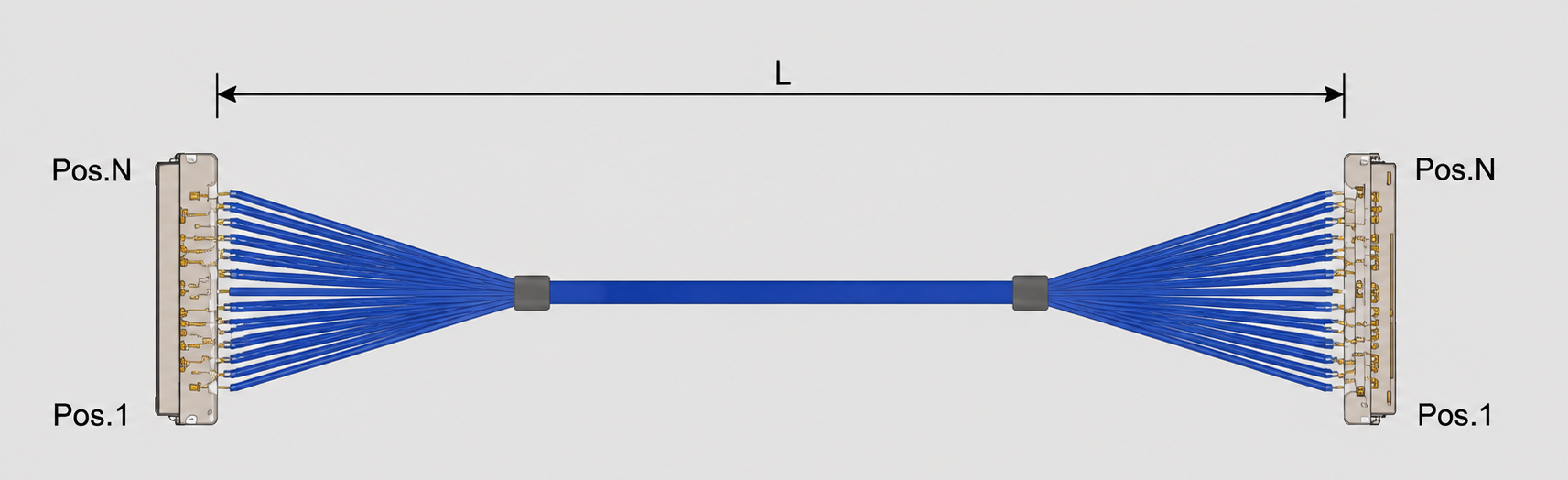
If the project requires finding a domestic compatible replacement cable for I-PEX 82992-100B-01-D, engineers and purchasing staff are recommended to focus on five dimensions: Firstly, the 50PIN quantity and 0.4MM pitch to ensure that the mechanical dimensions and pin positions on the connector side are fully matched; secondly, the 40AWG ultra-thin coaxial cable material and 100mm length to avoid obvious deviations in wire diameter, impedance, and transmission loss; thirdly, the 1-1 double-ended cable structure and line sequence/PIN definition to ensure that the signals on both ends can be correctly matched; fourthly, the shielding structure, grounding method, and termination process, especially paying attention to EMI and signal integrity in high-speed signal environments; fifthly, the bending reliability verification, requiring the replacement product to still meet the project's mechanical and electrical performance requirements after specified bending conditions and cycles. The official information of CABLINE®-CA II indicates that this series supports 20/30/40/50Pin and provides various Micro-Coaxial Cable solutions; among them, the evaluation cable material number corresponding to 50Pin, 40AWG, 100mm, and 1-1 is exactly 82992-100B-01-D. Our company can provide: I-PEX 82992-100B-01-D compatible replacement cable solution, which can match and manufacture ultra-thin coaxial cable solutions according to customer equipment structure, cable length, line sequence, connector, and electrical performance requirements, providing a domestic substitution option for engineering development, sample verification, and bulk procurement.
“Without the consent or authorization of this site, no one shall reproduce, reprint, distribute, cite, change, broadcast or publish the content in whole or in part in any form, nor shall there be any other violation of the copyright of this site.