


Categorization:Harness Component
In notebook computers, tablets, industrial vision, high-speed cameras, VR/AR equipment, and high-resolution display modules, extremely thin coaxial cables often need to transmit multiple high-speed differential signals simultaneously within limited spaces. Therefore, the "number of cores/Pin number" is not the more, the better, but needs to be matched according to the interface definition, the number of signal channels, PCB space, cable bend path, and connector specifications. For extremely thin coaxial cables, common multi-core solutions in engineering projects include 20Pin, 30Pin, 40Pin, 50Pin, and 60Pin, and the specific number of cores that can be achieved mainly depends on the selected connector series and its terminal arrangement. The I-PEX 82996-100B-01-D introduced this time belongs to the CABLINE®-CA II PLUS 60Pin extremely thin coaxial cable solution, which adopts a high-density 60Pin connection structure and can realize multi-channel high-speed signal transmission in a smaller connection area. It is particularly suitable for product designs that require a high number of channels, thinness, and high-speed signal integrity for engineers.
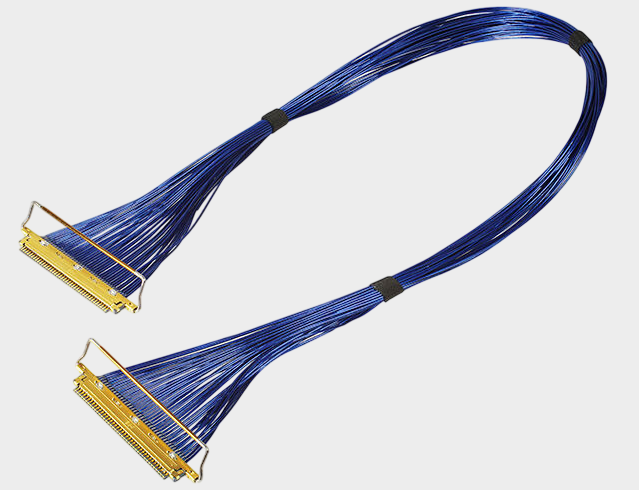
From the perspective of product design, the increase in the number of cores in extremely fine coaxial cables does not simply mean "more wires"; more importantly, it is about being able to meet the needs of simultaneous transmission of multiple signal types such as display, data, and control. The I-PEX CABLINE®-CA II PLUS utilizes a 0.4mm ultra-fine pitch, 60Pin, high-speed transmission, and ZenShield® full shielding structure. The connector mating height is approximately 0.95mm, and it is designed for high-speed, miniaturized electronic devices. Compared to ordinary cables, multi-core extremely fine coaxial cables can concentrate a large number of independent shielded signal channels in a small space, while isolating each signal path through a single coaxial structure, which helps to reduce cross-talk between high-speed signals and external EMI interference. For engineers, when choosing between 20P, 30P, 40P, 50P, or 60P solutions, they should comprehensively determine based on actual signal quantity, connector Pin number, internal space of the device, and high-speed interface requirements; for procurement personnel, it is important to focus on verifying parameters such as Pin number, wire diameter, wire length, terminal definition, connector model, and left-right line direction, avoiding simple replacement based solely on "60Pin" or product code.
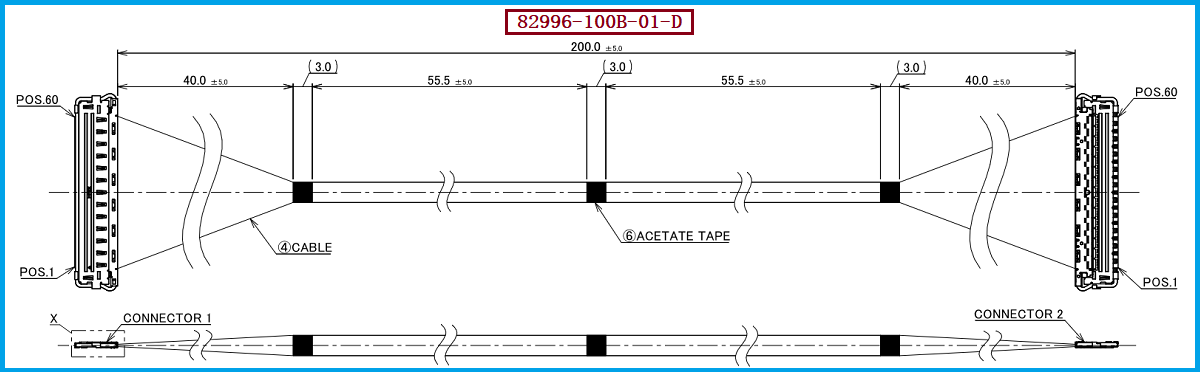
This product is the I-PEX 82996-100B-01-D coaxial cable assembly, which uses the 20680-060T-01 connector at the cable end, and the connector is compatible with AWG#40 ultra-fine coaxial cable. For high-speed signal applications, AWG#40 is an ultra-fine specification that balances wire diameter, space occupancy, and high-speed transmission requirements, and is particularly suitable for internal wiring in high-density cable assemblies. The CABLINE®-CA II PLUS series products adopt a 0.4mm Pitch structure and are equipped with ZenShield® full shielding technology and mechanical locking design, which can be used in high-speed display, eDP, USB4, Thunderbolt, industrial vision, and other high-density electronic device connection scenarios. When engineers are selecting, it is recommended to focus on confirming the 60Pin connection relationship, AWG#40 cable, cable length, Pin Assignment, impedance requirements, and connector compatibility; when purchasing, it is also recommended to use these key parameters as the basis for compatibility judgment during domestication, supply chain optimization, or the introduction of second suppliers, and not to rely solely on appearance dimensions as a substitute standard.
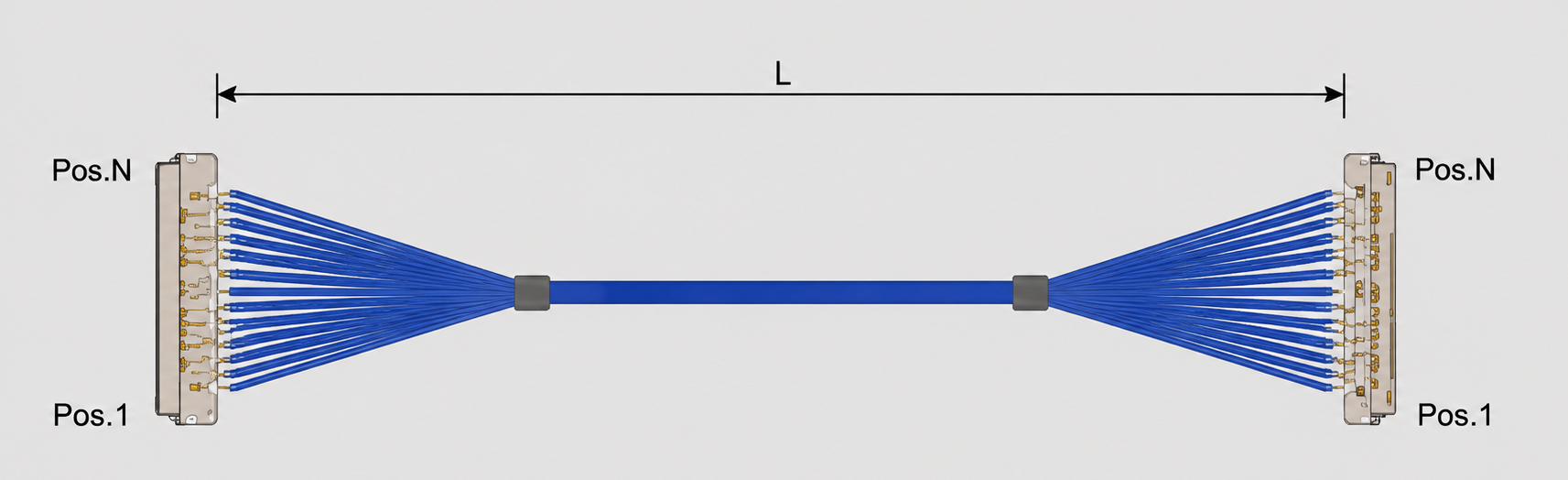
If the project originally used I-PEX 82996-100B-01-D, when looking for compatible or alternative ultra-thin coaxial cable assemblies, it is recommended to prioritize confirming whether the connector end is fully matched with 20680-060T-01, and at the same time, confirm that the wire specification is AWG#40, and further check the 60Pin terminal definition, wire sequence, wire length, cable exit direction, shielding structure, and electrical performance requirements for high-speed signals. For engineers, if the product has bending, sliding, flipping cover, or continuous movement conditions, it is also necessary to further verify the flexibility, bend life, and terminal stress control of the wire. For purchasers, it is necessary to pay attention to whether the supplier has an integrated manufacturing capability from ultra-thin coaxial wire materials, terminal crimping/welding, connector assembly to finished product testing. Our company can provide I-PEX 82996-100B-01-D compatible alternative cable assembly solutions, and can match and develop the core number, AWG specification, length, terminal definition, cable exit direction, and connector configuration of the ultra-thin coaxial cable assembly according to the actual equipment structure and electrical requirements of customers, and provide corresponding cable assembly alternative solutions for engineering verification, sample making, and mass production. It should be particularly noted that the actual alternative project should be finally confirmed based on the customer's samples, drawings, and specific electrical/mechanical specifications.
“Without the consent or authorization of this site, no one shall reproduce, reprint, distribute, cite, change, broadcast or publish the content in whole or in part in any form, nor shall there be any other violation of the copyright of this site.