


Categorization:Harness Component
In the internal connections of high-speed electronic devices, extremely thin coaxial cable assemblies play a crucial role in high-speed signal transmission, electromagnetic interference resistance, and spatial connections. For engineers and procurement personnel, when selecting an extremely thin coaxial cable assembly, it is not enough to focus solely on whether "the interface can be plugged in." Instead, they need to comprehensively confirm factors such as connector matching, cable structure, impedance control, signal integrity, assembly dimensions, cable length, and reliability. Taking the I-PEX 82976-100B-01-D as an example, this product belongs to the I-PEX CABLINE®-CA series of extremely thin coaxial cable assembly solutions. The connector model used at the cable end is 20634-210T-02, and the cable length is 300mm. Due to the extremely fine wire diameter, coaxial structure, and termination process of the extremely thin coaxial cable, even if the connector model is the same, if there are differences in cable specifications, terminal crimping, shielding treatment, or impedance control, it may also lead to a decrease in high-speed signal quality. Therefore, it is an important step to conduct sample verification, structural verification, and performance verification before mass importation to reduce the risk of rework and quality issues in the later stage of the project.
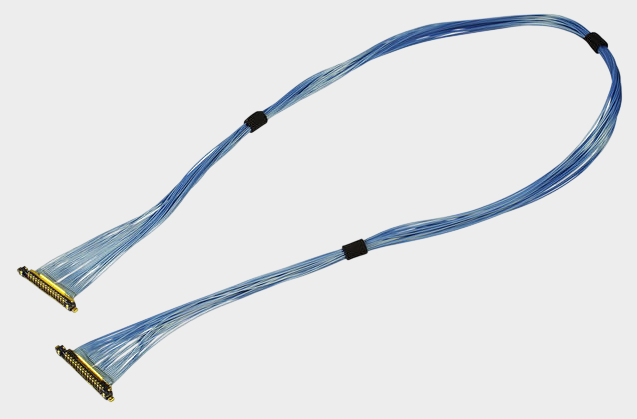
For high-speed signal applications, extremely thin coaxial cable assemblies are not a standalone component but a complete signal chain that connects PCBs, connectors, chips, and display/camera functional modules. Therefore, engineers need to pay attention not only to the connector's appearance during the selection phase but also to verify the matching degree between the cable assembly and the entire system. For example, the I-PEX 82976-100B-01-D corresponds to a 10Pin level CABLINE®-CA extremely thin coaxial cable assembly application, which adopts a 40AWG extremely thin coaxial cable, 300mm length, and 1-1 end-to-end connection method. The characteristic impedance, attenuation, crosstalk, return loss, and termination quality of the cable material will all affect high-speed signals. Especially when the device uses eDP, MIPI, USB high-speed signals, or other high-frequency differential transmission, the signal loss and timing margin may also change as the cable length varies from 100mm to 200mm and 300mm. Therefore, pre-validation of samples allows engineers to confirm the overall compatibility of "connector + extremely thin coaxial cable + termination process + PCB" during the design phase, rather than discovering that high-speed signals cannot be transmitted stably until after mass production. For purchasing personnel, pre-validation can also effectively avoid problems such as inability to assemble, performance not meeting standards, or the need to re-mold and re-sample after purchasing solely based on part numbers.
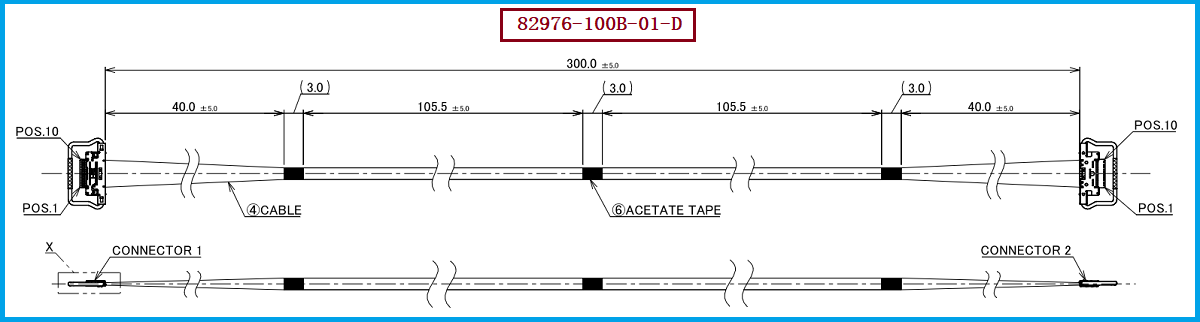
The reliability of extremely thin coaxial cable bundles often comes from the joint control of multiple links. Firstly, the reliability of the connector end, the connector model used at the cable end of this scheme is 20634-210T-02, and the terminal precision between the connector and the extremely thin coaxial cable directly affects the contact stability; secondly, the reliability of the cable itself, the extremely thin coaxial cable contains a center conductor, insulation layer, shielding layer, and sheath, and excessive bending, stretching, or long-term mechanical stress may cause changes in the internal structure, thereby affecting impedance and signal transmission; thirdly, the reliability of shielding and grounding, in a high-speed signal environment, if the shielding treatment is unstable, it may increase the risk of EMI interference and crosstalk; in addition, attention also needs to be paid to insertion and extraction durability, temperature changes, vibration, bending, tension, and contact stability after long-term use. Because these factors cannot be simply judged by appearance, it is an important step for engineers to carry out sample installation, open and close tests, high-speed signal tests, mechanical assembly confirmation, and reliability verification in advance, and for purchasing personnel, it is an important basis for selecting stable suppliers and reducing the risk of bulk procurement.
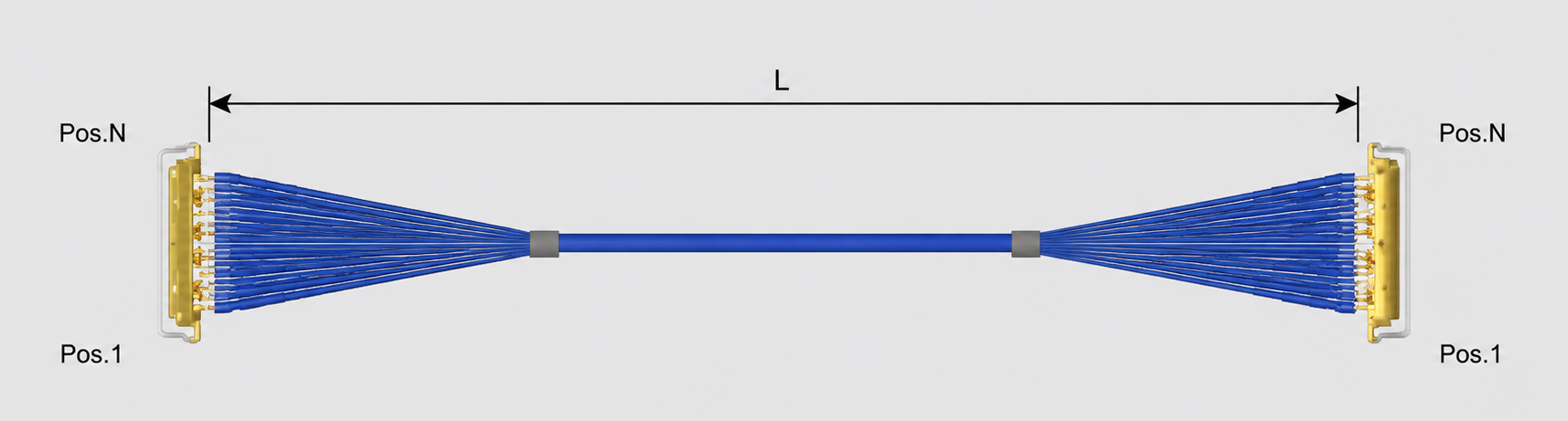
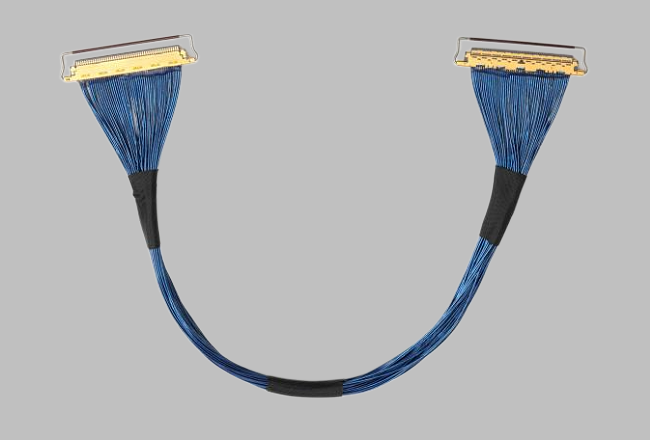
For customers currently using or planning to import the I-PEX 82976-100B-01-D, if they are looking for domestication, cost optimization, or alternative supply chain solutions, it is recommended to use the original product's connector model, pin count, wire specification, cable length, pin assignment, wire exit direction, and actual installation space as the basic conditions for alternative verification. This solution focuses on the 20634-210T-02 connector and ultra-fine coaxial cable assembly with a 300mm cable length. During the actual substitution process, it is recommended to first produce a small number of samples, and then carry out size assembly, high-speed signal, continuity, impedance, attenuation, crosstalk, bending, and reliability verification according to the customer's equipment; after passing the verification, proceed to the small batch trial production and mass supply stage. Our company can provide I-PEX 82976-100B-01-D compatible alternative cable assembly solutions, which can be customized for ultra-fine coaxial cable assemblies according to the actual structure, connector requirements, wire specifications, length, and termination requirements of the customer's equipment, providing corresponding cable solutions for engineering development, prototype verification, domestic substitution, and bulk procurement. For the procurement side, this "verify first, import later" approach is also more conducive to establishing a stable second supply source and reducing dependence on a single supplier.
“Without the consent or authorization of this site, no one shall reproduce, reprint, distribute, cite, change, broadcast or publish the content in whole or in part in any form, nor shall there be any other violation of the copyright of this site.