


Categorization:Harness Component
In camera module, display module, laptop, tablet, AI vision equipment and other products, the MIPI interface undertakes the task of high-speed data transmission. Engineers, when selecting MIPI interface cables, cannot just look at "whether it can be connected," but also need to comprehensively consider factors such as cable size, impedance, signal integrity, connector matching, wiring space, and EMI. The I-PEX CABLINE®-SS series adopts a 0.4mm Contact Pitch, Vertical Right Angle vertical right-angle insertion and extraction, and Horizontal Cable Exit horizontal cable exit structure, and lists MIPI in the applicable standard reference range, suitable for internal connections of high-speed electronic devices with limited space. For products that need to balance miniaturization and high-speed signal transmission, using structurally stable and parameter-clear Micro-Coaxial ultra-fine coaxial cables helps engineers complete high-speed signal wiring within limited space.
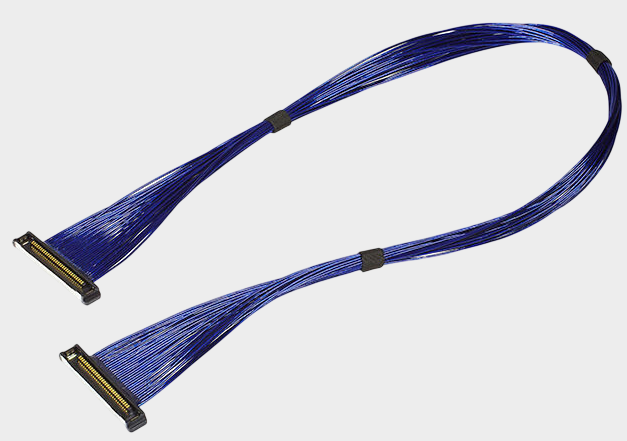
The product introduced this time is I-PEX 82069-100B-02-D, which belongs to CABLINE®-SS 20Pin ultra-thin coaxial cable assembly, with a standard length of 200MM and wire sequence 1-N. It adopts the ultra-thin coaxial cable scheme of Micro-Coaxial. The cable end connector model for the cable assembly is 20373-R20T-06, which corresponds to CABLINE-SS 20Pin Plug Housing. The official information of I-PEX also lists the 20Pin corresponding to 20380-R20T-06 Plug Cable Assembly and 20374-R20E-31 Receptacle. For engineers, it is necessary to check the Pin number, connector model, cable assembly length, wire sequence, and actual MIPI signal definition simultaneously when selecting the model. Purchasers can confirm the specifications through the complete material number, reducing the risk of specification inconsistency caused by purchasing only based on "20Pin cable assembly".
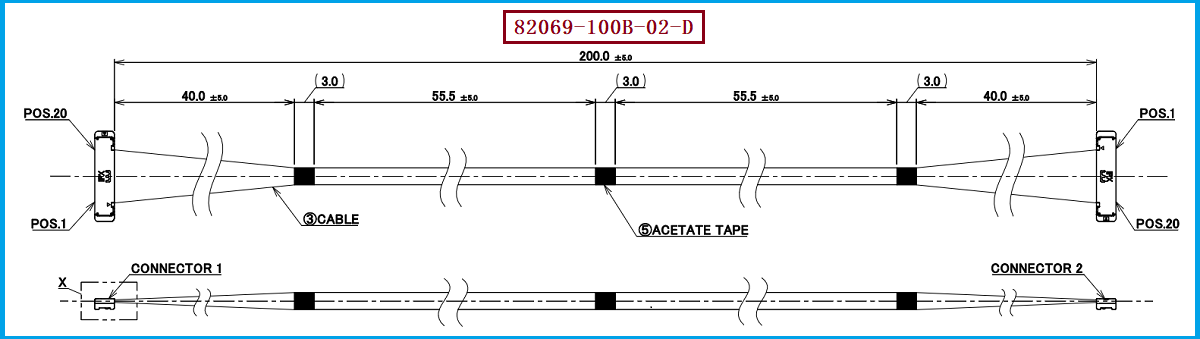
The selection of MIPI interfaces must first confirm the number of pins and wire sequence, and then determine the cable length and direction of exit according to the internal space of the device; for high-speed signals, it is also necessary to focus on the electrical characteristics of extremely thin coaxial cables and the matching relationship between connectors and cables. CABLINE®-SS adopts a compact structure with a 0.4mm pitch, 1.65±0.2mm combined height, and 3mm depth. Official data shows that it supports specifications such as 10P, 14P, 20P, 30P, 32P, 35P, 40P, and 50P, and supports AWG36, AWG38, AWG40, and some AWG42 Micro-Coaxial Cables, where there are注意事项 regarding the characteristic impedance mismatch of AWG42. Therefore, for MIPI high-speed applications, engineers cannot simply choose based on the thinner the wire diameter, the better, but should comprehensively confirm based on signal rate, impedance requirements, cable length, PCB layout, connector specifications, and overall machine space; for this 82069-100B-02-D, 200MM, 20Pin cable assembly, it should be verified based on the corresponding drawings and actual application requirements.
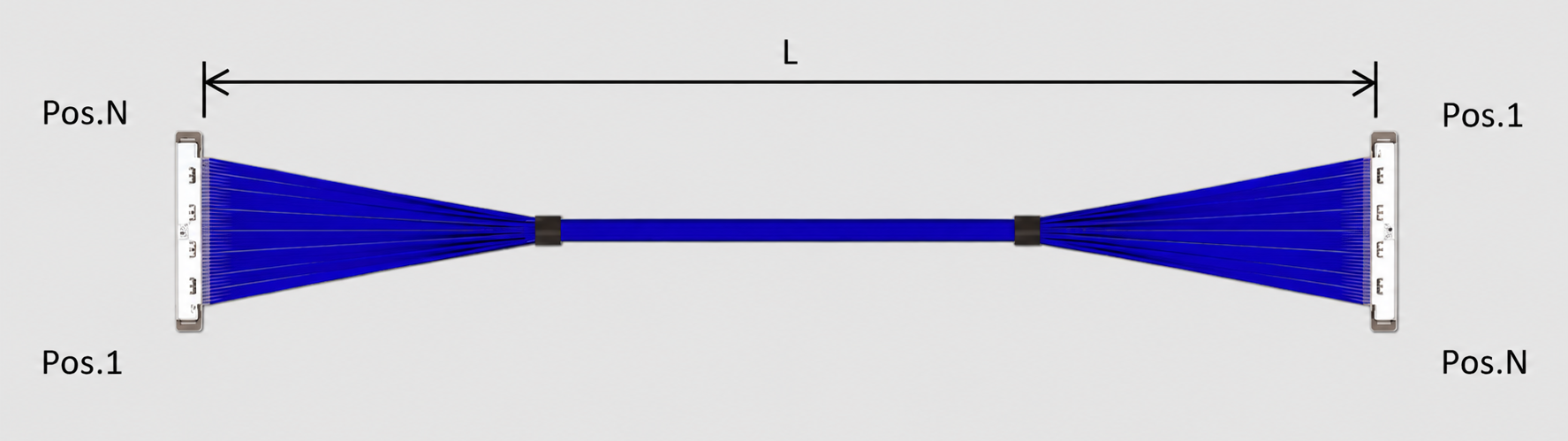
For engineers and purchasers seeking alternative solutions for I-PEX CABLINE®-SS 20Pin cable harnesses, it is recommended to use the original model 82069-100B-02-D as a benchmark, focusing on key conditions such as 20Pin, 200MM, 1-N wire sequence, Micro-Coaxial cable material, and 20373-R20T-06 connector. At the same time, signal integrity, connection reliability, and mechanical dimensions should be verified in combination with the actual MIPI applications. I-PEX official data indicates that the high-speed performance testing of CABLINE®-SS uses 40Pin, AWG#40, 45Ω, 100MM Micro-Coaxial Cable conditions, and indicates the highest application capability of 16Gbps/Lane; however, this is a reference performance for the connector series and cannot be directly equated to the actual data rate of the specific 82069 cable harness in all MIPI systems. Therefore, alternative products are still recommended to be tested for actual SI and compatibility based on customer equipment. Our company can provide: I-PEX 82069-100B-02-D compatible alternative cable harness solutions, which can be manufactured around the original model's connector, pin count, cable length, and wire sequence requirements, providing engineers with cable solutions for sample verification, specification matching, and bulk procurement.
“Without the consent or authorization of this site, no one shall reproduce, reprint, distribute, cite, change, broadcast or publish the content in whole or in part in any form, nor shall there be any other violation of the copyright of this site.