


Categorization:Harness Component
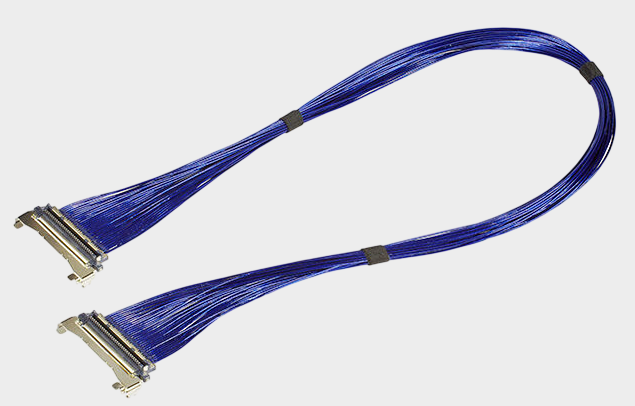
In mobile phones, tablets, camera module, display module, and AI vision equipment, the MIPI interface is increasingly adopting high-speed serial transmission solutions, which put higher requirements on the signal integrity, spatial dimensions, and impedance control of connectors and extremely thin coaxial cables. The I-PEX 83015-100B-01-D introduced this time belongs to the CABLINE®-SS 20P extremely thin coaxial cable, with a length of 300mm and wire sequence of 1-1. The matching cable end connector model is 20373-R20T-06. According to the corresponding product drawings, this cable assembly uses AWG#40 Micro-Coaxial Cable with a 50Ω specification. For engineers, these parameters are directly related to PCB connector matching, cable routing space, and high-speed signal transmission design; for purchasers, they are an important basis for confirming alternative material numbers, specification consistency, and supplier delivery capabilities.
MIPI D-PHY and C-PHY can both be used for applications such as CSI-2 and DSI-2, but their high-speed signal organization methods are not the same. D-PHY uses differential signal mode, with an independent clock Lane and one or more data Lanes; C-PHY, on the other hand, uses a Trio composed of three wires, transmits data through three-phase encoding, and embeds the clock in the signal, so it does not require an independent high-speed clock Lane. This means that engineers cannot simply understand it as "since it is the same MIPI interface, the cable束 can be directly interchangeable" when selecting very thin coaxial cable束s. D-PHY focuses on the number of differential pairs, clock pairs, and impedance, length, and crosstalk control between Lanes; C-PHY needs to focus on the consistency of the three signal lines within the Trio, the topology structure, impedance characteristics, inter-wire coupling, and signal integrity corresponding to high-speed encoding. In other words, the selection of cable束s should first determine the number of conductors and signal topology according to the PHY architecture, and then confirm the connector Pin definition, wire sequence, and electrical parameters, rather than simply purchasing according to the MIPI name. MIPI official materials also point out that there are many commonalities between C-PHY and D-PHY at the physical layer, but there are significant differences in high-speed data encoding and high-speed timing requirements.
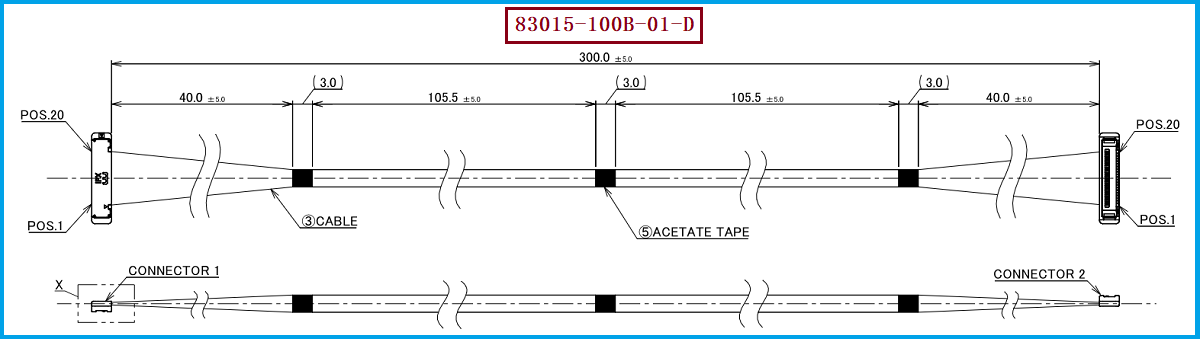
For coaxial cable assemblies such as I-PEX 83015-100B-01-D, which are 20P, 300mm, and AWG#40 ultra-thin, in actual projects, it is not enough to confirm only the two dimensions "20Pin" and "300mm". It is also necessary to further check the cable impedance, wiring sequence, Pin Assignment, connector type, and PHY definition on the device side. CABLINE®-SS itself uses a 0.4mm contact pitch, a height of 1.65±0.2mm, and supports AWG36, AWG38, AWG40, and AWG42 Micro-Coaxial Cables. In the official high-speed performance verification conditions of I-PEX, conditions such as AWG#40 Micro-Coax, 45Ω, and 100mm are included, so the specific project should still be based on the actual cable material, length, connector combination, and system SI test results. This is especially true for D-PHY and C-PHY applications: even if the connector shape, Pin count, and cable length are the same, it cannot be concluded that the two PHYs can be directly replaced solely based on mechanical dimensions. When procuring, it is recommended to submit a complete specification condition to the supplier, including the connector model 20373-R20T-06, 20P, 300mm, AWG#40, 50Ω, 1-1 wiring sequence, and the actual MIPI PHY type, which is more beneficial for avoiding selection errors than simply providing "20Pin MIPI cable".
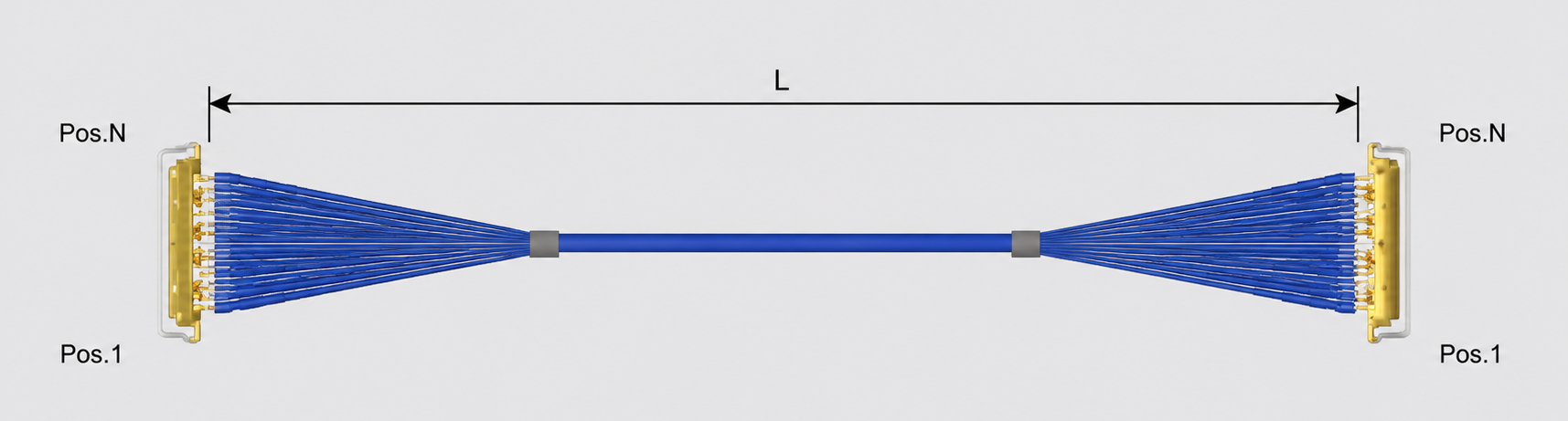
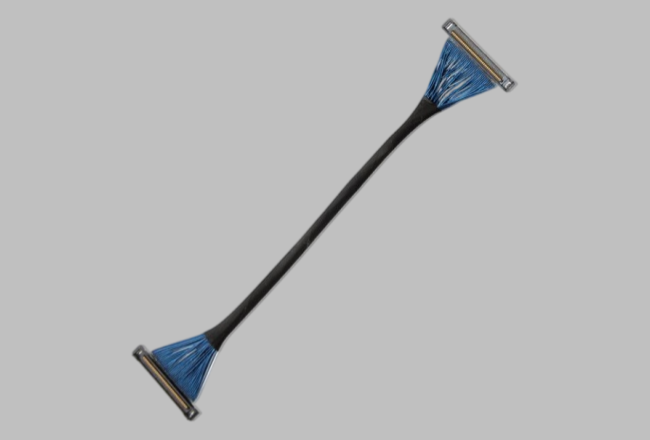
If the original equipment uses I-PEX 83015-100B-01-D, it is recommended to prioritize the establishment of a one-to-one corresponding BOM and specification benchmark according to the original drawings when carrying out domestic substitution or second supplier development. This includes harness length of 300mm, 20P structure, 1-1 wire sequence, AWG#40 wire material, and connector at the wire end 20373-R20T-06. Further confirmation should be made to determine whether the equipment actually uses MIPI D-PHY or C-PHY. For D-PHY, the focus should be on verifying differential impedance, Clock/Data Lane matching, insertion loss, return loss, crosstalk, and eye diagram; for C-PHY, the focus should be on verifying Trio three-wire consistency, high-speed signal integrity, and the channel performance corresponding to the coding method. MIPI C-PHY adopts a three-wire Trio and embeds the clock, and its channel evaluation method is different from the traditional two-wire differential Lane, so the substitute harness cannot only be tested for conduction but should also be combined with the actual mainboard and chip platform for SI verification. Our company can provide: I-PEX 83015-100B-01-D compatible alternative harness solutions, which can be developed for extremely fine coaxial harnesses according to the connector, wire material specifications, length, wire sequence, and MIPI high-speed signal requirements, providing corresponding harness solutions for engineering verification, domestic substitution, and bulk procurement.
“Without the consent or authorization of this site, no one shall reproduce, reprint, distribute, cite, change, broadcast or publish the content in whole or in part in any form, nor shall there be any other violation of the copyright of this site.