


Categorization:Harness Component
When developing for ultra-fine coaxial cable assemblies, it is not enough to only confirm the cable length and diameter. First, it is necessary to check the connector series, pin count, pitch, and the cable end connector model. Taking the I-PEX 82969-100B-02-D as an example, this product belongs to the CABLINE®-SS 35Pin ultra-fine coaxial cable assembly, using a 0.4mm Contact Pitch structure. The connector model used at the cable end is 20373-R35T-06, corresponding to a 35Pin Plug Housing. The matching Plug Cable Assembly model is 20380-R35T-06, which can be matched with the board end 20374-R35E-31. For engineers, these models are directly related to the plug-in size, terminal arrangement, and overall assembly space of the machine. For purchasers, accurately confirming the original part number can avoid situations where "the connector series and pin count are the same, but they cannot be directly replaced in practice."
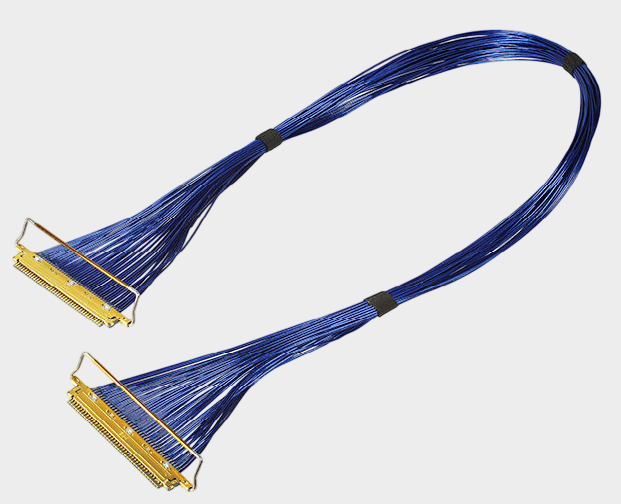
After the connector is confirmed, further verification of the wire specification is required. The PDF documentation for I-PEX 82969-100B-02-D indicates that this cable assembly uses Micro-Coaxial Cable, AWG#40, 50Ω, blue wire material, nominal length 300mm, length tolerance ±5mm, and Pin Assignment of 1-N. Therefore, when developing compatible alternatives, AWG cannot solely rely on "it is the same ultra-fine coaxial cable" to determine whether it can be substituted. Instead, it should also confirm conductor specification, outer diameter, impedance, length, wire sequence, and termination style at both ends. It should be especially noted that the 16Gbps/Lane high-speed performance test conditions on the CABLINE®-SS webpage are for 40Pin, AWG#40, 45Ω, 100mm, GSSGSSG, which is a specific test condition and should not be directly equated to the 50Ω parameters of the specific 300mm cable assembly 82969-100B-02-D; the target cable assembly drawings and actual system requirements should be used as the standard for development.
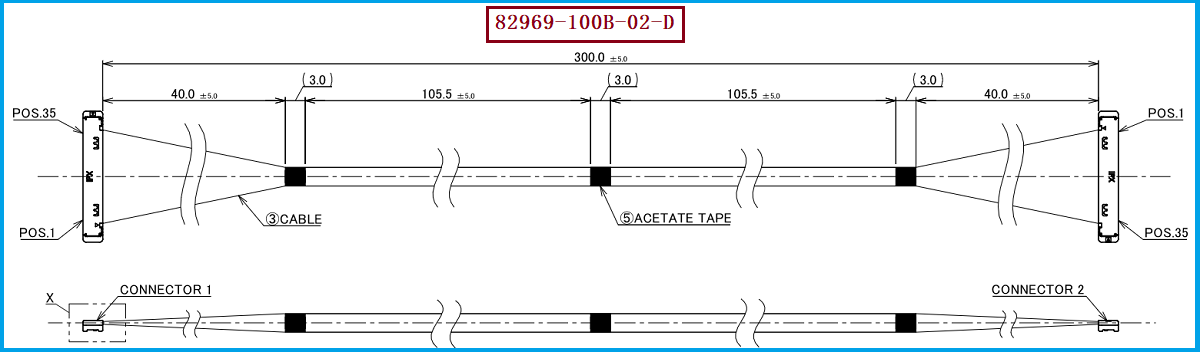
For extremely thin coaxial cable assemblies, the fact that a connector "can be plugged in" does not necessarily mean it can reliably replace the original. It is also necessary to confirm the overall mechanical structure of the cable assembly. The CABLINE®-SS itself uses a Vertical Right Angle structure, with a series height of 1.65±0.2mm and a connector depth of approximately 3mm, and supports the 35Pin specification; the specific drawings for 82969-100B-02-D define the dimensions at both ends of the cable assembly, the dimensions in the middle section, the fixation at the ends, and the processes for glue and tape, among others. The PDF for this model explicitly states the use of UV Glue for bonding and the use of black Acetate Tape for fixation. Therefore, engineers should focus on confirming the connector height, the direction of the outgoing cable, the length of the end fixation, the curing area of the glue, the position of the tape, and the actual routing status of the entire cable assembly in the turntable, housing, or narrow spaces when introducing alternative cable assemblies; purchasers should also include these structural and process requirements in the specification confirmation when inquiring about prices, and should not simply ask "How much for 35Pin, AWG40, 300mm?"
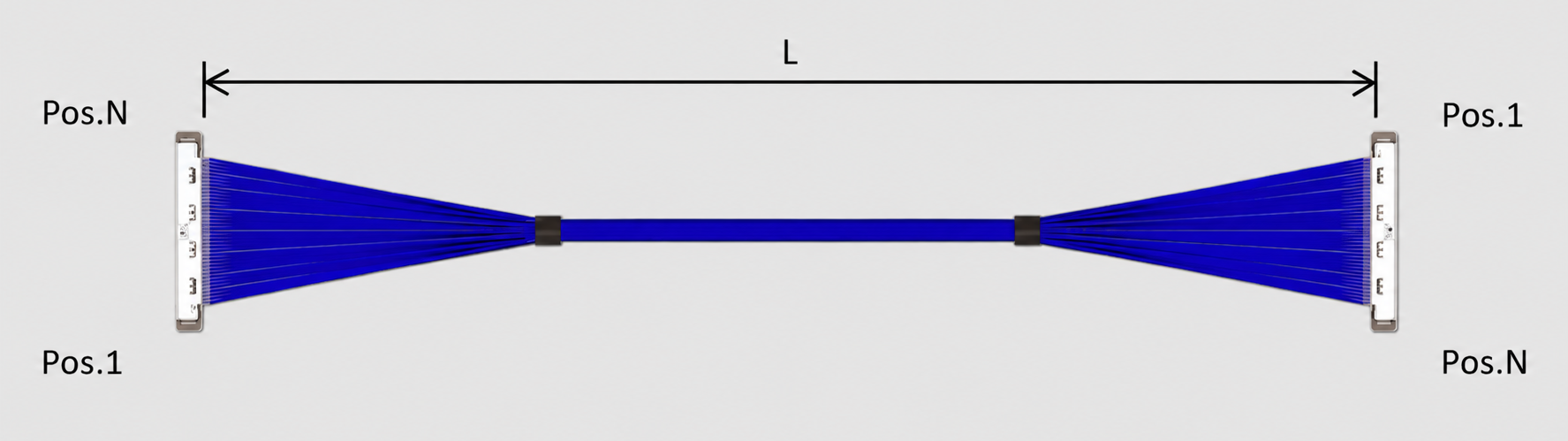
For customers in need of an alternative solution for the 82969-100B-02-D connector, it is recommended to confirm in the order of "Connector—Pin number—AWG—Impedance—Length—Wire sequence—Terminal size—Molding process". The core matching conditions for this model can be summarized as: 35Pin, wire-end connector 20373-R35T-06, Micro-Coaxial AWG#40, 300mm, 1-N, while also confirming the impedance and shielding structure in conjunction with the installation space and high-speed signal requirements of the original equipment. The CABLINE®-SS series also offers specifications such as 10, 14, 20, 30, 32, 35, 40, 50Pin, with different lengths and wire harness models in 1-N and 1-1 wire sequences. Therefore, in actual projects, if the original model is discontinued, the delivery period is long, or the procurement cost needs to be optimized, it is advisable to start with compatible development from the same connector series and the same Pin number specification, rather than simply replacing it with other series connectors. Our company can provide: I-PEX 82969-100B-02-D compatible alternative wire harness solutions, which can be developed for extremely fine coaxial cable matching based on the original model, connector model, AWG, length, wire sequence, and structural requirements, providing corresponding solutions for engineering verification, sample making, and bulk procurement.
“Without the consent or authorization of this site, no one shall reproduce, reprint, distribute, cite, change, broadcast or publish the content in whole or in part in any form, nor shall there be any other violation of the copyright of this site.