


Categorization:Harness Component
With the development of AI computing, ultra-high-definition displays, high-speed cameras, servers, and intelligent terminals, high-speed data transmission has higher requirements for bandwidth, latency, signal integrity, and connection density. Currently, there is no cable technology that can cover all high-speed transmission scenarios. Copper cables, ultra-thin coaxial cables, Twinax, and optical interconnects are divided according to conditions such as distance, speed, power consumption, space, and cost. Recent industry data shows that copper-based high-speed interconnects are still mainly used for short-distance connections, and with the development of higher speeds such as 800Gbps and 1.6Tbps, the importance of technologies such as optical interconnects and CPO is also increasing. Therefore, for engineers, the more accurate question is whether ultra-thin coaxial cables will continue to dominate in the future in high-density, short-distance, and thin high-speed electrical connection scenarios. From the current product structure and application requirements, such scenarios still exist, and they have higher requirements for connector, cable, and cable assembly manufacturing capabilities.
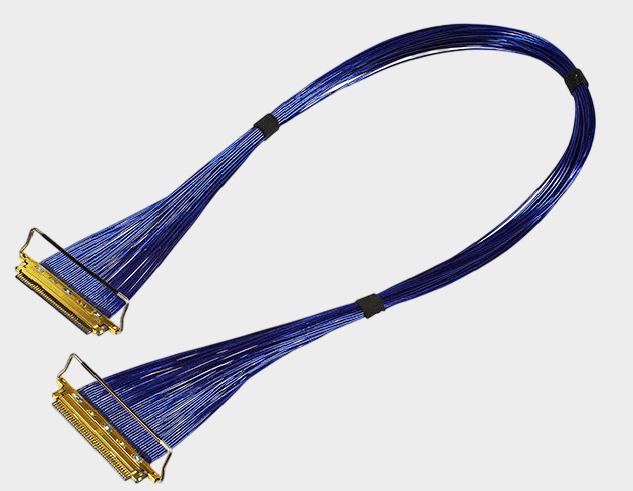
The value of extremely thin coaxial cables is not just that "the line is very thin," but rather that they form a relatively stable transmission structure through the central conductor, insulation layer, shielding layer, and outer sheath, and achieve high-density signal connections by combining with high-speed connectors. The I-PEX CABLINE®-UA II uses a 0.3mm Contact Pitch and a Vertical Right Angle structure, supporting 26P, 32P, 40P, and 50P, and provides specifications such as AWG42, AWG44, and AWG46 for Micro-Coaxial Cable; the official reference transmission applications include USB 3.1 Gen1, V-by-One HS 1.4, HDMI 1.3, etc. For engineers, this type of structure is particularly suitable for connection environments inside devices with "short distance, small space, and high signal density," such as display modules, camera modules, laptop hinges, and other precision electronic devices. For purchasers, the advantage of extremely thin coaxial cables lies in their ability to form standardized or customized cable assemblies around specific connectors, Pin count, wire diameter, impedance, length, and termination methods, rather than simply purchasing a general-purpose high-speed wire.
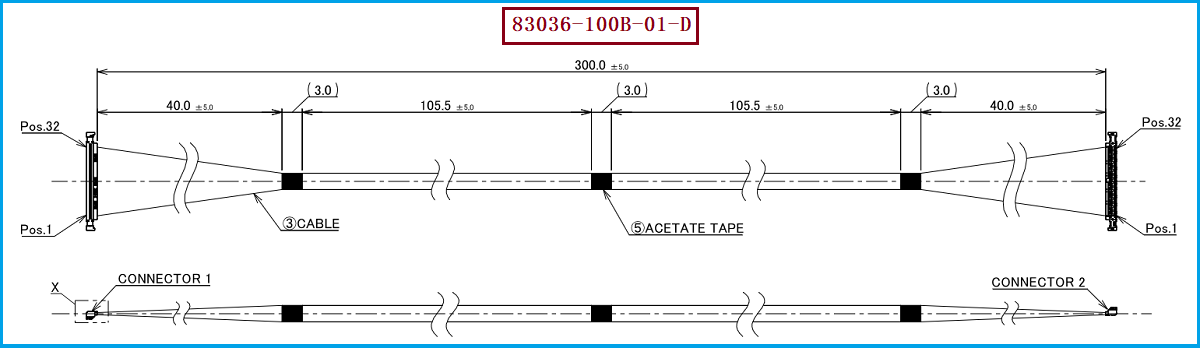
This product is I-PEX 83036-100B-01-D, belonging to the CABLINE®-UA II 32P ultra-thin coaxial cable assembly, using a 300mm length, AWG#44, 50Ω Micro-Coaxial Cable, 32 wires, and 1-1 wire position definition. The connector model used at the wire end is 20497-032T-30, and the two ends are connected in correspondence according to 1→1, 2→2, up to 32→32. For engineers, 50Ω Micro-Coax, AWG#44, and 300mm cable length constitute an important foundation for high-speed signal design, and the actual performance still needs to be confirmed in combination with connectors, PCB, cable assembly structure, and SI testing; for purchasers, it is necessary to pay attention to whether the original model, Pin number, wire length, wire gauge, impedance, and wire position definition are completely matched. Especially, the 300mm wire length cannot be simply regarded as a mechanical dimension. After the high-speed signal passes through a longer transmission path, factors such as insertion loss, return loss, crosstalk, and delay need to be included in the verification. Therefore, the value of 83036-100B-01-D is not to claim that a single cable assembly can cover all high-speed transmission standards, but to provide a clear high-speed electrical connection solution in specific short-distance, high-density internal connection scenarios.
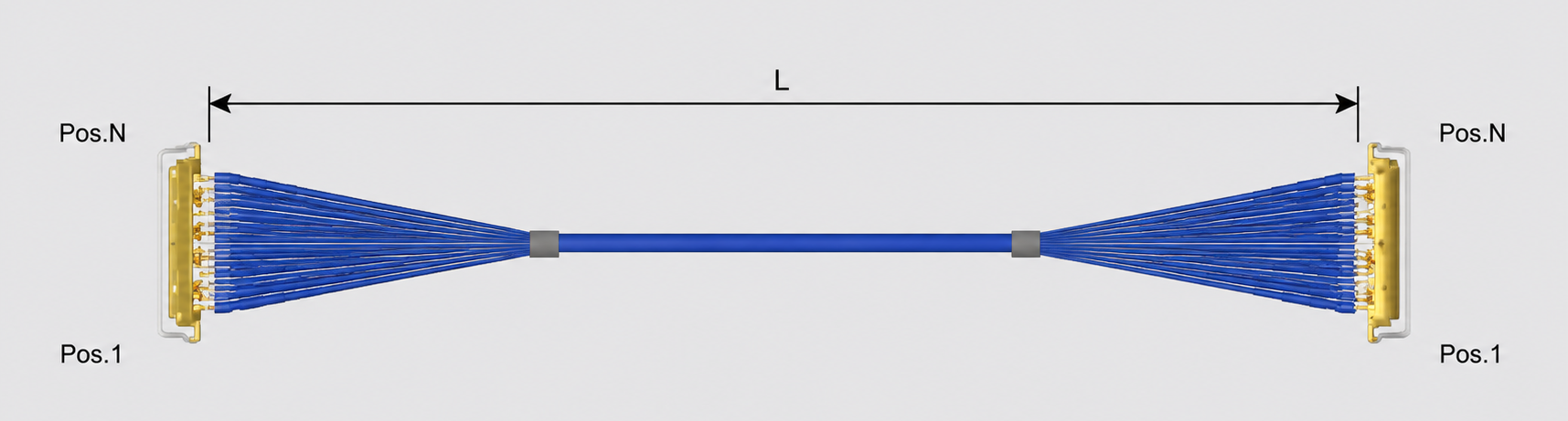
The future high-speed transmission market is more likely to present a state of "long-term coexistence of copper electrical connections and optical interconnections, with division of labor according to application scenarios." Industry data shows that short-distance connections are still an important application range for copper-based interconnections, while higher transmission rates, longer distances, and power consumption pressures are driving the further development of optical interconnection technology. Therefore, when selecting extremely fine coaxial cable bundles, engineers should first confirm the transmission distance, target rate, differential impedance, allowable insertion loss, spatial dimensions, and connector structure, and then determine the AWG, cable length, and pin count; procurement personnel should further confirm whether alternative suppliers can implement connector assembly, 1-1 line position, 50Ω impedance, AWG#44, and 300mm length according to the original drawings, and complete the verification of conduction, insulation, voltage resistance, and high-speed SI. For the existing I-PEX 83036-100B-01-D product, it is recommended to use CABLINE®-UA II, 32P, 300mm, AWG#44, 50Ω, 1-1, 20497-032T-30 as the core conditions for compatible development, rather than simply replacing it based on the appearance of the connector. Our company can provide: I-PEX 83036-100B-01-D compatible alternative cable assembly solutions, which can produce and manufacture extremely fine coaxial cable bundles according to customer drawings, samples, and technical requirements, providing corresponding cable assembly solutions for engineering verification, domestic substitution, and bulk procurement.
“Without the consent or authorization of this site, no one shall reproduce, reprint, distribute, cite, change, broadcast or publish the content in whole or in part in any form, nor shall there be any other violation of the copyright of this site.