


Categorization:Product Information
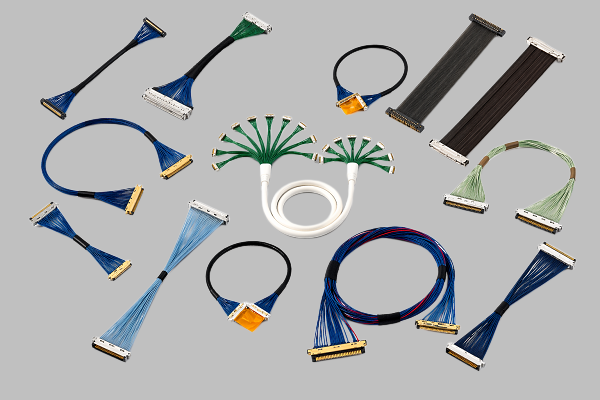
With the continuous upgrade of camera module, laptop, tablet, and high-performance electronic devices, the internal data transmission rate is also gradually developing towards 10 Gbps and even higher speeds. In such application environments, many engineers will focus on a question: Can ultra-fine coaxial cable bundles with small outer diameter and precise structure meet the requirements of 10 Gbps high-speed signal transmission? The answer is: yes, but it needs to be evaluated according to specific transmission protocols, connector specifications, cable length, and signal integrity requirements, as not all ultra-fine coaxial cable bundles are suitable for 10 Gbps applications. Ultra-fine coaxial cable bundles adopt a structure composed of a central conductor, insulating layer, outer conductor shielding layer, and outer sheath, which can realize high-speed signal connections within a limited space while also considering shielding performance, thus having application advantages in miniaturized and high-density electronic devices.
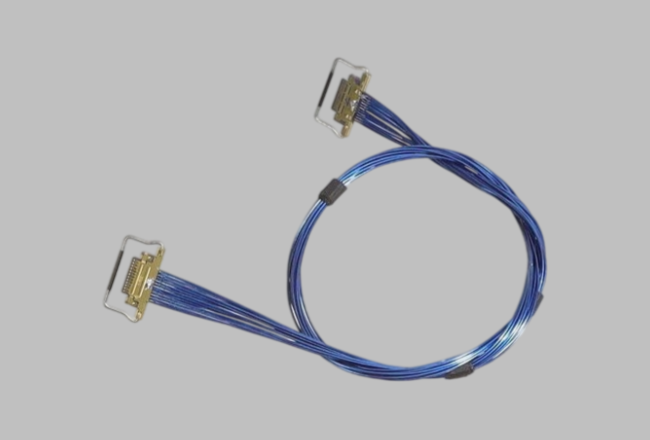
The question of whether a very thin coaxial cable can be used for 10 Gbps transmission cannot be determined solely by its outer diameter or AWG specification. It is more important to focus on its electrical performance. Firstly, characteristic impedance needs to match the connector and PCB transmission channel to reduce signal reflection caused by impedance discontinuity; secondly, insertion loss and return loss, which affect the quality of the signal when it reaches the receiver; in addition, attention should also be paid to crosstalk, signal jitter, and eye diagram performance. Particularly at higher transmission rates, the requirements for signal edge and frequency components of the transmission channel are more stringent. If the cable itself has significant losses or there are obvious impedance changes in the connection area, it may lead to a narrowed eye diagram, increased bit error rate, and affect the stable operation of the system.
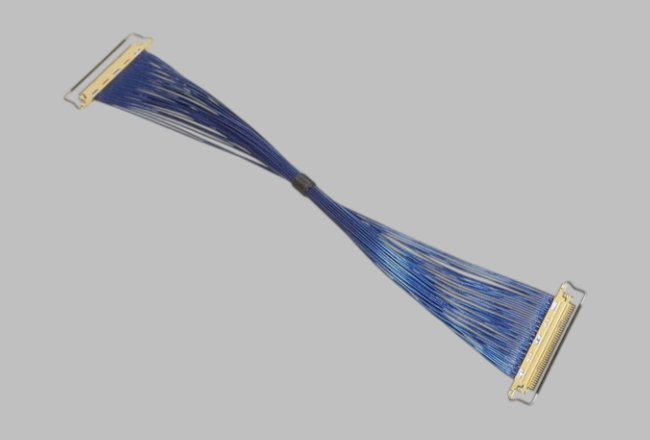
10 Gbps-level signal transmission is not solely determined by the cable, but rather by the complete transmission chain consisting of the cable, connector, termination area, and PCB. In most cases, the longer the cable length, the more attention needs to be paid to the cumulative transmission loss; the contact structure of the connector, the grounding method, and the shielding design will also affect signal integrity. The independent shielding structure of extremely thin coaxial cables helps to reduce external electromagnetic interference and crosstalk between adjacent signals, but if the shielding layer termination is poor or the connector does not match, it may still affect overall performance. Therefore, it is necessary to comprehensively consider cable length, connector model, pin count, spacing, wiring direction, and internal routing of the product during the design phase, to avoid only replacing the cable while ignoring the matching problem of the entire connection channel.
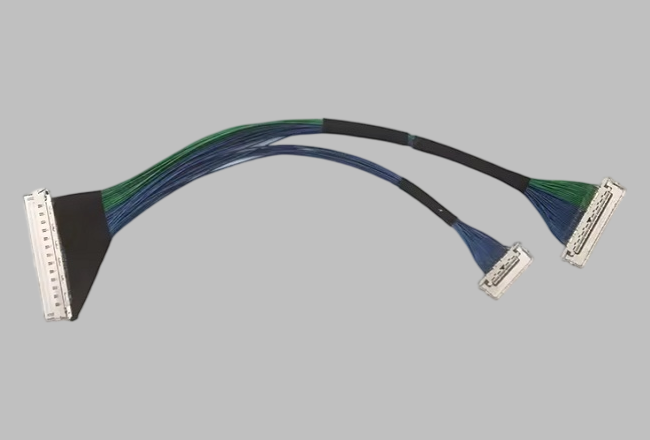
In addition to the electrical parameters of the cable itself, the processing quality of the extremely thin coaxial cable bundle cannot be ignored. Due to the smaller outer diameter of the cable, the processes such as stripping the center conductor, handling the insulation layer, connecting the shielding layer, and welding the connectors all require high processing accuracy. Inconsistencies in the termination size, unreliable shielding connections, or damage to the cable during the processing process may affect the impedance continuity and the quality of signal transmission. Therefore, 10 Gbps level cable assemblies not only require the selection of appropriate cables and connectors but also need to have stable precision processing capabilities, and according to the project requirements, conduct testing on conductivity, insulation, and high-speed signal integrity.
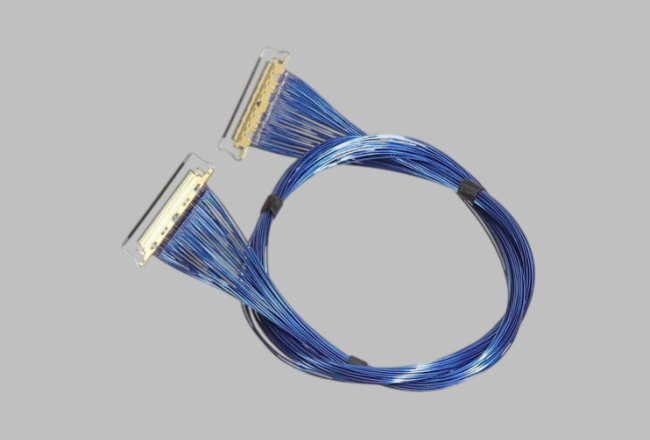
For 10 Gbps-level high-speed signal applications, it is recommended to clarify the transmission protocol, signal rate, cable length, connector model, and installation space at the early stage of the project, and then determine the appropriate ultra-fine coaxial cable assembly scheme. We focus on the production, customization, and development of matching connection solutions for ultra-fine coaxial cable assembly components. We can carry out cable selection, AWG wire gauge matching, connector adaptation, wire sequence confirmation, and compatible alternative solution development based on the original cable assembly model, connector specifications, product drawings, or physical samples provided by the customer. For 10 Gbps and other high-speed internal connection requirements, we can also combine actual application conditions for sample production and solution verification to help customers achieve more reasonable high-speed signal connection design within limited space.
“Without the consent or authorization of this site, no one shall reproduce, reprint, distribute, cite, change, broadcast or publish the content in whole or in part in any form, nor shall there be any other violation of the copyright of this site.