


Categorization:Product Information
With the continuous upgrade of laptops, tablets, high-definition cameras, display equipment, and industrial electronic products, the data transmission rate inside the devices is also increasing. From ordinary data connections to high-speed image transmission, internal wiring harnesses not only need to meet the basic connection requirements but also need to have the corresponding signal transmission capabilities. Many engineers pay attention to cable outer diameter, AWG wire gauge, and connector size when selecting, but these parameters cannot directly determine whether the cable is suitable for a high-speed interface. What truly needs to be considered is the transmission protocol of the interface, signal rate, impedance requirements, transmission distance, and electrical performance of the connector. No matter how fine the appearance is or how suitable the size is, if the electrical performance does not meet the requirements, it is also impossible to ensure the stable transmission of high-speed signals.
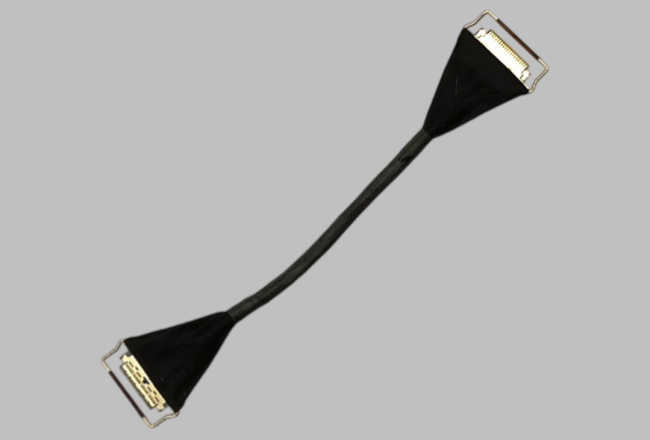
Extremely thin coaxial cables are typically composed of a central conductor, insulating medium, outer conductor shielding layer, and outer sheath. Signals are transmitted through the central conductor, while the outer conductor provides shielding and grounding paths. This structure can achieve controlled impedance transmission under smaller cable outer diameters and helps reduce external electromagnetic interference and crosstalk between adjacent signals. Therefore, extremely thin coaxial cable bundles have good structural adaptability in space-limited applications such as camera modules, laptops, tablets, and display devices. However, there are differences in conductor size, insulating materials, shielding structures, and impedance specifications among different cables, and it cannot be assumed that all extremely thin coaxial cables have the same high-speed transmission capabilities.
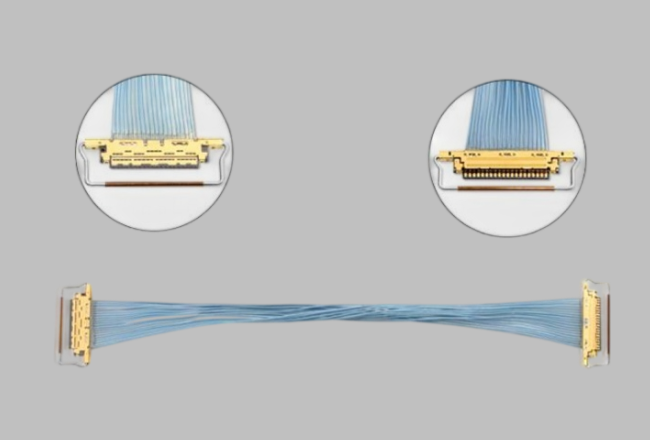
Firstly, it is necessary to confirm that the characteristic impedance of the cable meets the interface requirements to avoid signal reflections caused by impedance discontinuity. Secondly, attention should be paid to insertion loss and return loss to determine whether the signal can still maintain sufficient transmission quality after passing through the cable. In addition, the shielding performance, crosstalk, cable length, and actual working frequency also need to be comprehensively evaluated. It is also important to note that different high-speed interfaces use different signal transmission methods, such as MIPI, USB, DisplayPort, and PCIe, which have their own requirements in terms of physical layer, electrical specifications, and channel design. For differential signal applications, it is particularly important to confirm whether the cable structure is suitable for differential transmission, and it cannot be equated to twisted pair or Twinax differential wire by simply using a single very thin coaxial cable.
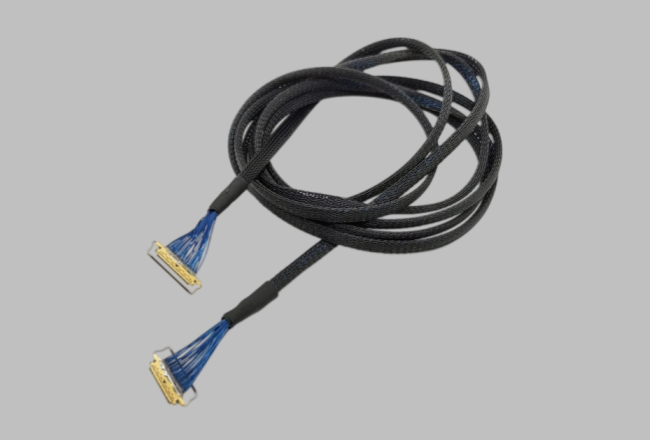
Even if the extremely thin coaxial cable itself meets the corresponding electrical requirements, if the connector does not match, it may still affect the entire transmission link. When selecting, it is necessary to confirm the connector model, pin count, spacing, applicable wire gauge, cable outer diameter, and termination structure, especially noting the constraints on cable size and processing precision for small spacing connectors. During the component processing, the center conductor positioning, insulation layer treatment, shielding layer connection, and connector welding quality will all affect the impedance continuity and signal integrity. Therefore, the selection of high-speed interfaces cannot only verify the cable but also evaluate the cable, connector, PCB interface, and processing technology as a complete connection scheme.
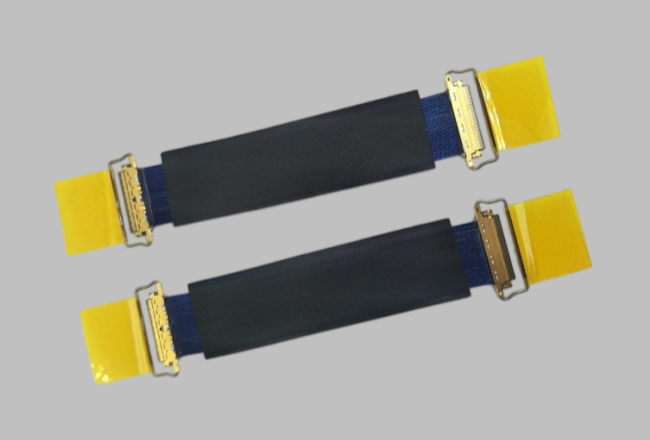
Different high-speed interfaces have different requirements for cables. The actual selection should be based on interface protocols, transmission rates, cable length, connector specifications, and internal space of the device to determine the appropriate cable structure and component scheme. We focus on the production, customization, and development of配套 connection solutions for ultra-fine coaxial cable components. We can assist with AWG wire gauge selection, connector matching, wire sequence definition, length design, and development of compatibility and alternative solutions based on the customer-provided interface model, original factory cable part number, product drawings, or physical samples. For MIPI camera modules, display modules, and other high-speed internal connection applications, we can also carry out sample production and solution verification in combination with specific project requirements to better match the high-speed transmission requirements of ultra-fine coaxial cables with the equipment.
“Without the consent or authorization of this site, no one shall reproduce, reprint, distribute, cite, change, broadcast or publish the content in whole or in part in any form, nor shall there be any other violation of the copyright of this site.