


Categorization:Product Information
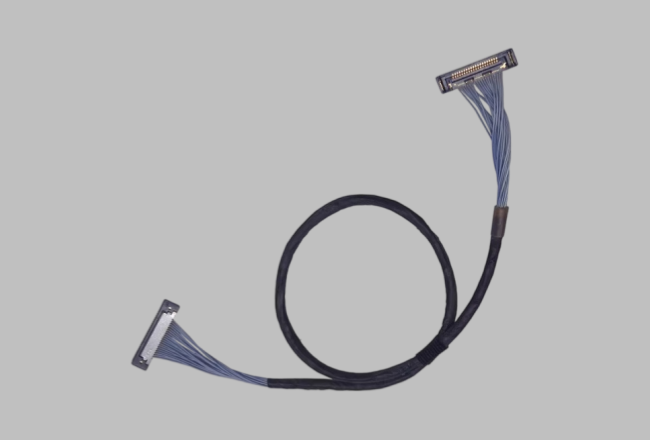
With the development of electronic devices towards high resolution, high frame rate, and high-speed data processing, the data transmission rate between internal modules of the devices is constantly increasing. Applications such as camera modules, display modules, laptops, and industrial vision equipment place higher requirements on the signal integrity, space occupation, and anti-interference ability of internal connections. Traditional wiring or ordinary cables may be difficult to meet both transmission performance and structural requirements in some high-speed and compact designs. In such cases, ultra-fine coaxial cable bundles can be considered.
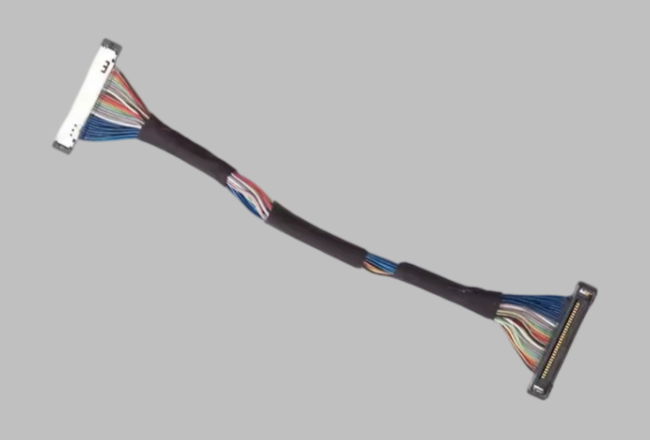
So, at what transmission rate is it necessary to use an ultra-fine coaxial cable bundle? In fact, there is no fixed numerical value applicable to all products. Whether to use an ultra-fine coaxial cable bundle cannot be determined solely based on data rate; it also requires a comprehensive judgment considering transmission protocols, signal frequency, cable length, interface structure, wiring space, and electromagnetic environment. As the signal rate increases, the requirements for impedance continuity, insertion loss, return loss, and crosstalk in the link usually become more stringent. If the ordinary connection method is difficult to meet these requirements, it is necessary to evaluate the ultra-fine coaxial cable bundle solution.
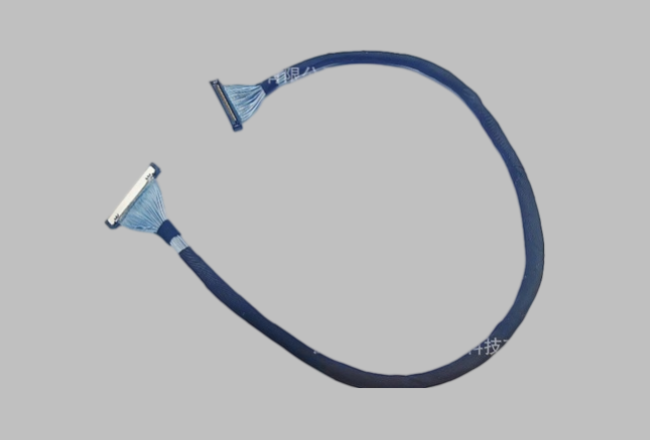
In MIPI camera modules, high-definition display modules, and other high-speed internal data connections, extremely thin coaxial cables can provide independent shielding structures for signals, helping to reduce external electromagnetic interference and improve the stability of high-speed signal transmission. At the same time, they have characteristics such as small wire diameter, good flexibility, and flexible wiring, which are suitable for electronic devices with limited space, requiring bending or compact module layout. It should be noted that the specific choice between Micro-Coax and Twinax structures should be based on the form of single-ended or differential signals and the requirements of interface impedance, and it cannot be simply assumed that all high-speed signals are suitable for the same type of cable.
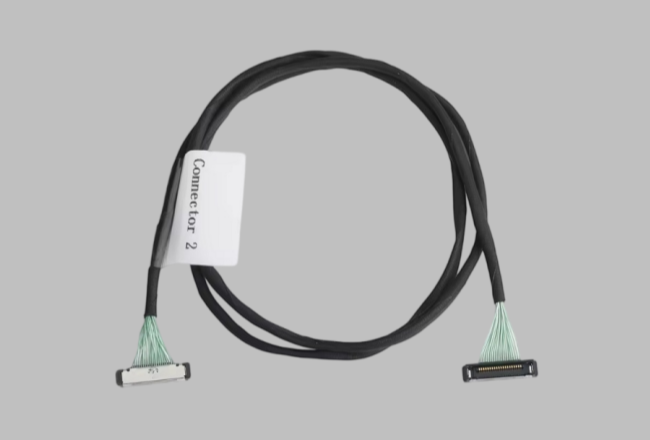
Even if an extremely thin coaxial cable assembly is chosen, it cannot be selected solely based on the nominal transmission rate. Wire gauge (AWG), characteristic impedance, cable length, connector spacing, pin count, termination process, and shielding grounding method will all affect the final performance. For example, excessively long cables may increase insertion loss, impedance discontinuities may cause signal reflections, and insufficient processing accuracy may also affect connection reliability. Therefore, reasonable selection should be combined with interface protocols and actual test requirements, and it is necessary to verify the performance of the entire cable assembly through signal integrity testing if required.
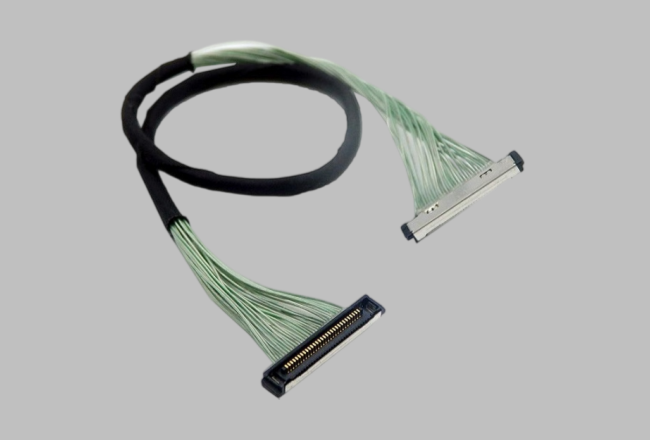
We focus on the production, customization, and connection solution development of ultra-fine coaxial cable束components. We can assist customers in selecting wire gauges, matching connectors, confirming wire sequences, and making samples according to their transmission rates, interface types, connector models, cable lengths, and internal space requirements. For projects with existing factory cable harness models, drawings, or physical samples, we can also evaluate compatible alternative solutions to help customers meet signal performance requirements while considering structural compatibility, production feasibility, and cost control.
“Without the consent or authorization of this site, no one shall reproduce, reprint, distribute, cite, change, broadcast or publish the content in whole or in part in any form, nor shall there be any other violation of the copyright of this site.