In the current era of high-definition video and high-speed data interconnectivity, the HDMI interface has become one of the most critical high-speed channels in the image system. From 4K to 8K, and from 60Hz to 120Hz, the data rate is constantly increasing, which puts higher requirements on the transmission cable's loss, crosstalk, shielding, and flexibility. Traditional multi-core cables have gradually shown their limitations in high-frequency scenarios, while ultra-fine coaxial cables (micro coaxial cable) are becoming the core solution for HDMI high-speed interconnects with their high bandwidth, low loss, and excellent electromagnetic shielding capabilities.
This article will analyze the advantages and application value of ultra-fine coaxial cables in high-speed interconnections from three dimensions: transmission challenges, cable structure, and support for HDMI 2.1.
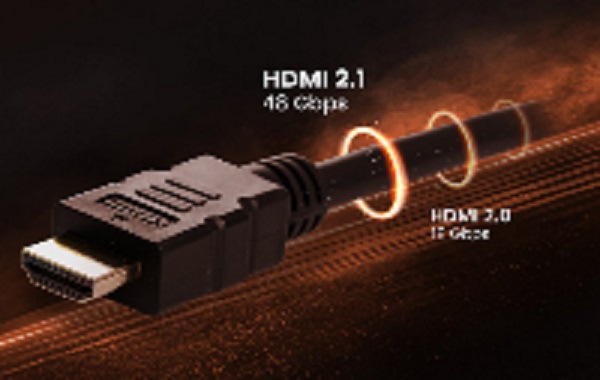
The high-speed signal transmission challenges brought by HDMI interfaces
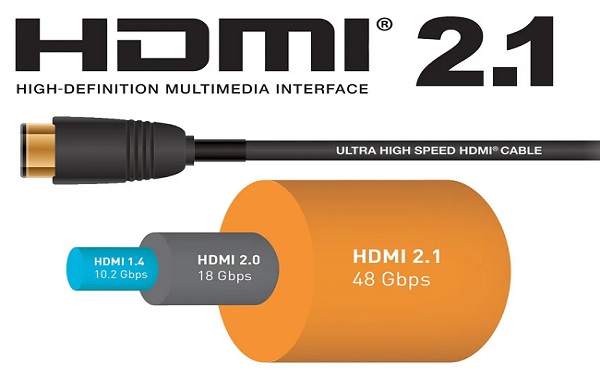
HDMI, as the mainstream interface for high-definition audio and video transmission, is widely used in televisions, monitors, cameras, VR/AR modules, and industrial vision systems. With the evolution from 4K to 8K resolution and refresh rates increasing to 120Hz or higher, the data rate of HDMI has increased from the early 4.95Gbps (HDMI 1.3) to 48Gbps (HDMI 2.1). High-speed signals at high frequencies require significantly higher losses, impedance consistency, and shielding performance of the transmission medium, leading to issues such as reflections, crosstalk, and eye diagram convergence in traditional multi-core shielded cables, especially in high-frequency differential signals. Ultra-thin coaxial cable bundles have become the ideal solution to improve the stability of high-speed links in this context.
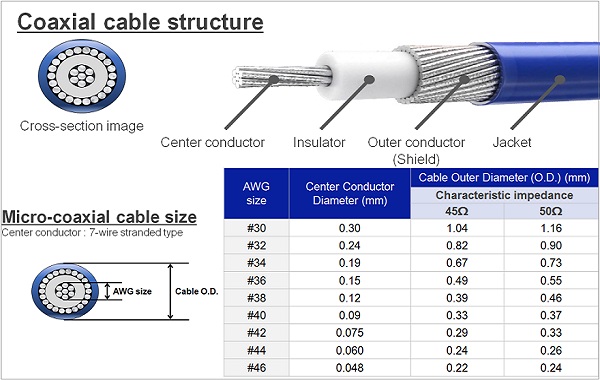
Structure and Characteristics Advantages of Extremely Fine Coaxial Beam
Extremely thin coaxial cable bundles are composed of multiple independent coaxial cables with diameters ranging from 0.3mm to 0.5mm. Each coaxial unit includes a central conductor, insulation layer, shielding layer, and sheath. Its core characteristics are reflected in the following aspects:
Impedance control accuracy: The single-core coaxial structure can control the impedance to 90Ω±10%, meeting the requirements of HDMI TMDS and FRL differential signals.
Low loss and low crosstalk: the independent shielding design significantly reduces the coupling between adjacent signals, while maintaining low insertion loss and reflection in the high-frequency band (above 3GHz).
Flexibility and lightweight design: Suitable for notebook, camera module, foldable devices, and other confined spaces, with a small bending radius that does not affect signal integrity.
4. Strong EMI suppression capability: The combination of single-core shielding with overall outer shielding (such as aluminum foil and woven layer) can effectively resist external electromagnetic interference, ensuring stable and clear image signals.
Three, the support capability of extremely fine coaxial cable束 for high-speed transmission of HDMI 2.1
HDMI 2.1 adopts the FRL (Fixed Rate Link) architecture, with a single channel speed up to 12Gbps and a total bandwidth of 48Gbps. Under this speed requirement, whether the extremely thin coaxial cable can stably support it depends on factors such as bandwidth performance, signal integrity, and termination technology.
Bandwidth and loss characteristics: Using silver-plated copper conductors and low dielectric constant FEP/PTFE insulation materials, it can maintain lower insertion loss in the frequency range of 10GHz to 15GHz, meeting the transmission requirements of full-speed HDMI 2.1.
Signal integrity stability: Reasonably designed coaxial cable bundles can achieve good return loss and eye diagram opening, and can pass the complete signal integrity test under the 12Gbps FRL mode.
Terminal matching and connector matching: Pairing with high-precision miniature connectors (such as I-PEX CABLINE series, JAE FI-R series) and maintaining equal length control and continuous grounding can ensure stable performance of the HDMI 2.1 high-speed link. According to industry application experience, extremely thin coaxial cable bundles can fully meet the high-speed interconnection requirements for 8K 60Hz, 10K display, and VR/AR scenarios.
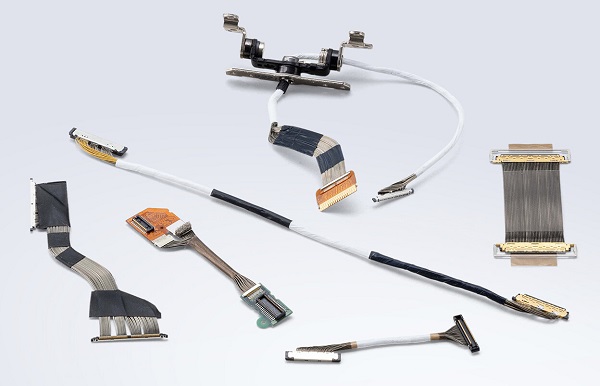
In high-speed imaging systems, extremely fine coaxial cables, with their high bandwidth, low loss, excellent anti-interference capability, and mechanical flexibility, have become the key interconnection solutions that meet the requirements of high-speed interfaces such as HDMI 2.1. For engineers, reasonable cable selection, precise impedance control, good shielding structure, and standardized termination processes are the core of ensuring image quality and transmission stability. As higher resolutions and frame rates continue to develop, extremely fine coaxial cables will further deepen and upgrade in the direction of high frequency, flexibility, and low noise, providing more reliable and precise support for the next generation of high-speed interconnection systems.
I am
[Suzhou Huichengyuan Electronic Technology], long-term focused on the design and customization of high-speed cable harnesses and ultra-fine coaxial cables, providing customers with stable and reliable high-speed interconnection solutions. For consultation or customization, welcome to contact
Manager Zhang: 18913228573 (same number for WeChat)。