


Categorization:Harness Component
Part 1: High-Speed Characteristics of USB4 and Thunderbolt 5
USB4, by integrating USB and Thunderbolt technologies, achieves the highest transmission speed of 40Gbps, and supports video output and power integration, aiming to perform multi-functional transmission through a single cable. Thunderbolt 5 further increases the bandwidth to 80Gbps, and can reach 120Gbps in specific modes to meet the needs of professional graphics, high-performance computing, and future immersive devices. Higher bandwidth means more stringent requirements for signal integrity, and also makes the cable a key link in influencing system stability.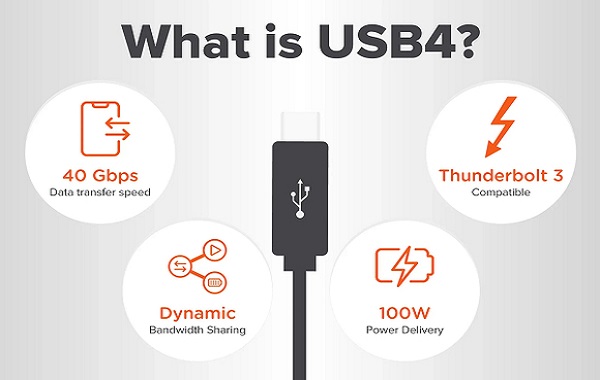
The necessity of 90Ω differential impedance
USB4 and Thunderbolt series interfaces both rely on high-speed differential signals, and the impedance of the differential pairs must be precisely matched to the protocol specifications to avoid reflections, crosstalk, and signal distortion. A 90Ω impedance not only ensures interface compatibility but also maintains lower error rates and more stable link performance in high-speed environments. For high-speed transmission, impedance control is not an option but a fundamental requirement for system-level reliability.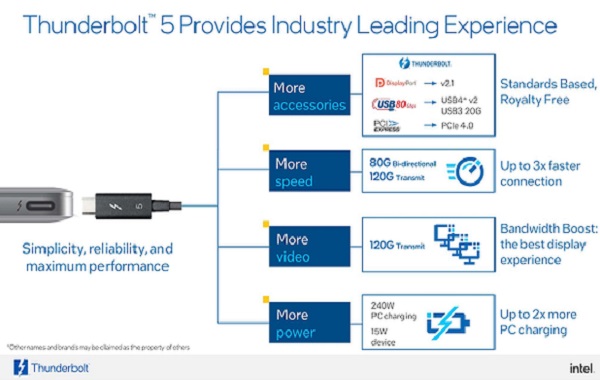
Section 3: Performance Advantages of Ultra-Fine Coaxial Beam
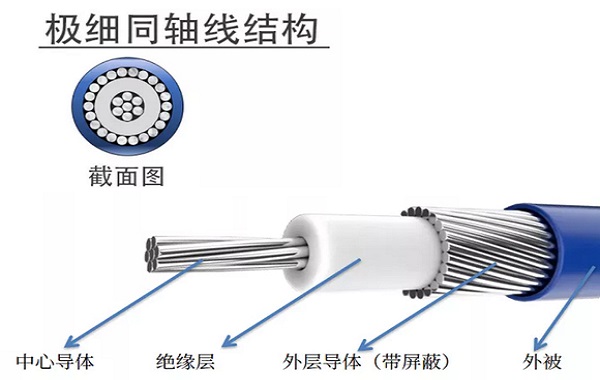
Extremely thin coaxial cables adopt coaxial structure, which has stronger shielding ability, smaller diameter, and higher flexibility, allowing for high-density wiring in limited spaces. They can maintain consistent impedance and extremely low loss in high-speed interfaces, making them suitable for short-distance high-bandwidth applications such as notebook expansion, VR/AR interfaces, expansion docks, and high-performance peripheral connections. In multi-functional cables that carry data, video, and power, the extremely thin coaxial structure can significantly reduce noise and enhance anti-interference ability, ensuring the entire link remains stable under high-bandwidth conditions.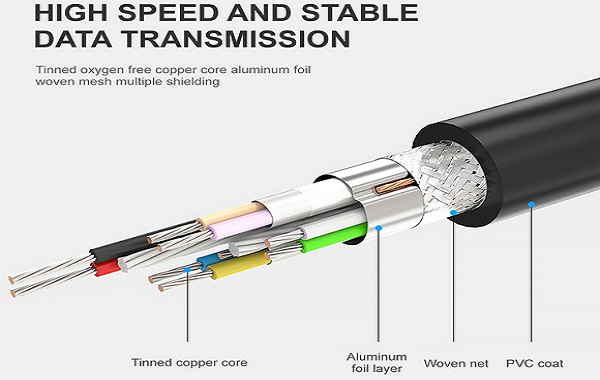
“Without the consent or authorization of this site, no one shall reproduce, reprint, distribute, cite, change, broadcast or publish the content in whole or in part in any form, nor shall there be any other violation of the copyright of this site.