


Categorization:Harness Component
The high-speed system is advancing towards bandwidths of 20-40 Gbps and even higher. At this point, the quality of the signal chain is no longer determined by a single link, but rather by the combined match of chips, PCBs, and extremely thin coaxial cables. Any mismatch at any point can lead to reflections, crosstalk, and increased error rates, therefore, the consistent design of the entire link becomes the key to system stability.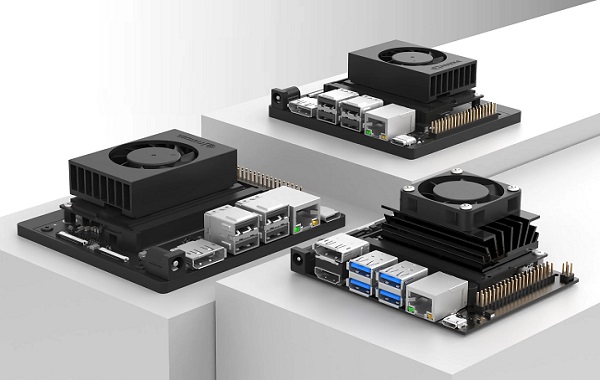
One, chip end: determines the link base
The chip is the source of signals, and its driving capability, edge speed, and output impedance will all affect the transmission of subsequent levels. If the chip's output impedance does not match the link, signal reflections will significantly increase, and the eye diagram aperture will shrink. At the same time, the return path from the chip to the PCB must be kept continuous to avoid signal distortion caused by parasitic effects. A stable and controlled source end is the foundation of the entire link.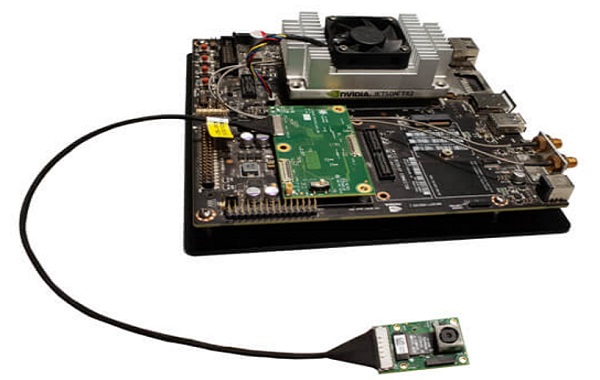
PCB: The main carrier for high-speed transmission
PCB needs to provide stable impedance, smooth routing, and complete return path to allow high-speed signals to propagate on the board without distortion. The trace width, dielectric thickness, differential spacing, and other parameters must be verified through simulation. The abrupt changes in via holes and reference planes should be minimized as much as possible. In high-speed products, a bridge structure is often used to optimize the transition between PCB and cable harness, making the link more consistent and reliable.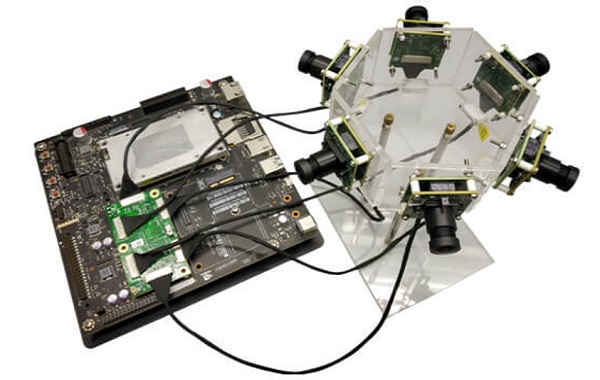
Three, ultra-fine coaxial beam: the core of external interconnection
Micro Coax cable assemblies feature high bandwidth, strong shielding, and high flexibility, enabling high-speed transmission in limited spaces. The cables must maintain precise 50 Ω or 100 Ω impedance and ensure stable termination, shielding, and mechanical structure; otherwise, losses and reflections may occur under high-frequency conditions. As the last segment of the link, the quality of the cable directly affects the ultimate performance of the system.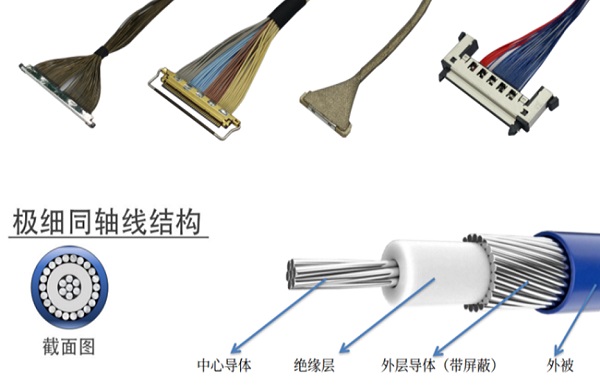
The quality of high-speed links depends on the matching and stability of chips, PCBs, and ultra-fine coaxial cable bundles. Only by achieving system-level impedance consistency, structural continuity, and controllable high-frequency characteristics can we obtain lower error rates and higher product reliability.
I amSuzhou Huichengyuan Electronic Technology, Long-term focus on the design and customization of high-speed signal cable harnesses and ultra-fine coaxial cable harnesses, committed to providing stable and reliable high-speed interconnection solutions. If you have related needs or want to learn more, please feel free to contactManager Zhang: 18913228573 (same as WeChat)。
“Without the consent or authorization of this site, no one shall reproduce, reprint, distribute, cite, change, broadcast or publish the content in whole or in part in any form, nor shall there be any other violation of the copyright of this site.