


Categorization:Harness Component

One, the "Invisible Bottleneck" of High-Speed Signals
Under the NXP platform, high-speed interfaces such as MIPI, LVDS, CSI, and DSI often need to carry transmission rates of several Gbps or even tens of Gbps. Traditional electronic cables are prone to signal attenuation, crosstalk, and reflection in such applications, especially in the high-speed links of camera modules and display modules, which can lead to distorted images or data packet loss. Extremely thin coaxial cables, through independent shielding layer design and strict characteristic impedance control (90Ω or 100Ω), effectively suppress signal reflection and crosstalk, providing a stable transmission environment for high-speed signals.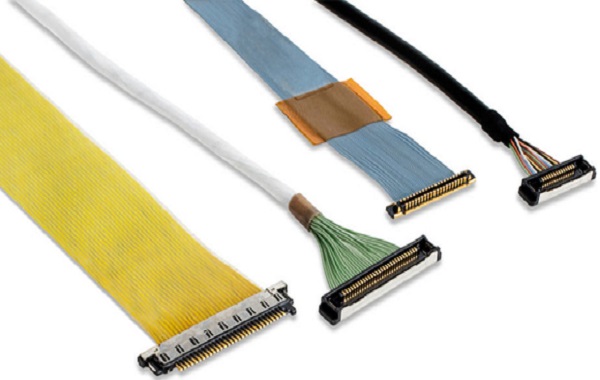
Chapter 2, Strict Requirements of NXP Ecosystem for Wires
In NXP automotive electronics platforms (such as the S32 series) and AI vision processing platforms (such as the i.MX8, i.MX9 series), interfaces not only require high speed but also need to consider anti-interference, lightweight, and flexible wiring. The ultra-thin coaxial cable bundle has significant advantages compared to traditional wiring (such as FPC, FFC): strong anti-interference, small size, good flexibility, high consistency, and can match various NXP interface standards (MIPI CSI/DSI, USB3.2, PCIe, etc.). Therefore, in vehicle-mounted cameras, industrial vision terminals, and AI edge computing modules, the ultra-thin coaxial solution has become the preferred choice for improving system reliability and signal stability.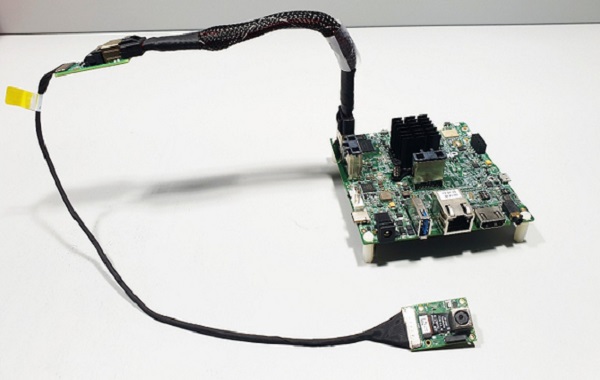
Three, the mainstream trend of ultra-fine coaxial scheme
With the promotion of vehicle intelligence and 8K display technology, the NXP platform has set higher standards for high-speed signal harnesses. Extremely thin coaxial cables not only maintain signal integrity in high-speed transmission but also meet design requirements for EMI control, lightweighting, and flexible wiring, becoming the "hidden artery" for connecting AI computing and sensor terminals. This solution is gradually becoming the standard configuration for high-end modules and smart devices, representing the pursuit of electronic system design for signal integrity and system reliability.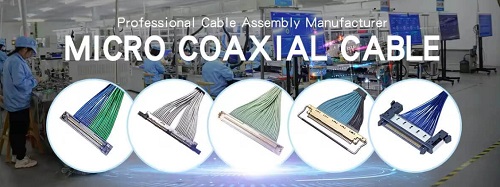
“Without the consent or authorization of this site, no one shall reproduce, reprint, distribute, cite, change, broadcast or publish the content in whole or in part in any form, nor shall there be any other violation of the copyright of this site.