


Categorization:Harness Component
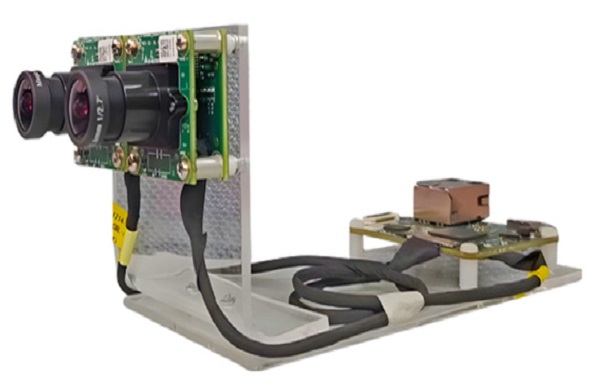
Part 1: Traditional Wire Harness and Its Limitations
Before 6Gbps, common signal cables include ribbon cables (FFC/FPC), twisted pair cables, ordinary copper-core wires, and shielded cables. They are cost-effective, easy to wire, or have good anti-interference properties, but they have limitations under high-speed signals. For example, ribbon cables have limited shielding effects and are prone to crosstalk; twisted pair cables may cause signal reflections due to uneven impedance; ordinary copper wires have high losses and are not suitable for high-frequency transmission; shielded cables, although anti-interference, have thick wire diameters and low space utilization. At speeds above 6Gbps, these limitations can lead to signal attenuation, jitter, and error codes, affecting long-term operation stability.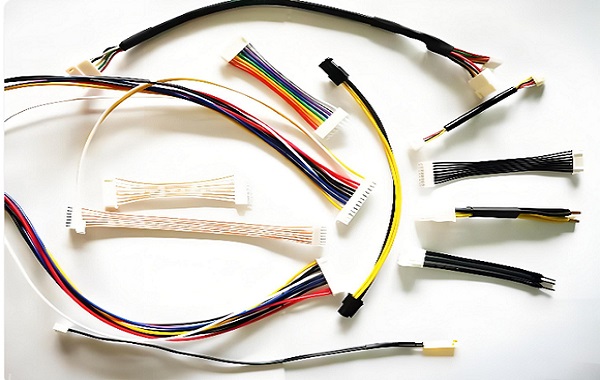
Chapter 2: Issues with Traditional Wires in High-Speed Transmission
With the increase in speed, traditional wiring harnesses show deficiencies in impedance control, crosstalk suppression, and signal integrity. Wire bending, uneven length, or improper shielding layer processing can lead to closed eye diagrams, increased data error rates, and even issues such as system crashes, frame drops, or black screens under temperature changes or long-term operation. These problems may be difficult to detect in short-term tests, but they can severely affect system stability in actual applications.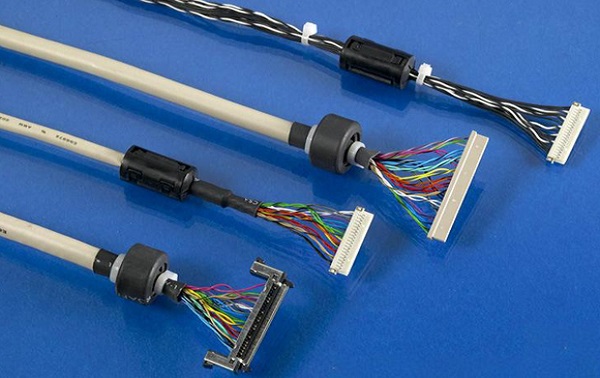
Threading coaxial bundle advantages
Compared with traditional wire harnesses, ultra-thin coaxial cables (Micro Coaxial Cable) have significant advantages in structure and performance. They offer precise impedance control, low crosstalk, and high shielding effectiveness, ensuring the integrity of high-speed signal transmission. The diameter of a single wire is usually around 0.3mm, making them soft, thin, and suitable for high-density module wiring. They have strong high-speed matching capabilities, supporting interface standards such as 6Gbps to 10Gbps and even higher, such as MIPI, eDP, USB4, PCIe Gen4, and so on. For this reason, ultra-thin coaxial cables have become the mainstream choice in fields such as 8K display modules, AI cameras, in-car imaging links, and industrial testing equipment.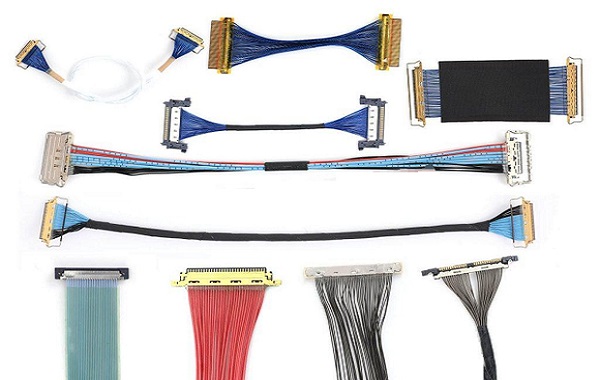
“Without the consent or authorization of this site, no one shall reproduce, reprint, distribute, cite, change, broadcast or publish the content in whole or in part in any form, nor shall there be any other violation of the copyright of this site.