


Categorization:Harness Component
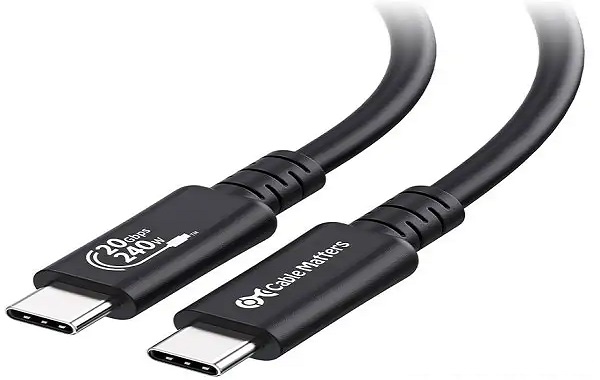
High-speed signal transmission's core requirements for harnesses
USB4 and Thunderbolt 5 operate at extremely high frequencies, where ordinary cables tend to experience signal attenuation, crosstalk, and reflection issues, thereby affecting data stability. The extremely thin coaxial cable bundle employs a precise coaxial structure, with each high-speed signal having an independent shielding layer, which can effectively suppress electromagnetic interference and maintain impedance consistency. This ensures stable transmission of high-speed data under long-term and high-load conditions, and is an indispensable key factor in high-speed interface design.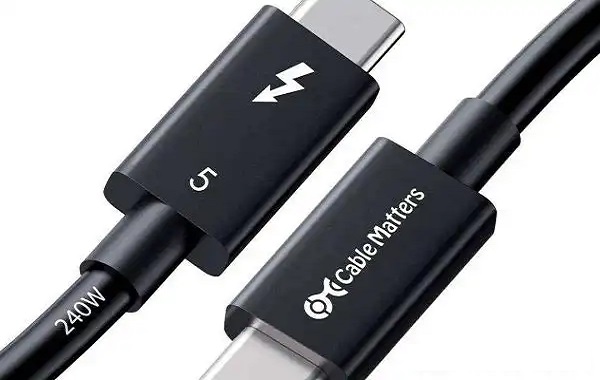
Section 2: Advantages of Miniaturization and Flexible Wiring
Modern electronic devices are continuously developing towards thinness and high integration, with limited internal wiring space. The diameter of ultra-fine coaxial cables can be as low as 0.2mm, occupying less space and having excellent bending performance. They can realize complex wiring in narrow structures, which is very suitable for the high-speed interface wiring needs of ultra-thin laptops, tablets, and portable devices. This flexible advantage provides higher design freedom for the application of high-speed interfaces in compact products.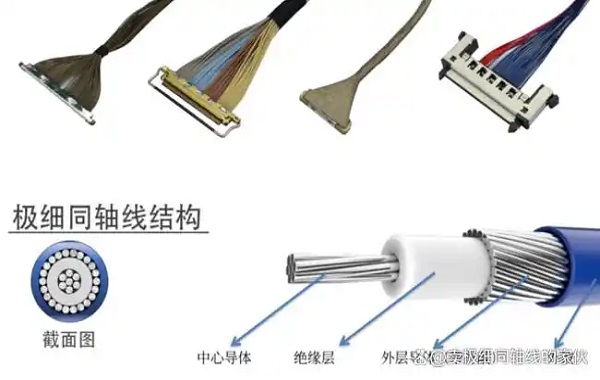
Consider both power supply capacity and long-term reliability
In the practical applications of USB4 and Thunderbolt 5, cables not only bear the responsibility of high-speed data transmission but also need to support a certain power supply. Extremely thin coaxial cable bundles usually adopt a design structure where signal lines and power lines are parallel, ensuring stable high-speed signals while also addressing power transmission requirements. At the same time, its outer shielding structure helps to reduce heat and interference, providing a guarantee for the long-term stable operation of the interface under high-power, high-bandwidth conditions.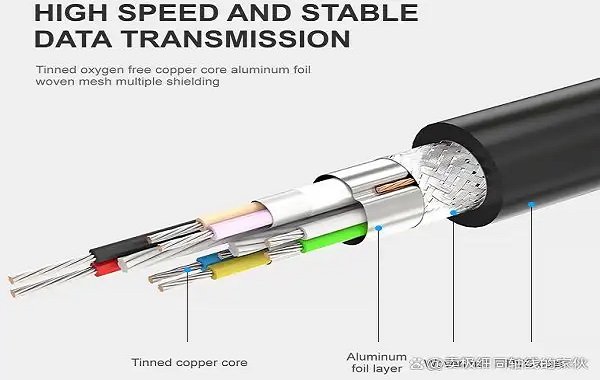
“Without the consent or authorization of this site, no one shall reproduce, reprint, distribute, cite, change, broadcast or publish the content in whole or in part in any form, nor shall there be any other violation of the copyright of this site.