


Categorization:Harness Component
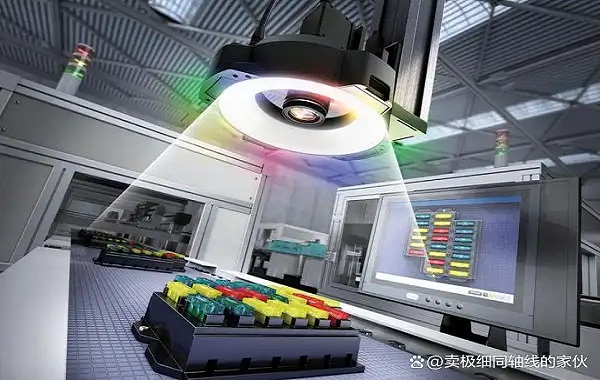
Part 1: Performance Characteristics of Mainstream High-Speed Interfaces
USB3.0 bandwidth can reach 5Gbps, with low cost and good compatibility, suitable for mid-range industrial cameras; GigE transmission distance can reach 100 meters, suitable for multi-camera distributed systems; Camera Link interface is stable but cables are relatively thick; CoaXPress has high bandwidth and can be transmitted over long distances, making it the mainstream of high-end vision systems; MIPI CSI is used for embedded and AI vision modules, with high speed but high requirements for signal integrity; LVDS/SLVS-EC is suitable for short-distance high-speed transmission; HDMI/DisplayPort is mainly used for display transmission, adopted by some customized cameras; PCIe direct connection to CPU/GPU, with low latency, suitable for AI and high-performance computing scenarios. With the increase in data rates, traditional wiring and copper cable bundles are difficult to meet the requirements for high-speed transmission.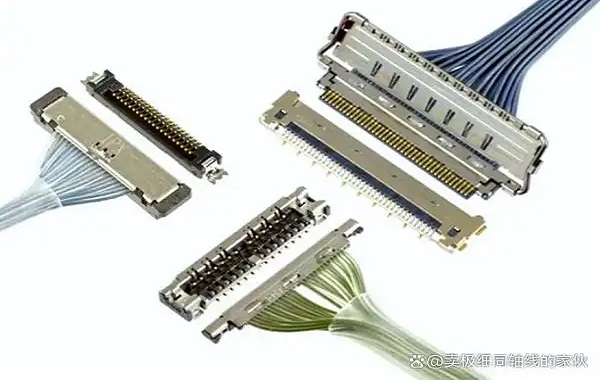
Advantages of ultra-fine coaxial beam
The extremely thin coaxial cable assembly is composed of independent shielded miniature coaxial units, with each core wire having an independent shielding layer, effectively reducing crosstalk and EMI interference. It supports transmission above 20GHz and is compatible with high-speed interfaces such as USB4, MIPI, and CoaXPress; with a diameter of 0.3~0.8mm, it allows flexible cabling in compact spaces; the precise impedance control ensures that high-speed data is not distorted; the shielding structure is reliable with strong anti-interference ability, and performs outstandingly in industrial environments. Therefore, the extremely thin coaxial cable assembly is gradually replacing traditional multi-core cable assemblies and becoming the preferred transmission solution for AI vision modules, industrial CCDs, automatic inspection cameras, and medical imaging equipment.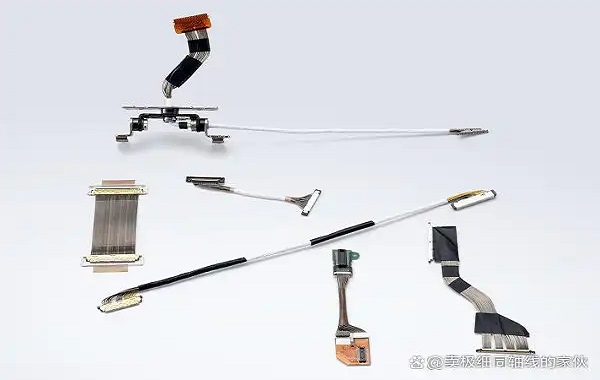
Section 3: Application Trends of Interface and Harness Matching
The current high-speed interfaces such as MIPI, CoaXPress, and PCIe have extremely high requirements for signal integrity, which traditional cables are difficult to meet. Micro Coax, while ensuring the stability of high-speed signals, also meets the needs of module miniaturization and lightweight design. It has become a standard configuration in AI cameras and industrial automation detection systems. With the upgrade of high-speed interface standards, the application ratio of ultra-thin coaxial cables in industrial vision systems will continue to rise. Their high signal integrity, anti-interference capability, and wiring flexibility make them an important supporting technology for high-speed transmission.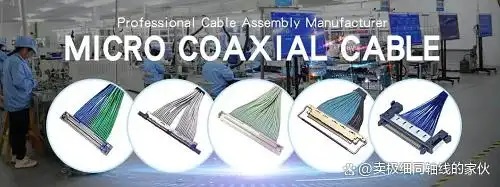
“Without the consent or authorization of this site, no one shall reproduce, reprint, distribute, cite, change, broadcast or publish the content in whole or in part in any form, nor shall there be any other violation of the copyright of this site.