In today's data center and high-performance computing (HPC) network architectures, high-speed interconnect solutions have become one of the core elements to enhance overall system performance. Finisar Corporation (now a brand under Coherent) as a major supplier in the global optical communication field, its Active Optical Cables (AOC) and Direct Attach Cables (DAC) cable component product lines have long provided stable and reliable interconnect solutions for data centers, storage networks, and enterprise switching systems.

Key Roles in Optical Interconnect Technology
Finisar's AOC and DAC cables are an important part of the network physical layer, used for high-speed data transmission between devices:
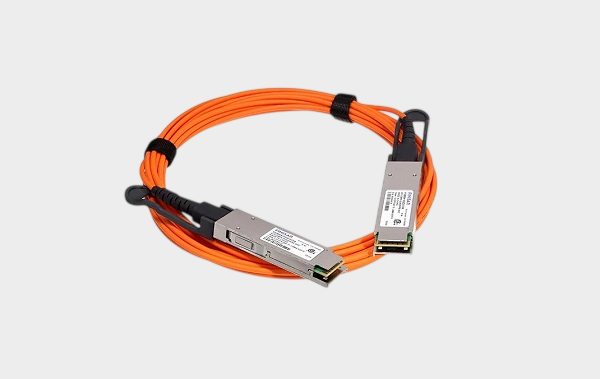
AOC (Active Optical Cable) utilizes fiber optic and electro-optical conversion technology to convert electrical signals into optical signals for transmission, supporting long-distance, high-speed, and high-interference resistance. Due to the built-in electro-optical module, it has better performance and a wider coverage capability.
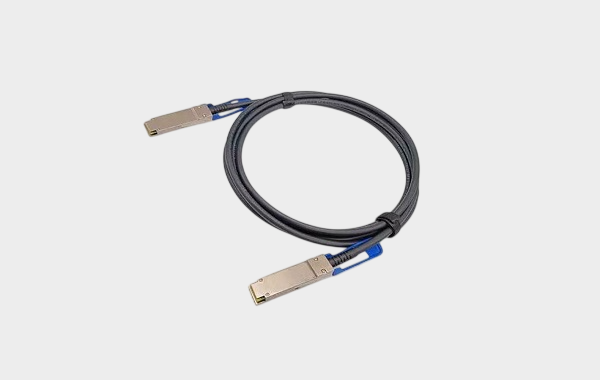
• DAC (Direct Attach Copper) is mainly composed of copper wires and fixed ports, providing cost-effective signal transmission over short distances and is commonly used for connecting racks or adjacent devices.
Compared with traditional optical module and fiber optic jumper solutions, both AOC and DAC can achieve a more lightweight and easy-to-manage interconnection installation, while saving cabling space and energy consumption in data center or server architectures.
Comparison of Performance Advantages Between AOC and DAC
When comparing the performance advantages of AOC and DAC, the following aspects can be considered:
Transmission distance and rate:
AOC provides stable high-speed high-bandwidth connections over tens of meters, suitable for inter-rack or cross-row data center interconnections.
DAC is more suitable for short distances (such as within racks or between adjacent devices), typically providing connections with speeds up to 100G and even higher within a few meters.
2. Interference Resistance and Signal Integrity:
The AOC fiber transmission is inherently resistant to electromagnetic interference and maintains high reliability in complex electromagnetic environments.
DAC as copper wire transmission, in short-distance scenarios, although it has low cost and low latency, attention should be paid to signal loss and EMI impact in terms of anti-interference and large-scale cross-rack wiring.
Power consumption and cost:
DAC does not contain photoelectric conversion components, therefore it has lower power consumption and a relatively lower price.
The AOC contains an optical module, with slightly higher power consumption, but it has more advantages when a longer distance or higher anti-interference capability is required.
Installation and cabling management:
AOC is usually lighter and more flexible than copper cables of the same speed, making it easier to handle wiring management in high-density environments.
Three, selection, compatibility, and domestic substitution suggestions
When choosing Finisar AOC or DAC type cables, it should be comprehensively evaluated based on your system requirements and device compatibility:
Transmission distance requirements: If it is necessary to deploy across cabinets or even across data centers, it is recommended to prioritize AOC; if it is mainly for internal connections within the rack, it can be preferred to choose DAC to save costs and power consumption.
Device compatibility: Different manufacturers' equipment (such as Cisco, Juniper, Arista, etc.) have strict requirements for cable coding and compatibility. It is recommended to choose Finisar standard models with verified compatibility.
Domestic Alternative Reference: In recent years, domestic high-performance cables such as Changhong Fiber Optics and FiberHome have gradually matured. They have already provided feasible domestic solutions in short-distance DAC and certain specifications of AOC scenarios, which can be used as a reference for cost optimization. It is recommended to pay attention to compatibility, brand certification, and on-site testing and verification when selecting alternatives.
Compatibility and replacement suggestions: For applications of general speed (such as 10G, 25G), it is recommended to prioritize the stability test of domestic replacement products with mainstream switches; for scenarios with high bandwidth requirements (such as above 100G), it is suggested to conduct laboratory compatibility verification before mass deployment.
Finisar AOC and DAC cable assemblies have significant advantages in the data center optical interconnect field due to their long-term accumulated technical strengths, providing high-speed, stable, and low-latency interconnects. Selecting the appropriate models based on the actual needs of transmission distance, device compatibility, and cost can effectively enhance network architecture performance and deployment flexibility. The combined use of AOC and DAC products, making trade-offs at reasonable locations, is an important strategy for building an efficient data center interconnect system.
We focus on the R&D and implementation of domestic alternatives for Finisar brand interconnect products. If you are interested in domestic alternative solutions, product selection, or procurement, please contact: Manager Zhang.
18665383950, same WeChat number), we look forward to in-depth communication and cooperation with you to jointly promote the application of domestic interconnect solutions.