


Categorization:Harness Component
In the field of extremely thin coaxial cable assemblies, Hirose (Mitsubishi Electric) and I-PEX are connector brands frequently encountered by engineers and purchasers. Both have developed a variety of Micro-Coaxial Cable connection solutions around miniaturization, high density, high-speed transmission, and EMI/EMC control. Therefore, it is better to judge who is more suitable based on specific project requirements rather than simply determining "who is the king." Taking this product as an example, I-PEX 82694-100B-01-D belongs to the CABLINE®-VS II 30Pin extremely thin coaxial cable assembly, using a 40AWG Micro-Coaxial Cable, 200mm in length, and a 1-1 double-ended structure. The matching cable end connector is 20847-030T-01; the corresponding connector is 30Pin with a 0.5mm Pitch (contact spacing). According to I-PEX official data, CABLINE®-VS II uses a horizontal insertion and removal structure, ZenShield® full shielding, and multi-point grounding, and is equipped with a mechanical lock, positioning for high-speed data transmission applications. In comparison, Hirose also has micro high-speed connector products for Micro-Coaxial Cable, such as the DF81 series, which uses a 0.4mm Pitch, horizontal insertion and removal, and 30/40/50Pin, emphasizing multi-point grounding, enhanced shielding, and high-speed transmission capabilities. Therefore, it is difficult to simply distinguish between the two brands in terms of brand itself, and the true "king" should be a solution that can accurately match the connector size, Pin count, cable specifications, high-speed performance, and installation space of the target device.
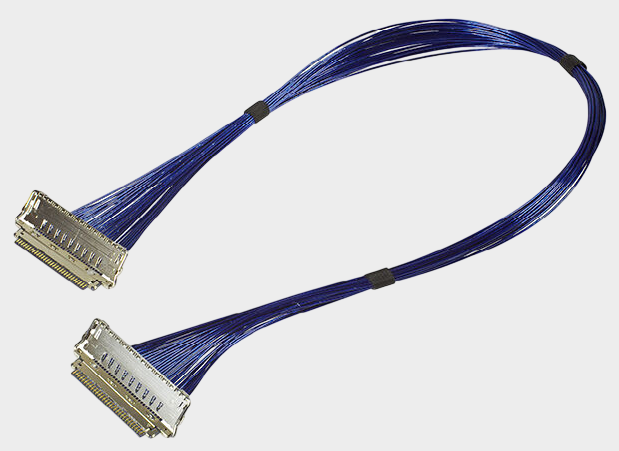
From the perspective of engineering applications, the core competitiveness of I-PEX 82694-100B-01-D is not a single parameter, but an overall combination of multiple parameters: 30Pin, 0.5mm Pitch, 40AWG Micro-Coaxial, 200mm, 1-1 dual-end structure, and the 20847-030T-01 connector. The 0.5mm ultra-fine pitch can help engineers achieve high-density signal connections in limited PCB areas, while the extremely fine coaxial cable can provide a more suitable transmission structure for high-speed differential signals. I-PEX official documentation positions CABLINE®-VS II for high-speed data transmission, listing reference application standards such as PCIe Gen5 32 GT/s/lane, USB4 Gen4 40 Gbps/lane PAM3, and DisplayPort UHBR20 20 Gbps/lane, etc. At the same time, in the official series reference tests, under the conditions of 40AWG, 45Ω, and 100mm Micro-Coaxial Cable, a rate of 32 GT/s/lane NRZ can be achieved. It should be emphasized that these are reference data for the CABLINE®-VS II series and cannot be directly equated to the actual certified speed of the 30Pin, 200mm cable assembly 82694-100B-01-D in a specific device; the final performance should still be confirmed through the specific cable assembly's SI test. For purchasers, this also means that when choosing alternative products, they cannot only look at surface parameters such as "30Pin, 0.5mm pitch," but should also confirm the cable impedance, termination process, shielding continuity, and batch consistency.
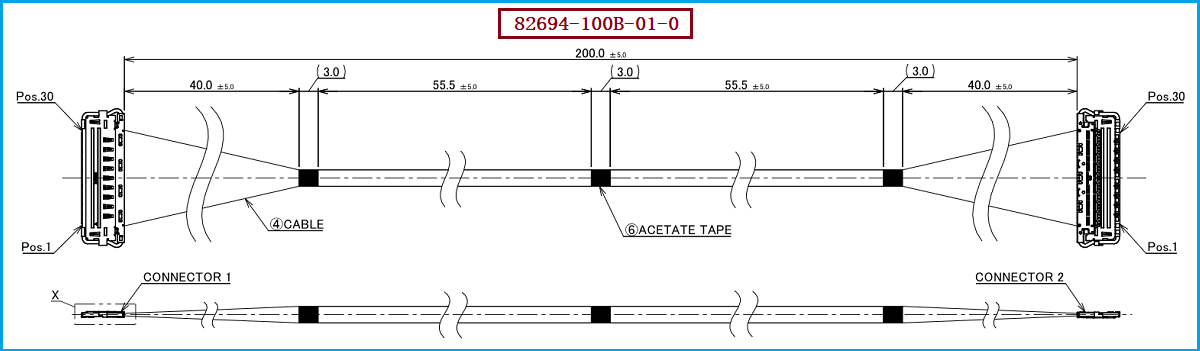
For engineers, the comparison between Hirose and I-PEX should be based on specific application requirements. For example, Hirose DF81 uses a 0.4mm pitch, while the I-PEX 82694-100B-01-D kit配套的 20847-030T-01 belongs to the CABLINE®-VS II system, with a core of 30Pin and 0.5mm pitch. Even though both are ultra-thin coaxial connectors, they cannot be directly substituted for each other simply because "they are both Micro-Coaxial and both high-speed connectors"; the pitch, number of pins, mating height, width, depth, insertion direction, locking method, wire specification, and PCB pad design of the connectors all need to be re-checked. The official information of Hirose DF81 shows that its 30Pin version has multiple grounding connections and uses a rotating lock, while the I-PEX CABLINE®-VS II uses ZenShield® full shielding, multiple grounding, and mechanical locking. Although both design approaches emphasize high-speed transmission and shielding reliability, the specific structures are not equivalent. Therefore, if the original equipment of the customer has adopted the I-PEX solution, the more reasonable path for domestic substitution is to carry out compatibility development based on the original connector size and original cable electrical performance, rather than simply replacing I-PEX with Hirose or other brands. Our company can provide: I-PEX 82694-100B-01-D compatible replacement cable solution, which can focus on the key specifications such as 20847-030T-01, 30Pin, 0.5mm pitch, 40AWG, 200mm, 1-1 double-ended structure, and carry out ultra-thin coaxial cable prototyping, performance matching, and mass production. This provides engineers with a domestic substitution verification solution and also provides procurement personnel with a stable supply chain substitution option.
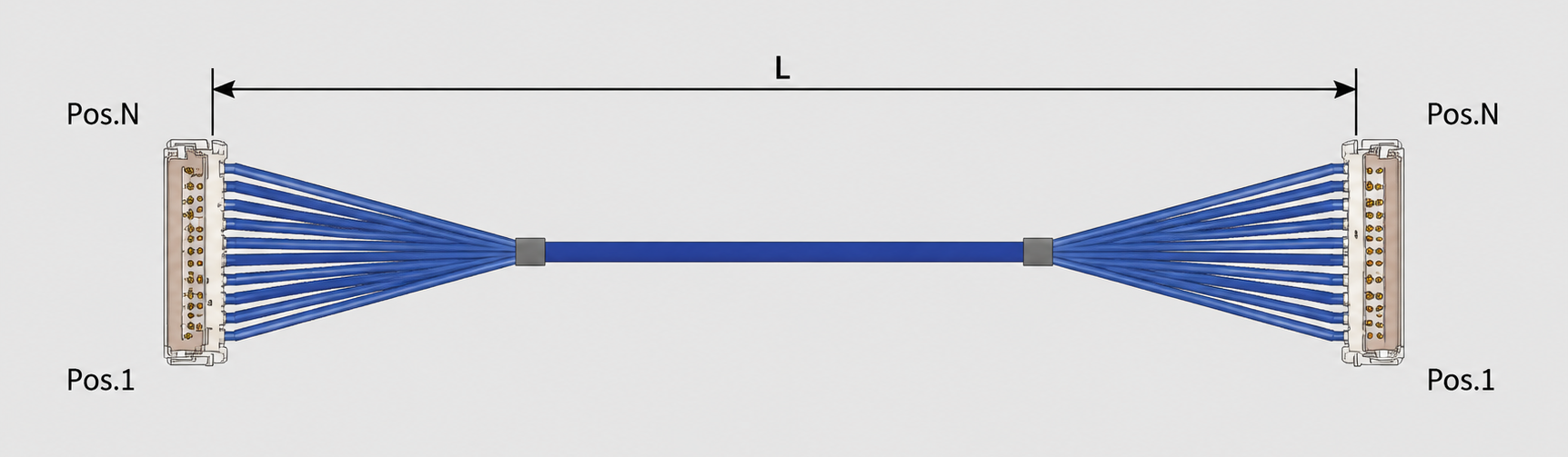
Hirose and I-PEX are both representative brands in the field of ultra-fine coaxial connectors. Both have product systems for high-density, high-speed signals and EMI control, but the Pitch, Pin count, structural height, insertion and extraction direction, locking mechanism, and compatible cable materials of different series are not the same, so it cannot be simply judged by brand rankings. For the I-PEX 82694-100B-01-D in this round, its 30Pin, 0.5mm Pitch, 40AWG Micro-Coaxial, 200mm, 1-1 double-ended structure, and 20847-030T-01 connector form a clear product identification basis, making it more suitable for evaluating domestic alternatives from several dimensions such as "mechanical compatibility + high-speed signal integrity + EMI/EMC + reliability + mass production consistency". Our company focuses on the production and manufacturing of ultra-fine coaxial cable assemblies and the development of compatible alternative solutions, and can provide corresponding compatible alternative cable assembly solutions for I-PEX 82694-100B-01-D according to the actual equipment structure and technical requirements of customers.
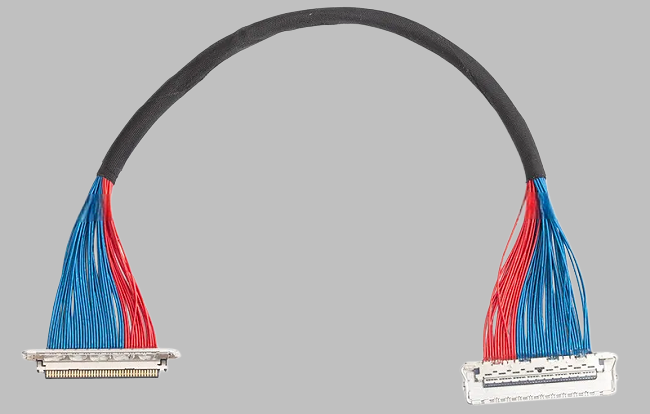
“Without the consent or authorization of this site, no one shall reproduce, reprint, distribute, cite, change, broadcast or publish the content in whole or in part in any form, nor shall there be any other violation of the copyright of this site.