


Categorization:Harness Component
In laptops, display devices, industrial cameras, machine vision, and other space-limited electronic devices, the wire harness not only needs to meet high-speed signal transmission but also take into account miniaturization, flexible wiring, and long-term reliability. This introduction is about the I-PEX 83063-100B-01-D, a 20PIN ultra-thin coaxial cable in the CABLINE®-VS series. It uses AWG #40, 50Ω Micro-Coaxial Cable (ultra-thin coaxial cable), with a standard length of 300mm and a 1-1 termination method. The wire material is matched with the connector model 20454-220T, which uses a 20PIN, 0.5MM Pitch structure and can achieve high-density signal connections in limited spaces. For engineers, selecting such a wire harness requires attention to wire diameter, impedance, length, termination method, and connector matching. Purchasers, on the other hand, should focus on verifying the material number/model and specification consistency of the ultra-thin coaxial cable products, avoiding replacement decisions based solely on appearance or Pin number.
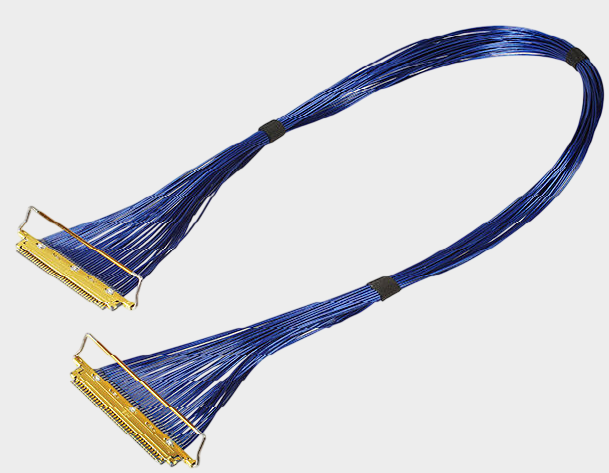
Many engineers, when laying cables inside equipment, often ask: "How many times can a very thin coaxial cable bend before it breaks?" In fact, this question cannot be answered simply with a fixed number of bends, because the bending resistance of very thin coaxial cables is affected by factors such as wire diameter, conductor structure, insulating material, shielding layer structure, bending radius, bending angle, movement speed, and whether it is a continuous reciprocating motion. For I-PEX 83063-100B-01-D AWG40 very thin coaxial cable bundles, if the product application involves repeated opening and closing, movement, or dynamic bending conditions, the engineering design cannot directly equate the performance of ordinary static cable bundles to that of drag chains, robot motion cables, and other dynamic cables. Especially, attention should be paid to the fact that after very thin coaxial cables have been bent at a small radius, even if the outer sheath is not broken temporarily, the internal conductors, insulating layers, or shielding structures may be subjected to mechanical stress, thereby affecting impedance consistency and high-speed signal integrity. Therefore, when judging how many times it can bend, reliability verification should be based on the specific cable structure and actual bending radius, movement conditions, rather than just looking at the theoretical number of bends.
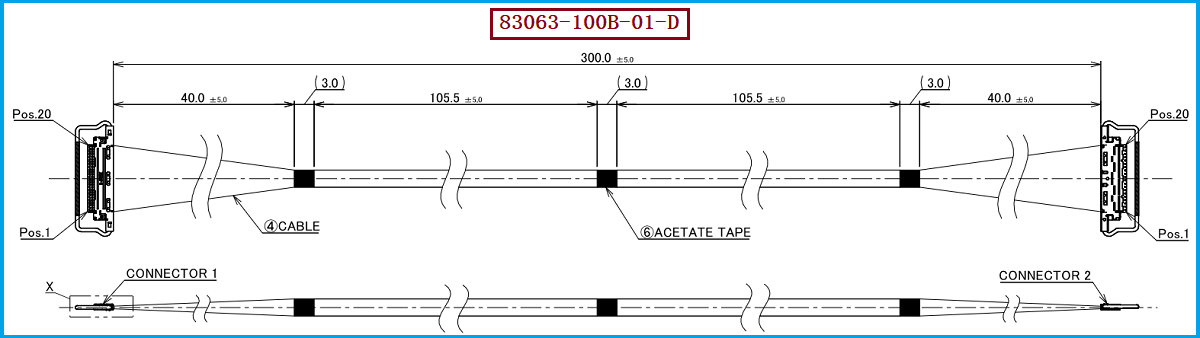
For projects requiring domestic substitution, second supplier introduction, or bulk procurement, the alternative selection recommendation for I-PEX 83063-100B-01-D should be confirmed from multiple dimensions such as "connector + wire + wire sequence + size + electrical performance + mechanical reliability". The key matching conditions for this model include the CABLINE®-VS series, 20PIN, 0.5MM pitch, 20454-220T connector, AWG #40, 50Ω, 300mm, and 1-1 termination method. Among them, the connector model 20454-220T and 20PIN, 0.5MM pitch are important structural matching conditions, while the 50Ω impedance, AWG40 wire, and 300mm length are directly related to the electrical and wiring performance of the harness. For products with frequent bending requirements, the bending radius, bending times, and actual installation conditions should also be verified. Our company can provide: I-PEX 83063-100B-01-D compatible alternative harness solution, which can match and develop ultra-thin coaxial wire, connector termination, wire sequence, length, and related processes according to the actual product structure and technical requirements of customers, provide compatible alternative selection references for engineers, and also provide domestic substitution supply solutions for procurement personnel.
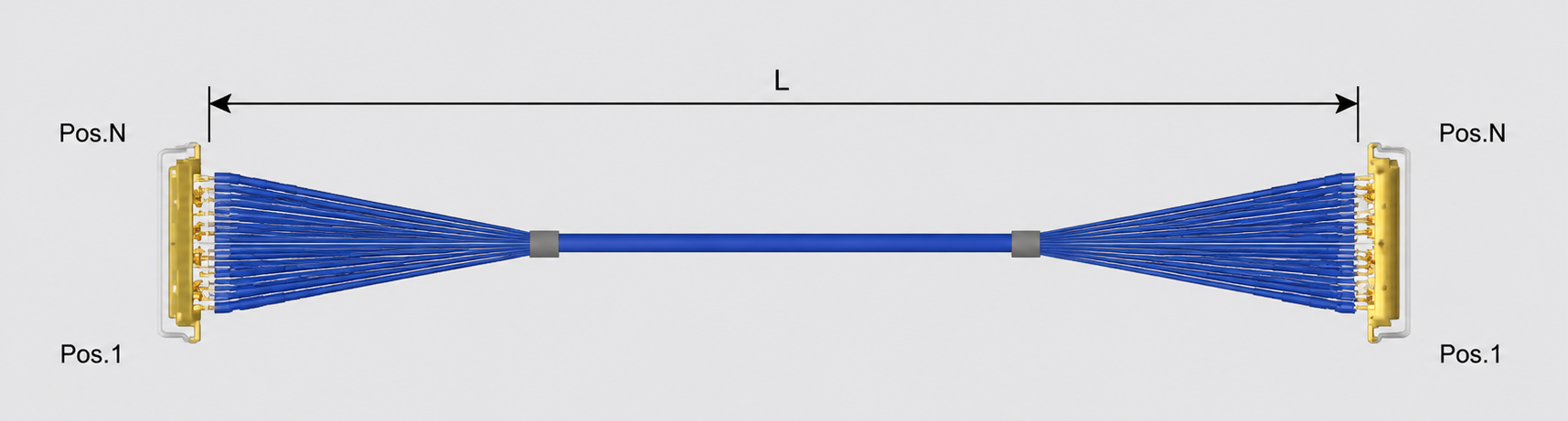
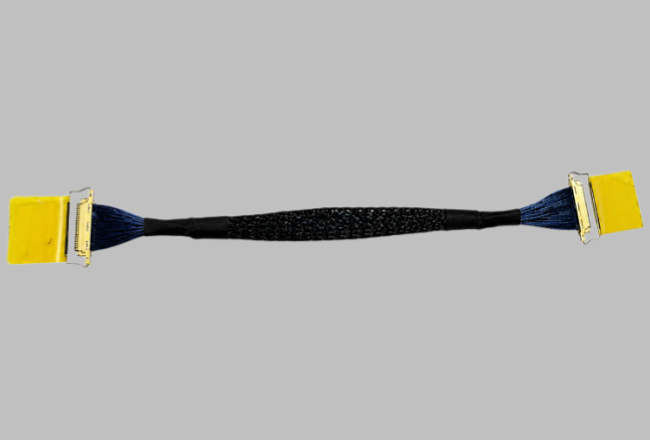
The value of extremely thin coaxial cable assemblies is not simply the pursuit of "the thinner, the better" or "the more flexible, the better," but rather achieving a balance of high-speed signal, mechanical reliability, and wiring flexibility within limited space. The 50Ω extremely thin coaxial structure adopted by I-PEX 83063-100B-01-D is itself a cable assembly solution for high-density, high-speed signal connection scenarios. When the cable assembly is installed in display modules, camera modules, or narrow areas within devices, a reasonable bending path can help reduce space occupation. However, if the bending radius design is not reasonable, long-term mechanical stress may affect the internal structure of the cable. Therefore, engineers should avoid sharp bends, repeated folding, and stress at the connector root during the design phase, and conduct sample testing according to actual application conditions; procurement personnel should also require suppliers to provide corresponding wire specifications, connector models, wiring sequence, and reliability verification materials when evaluating alternative suppliers, and should not solely rely on "same 20PIN, same 0.5MM spacing" as the basis for judgment.
“Without the consent or authorization of this site, no one shall reproduce, reprint, distribute, cite, change, broadcast or publish the content in whole or in part in any form, nor shall there be any other violation of the copyright of this site.