


Categorization:Product Information
With the continuous development of electronic devices towards high-speed, miniaturization, and high integration, the data transmission requirements between internal components such as camera modules, displays, and image processing modules are increasingly high. During the product development process, engineers often focus on chip performance, PCB design, and interface specifications, but easily ignore the impact of internal cable connections on signal transmission. In fact, the transmission of high-speed signals from one module to another needs to pass through cables, connectors, and multiple connection interfaces. Any mismatch in impedance, signal loss, or crosstalk at any link may affect the final transmission effect. If problems are found only during the whole machine testing stage, it not only increases the difficulty of troubleshooting but may also lead to structural adjustments, cable redesign, and even affect the development progress of the entire project.
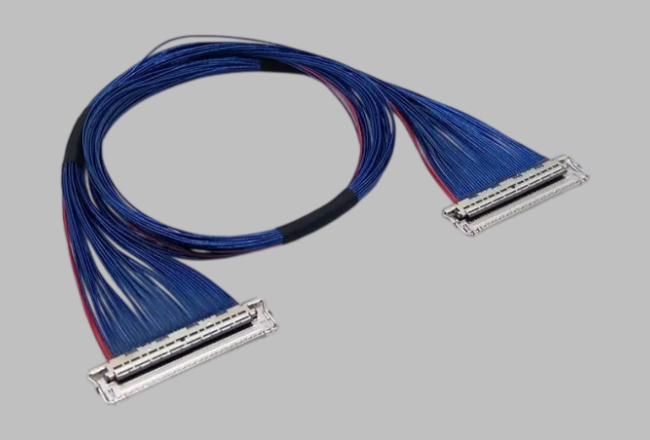
High-speed signal transmission requires considering both cables and connectors together.
High-speed connection solutions are not simply about choosing a cable that can conduct signals. As the transmission rate increases, impedance continuity, insertion loss, return loss, crosstalk, and shielding effectiveness become more important. Especially at the connection point between the cable and the connector, if the structural design or termination process is not reasonable, impedance突变 may occur, affecting signal integrity. Therefore, it is necessary to conduct a comprehensive evaluation of the entire connection channel at the early stage of the project, taking into account transmission protocols, signal rates, connector models, cable lengths, and internal routing paths, rather than focusing solely on the specifications of individual connectors or cables.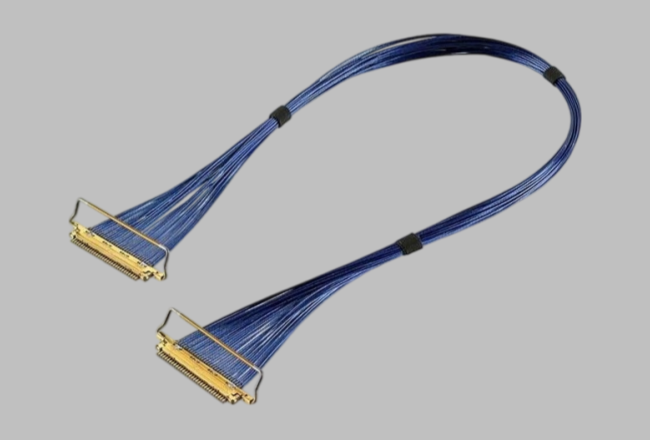
Extremely thin coaxial cable束 is an important choice for miniaturized high-speed connections.
In space-limited and high signal density electronic devices, ultra-fine coaxial cables can provide a more flexible solution for high-speed internal connections. Through its structure consisting of a central conductor, insulation layer, outer conductor shielding layer, and outer sheath, it achieves signal transmission and electromagnetic shielding under a smaller cable outer diameter, and is suitable for camera modules, laptops, tablets, display devices, and other precision electronic products. In actual selection, it is also necessary to match factors such as AWG wire specifications, characteristic impedance, cable length, connector spacing, pin count, and line direction to ensure that the cable束 can adapt to the internal space of the product while also meeting the requirements for high-speed signal transmission.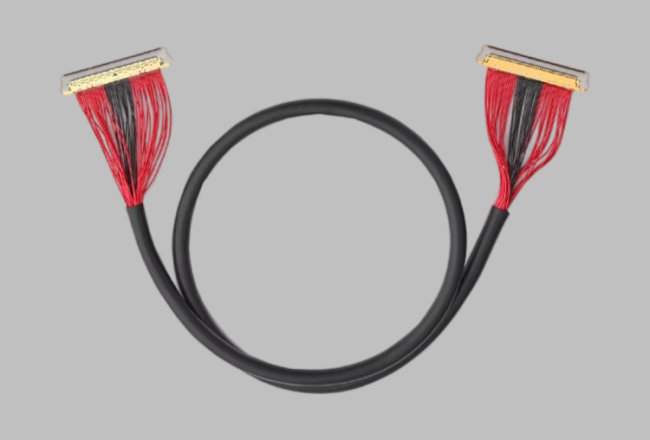
Anticipate the harness design in advance to minimize subsequent反复 modifications.
The optimization of high-speed signal connection schemes should be as far forward as possible, into the product design and sample development stage. Engineers can confirm the specifications of connectors and cables in advance, evaluate the routing of cables, bending radii, shielding structures, and termination methods, and conduct sample verification according to project requirements. For components with high-speed performance requirements, in addition to the conventional conductance, wire sequence, and insulation checks, impedance, insertion loss, return loss, and crosstalk should also be evaluated according to actual needs. By gradually confirming the scheme through design reviews, sample testing, and small batch verification, potential problems in the connection link can be discovered earlier, reducing the need for modifications during the whole machine testing stage.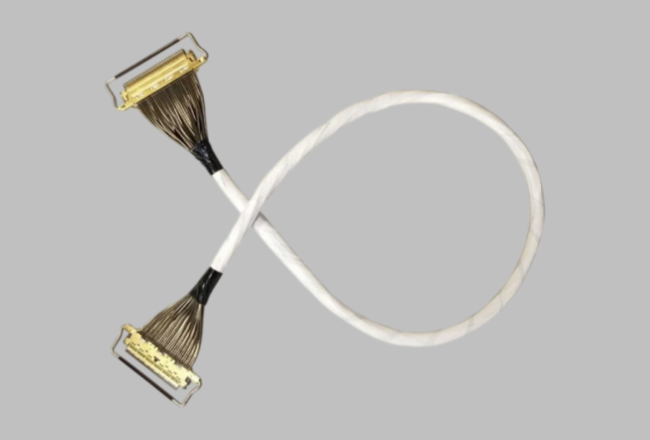
From cable processing to connection solutions, it is more important to prepare the matching in advance.
High-speed signal connections not only require suitable cables and connectors, but also matching component design and processing technology. We focus on the production and development of ultra-thin coaxial cable assemblies and matching solutions, and can assist in selecting wire gauges, matching connectors, confirming wire sequences, length design, and customized processing based on the connector models, cable assembly drawings, product structure, or samples provided by customers. For projects that need to adjust existing connection schemes or find compatible alternative solutions, we can also analyze and develop them in line with actual application requirements. By incorporating cable selection, structural matching, and processing requirements into the project design in advance, we help customers complete the development and verification of high-speed internal connection solutions more smoothly.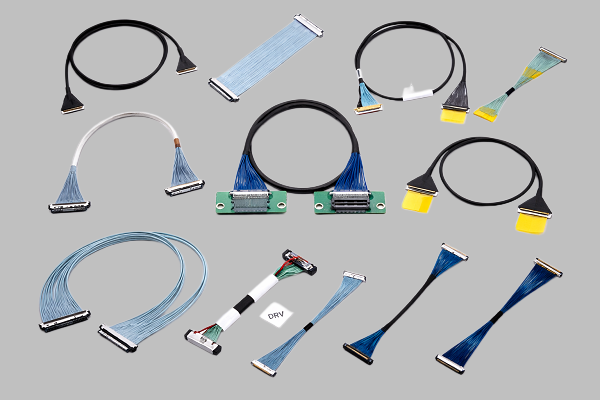
The upgrade of high-speed signal connection schemes should not wait until the whole machine test fails. Considering factors such as cables, connectors, impedance matching, shielding structures, and processing technology in advance can help the project discover potential problems earlier and reduce later design adjustments. For electronic devices with limited space and high transmission rates, extremely thin coaxial cable bundles are not only an internal connection method but also an important component worth planning in advance in the entire high-speed signal transmission chain.
“Without the consent or authorization of this site, no one shall reproduce, reprint, distribute, cite, change, broadcast or publish the content in whole or in part in any form, nor shall there be any other violation of the copyright of this site.