


Categorization:Product Information
In the internal connections of electronic devices, 1 Gbps and 10 Gbps may only seem to be differences in transmission rates, but for cable design, the two have different requirements for signal transmission quality. 1 Gbps applications typically have a relatively relaxed signal integrity design space, and can complete cable selection as long as the basic impedance, loss, and connection requirements are met. However, when the transmission rate is increased to 10 Gbps, factors such as signal edge, transmission loss, impedance discontinuity, and crosstalk become more sensitive. Cable and connector combinations that were able to work normally in the past may not necessarily meet the requirements of higher-speed applications. Therefore, when selecting cables, it is necessary to shift from simple specification matching to a comprehensive evaluation of the entire high-speed connection channel.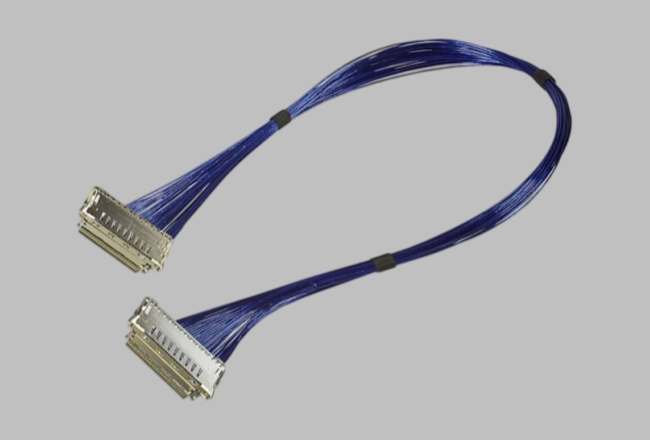
1 Gbps focuses more on basic matching, while 10 Gbps pays more attention to signal integrity.
For 1 Gbps applications, when selecting, it is usually necessary to pay close attention to cable outer diameter, AWG wire gauge, connector type, pin count, length, and basic electrical performance to ensure that the cable can fit the product structure and transmit data stably. However, for 10 Gbps applications, simply meeting the requirements of conduction and connection is far from enough. It is also necessary to focus on characteristics such as characteristic impedance, insertion loss, return loss, crosstalk, and signal jitter. Especially at the termination position of the cable and connector, if there is an impedance突变, it may cause signal reflection, affecting the data recognition at the receiving end. Therefore, the selection of 10 Gbps cables requires more attention to the overall impedance matching between the connector, cable, and PCB.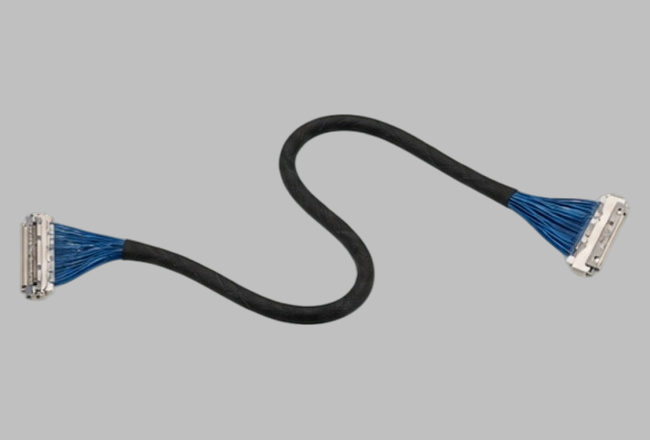
Cable structure and shielding performance need to be re-evaluated according to the rate.
In 1 Gbps applications, the conventional internal cable structures can meet the transmission requirements, but in 10 Gbps applications, the cable conductor size, insulation material, shielding structure, and manufacturing consistency all require more stringent evaluation. The extremely fine coaxial cable bundle, composed of a central conductor, insulation layer, and outer conductor shielding layer, forms an independent signal transmission structure that can balance high-speed signal transmission and electromagnetic interference suppression at a smaller outer diameter, making it suitable for camera module, display devices, laptops, and other high-density electronic equipment internal connections. However, a finer cable does not necessarily mean better transmission performance; it is still necessary to select the appropriate AWG wire gauge and cable structure according to the target rate, transmission length, connector specifications, and actual signal requirements.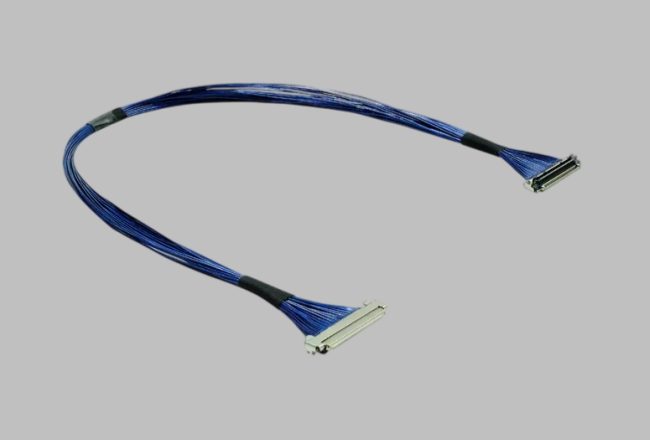
Connectors and processing technology are indispensable aspects that cannot be overlooked in 10 Gbps selection.
Upgrading from 1 Gbps to 10 Gbps cannot ignore connectors and processing technology while only replacing cables. The contact structure of the connector, pin arrangement, grounding design, and termination method will all affect the continuity of high-speed signals. For extremely thin coaxial cable bundles, the welding or crimping quality of the central conductor, the connection of the shielding layer, cable arrangement, and consistency of processing dimensions are also important. If the termination area is not handled reasonably, even if the cable itself has good electrical performance, signal loss or crosstalk issues may occur in actual application. Therefore, high-speed cable assembly components need to be considered as a whole from connector matching, cable structure to termination processing, and corresponding electrical performance verification should be carried out according to project requirements.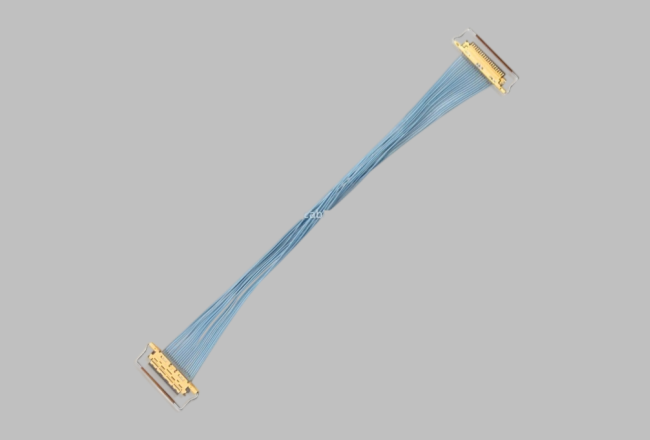
Select an appropriate ultra-fine coaxial cable bundle scheme based on actual transmission requirements.
1 Gbps and 10 Gbps do not have a set of universal cable selection standards. The final solution needs to be determined by combining transmission protocols, signal encoding methods, actual working frequencies, cable lengths, connector types, and product internal space. As a manufacturer and solution provider of ultra-fine coaxial cable assembly components, we mainly focus on cable selection, connector matching, custom processing, and development of compatibility and alternative solutions for high-speed internal connection needs. Whether it is the optimization of existing 1 Gbps connection solutions or the redesign of cable assembly components for 10 Gbps applications, we can analyze wire specifications, length, pin count, wire sequence, and structural requirements based on the customer-provided drawings, connector types, or physical samples. We can work with the project to complete sample development and solution verification, helping customers choose high-speed connection components that are more suitable for actual applications.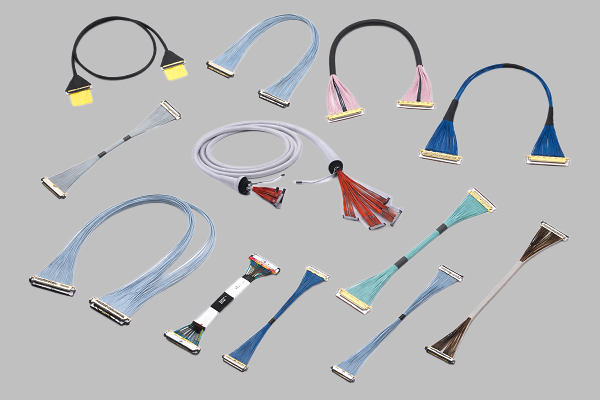
The selection of cables from 1 Gbps to 10 Gbps is not only about the increase in transmission speed, but also about higher requirements for signal integrity, cable structure, connector matching, and processing accuracy. For 1 Gbps applications, it is necessary to ensure basic specification matching, while 10 Gbps applications require greater attention to the electrical performance of the entire connection chain. For high-speed, miniaturized electronic devices, selecting and designing ultra-thin coaxial cable solutions in advance can help reduce connection risks and provide a guarantee for the stable operation of the product.
“Without the consent or authorization of this site, no one shall reproduce, reprint, distribute, cite, change, broadcast or publish the content in whole or in part in any form, nor shall there be any other violation of the copyright of this site.