


Categorization:Product Information
In the internal connections of electronic devices, cables not only undertake the task of signal transmission but also directly affect the overall signal quality of the system. Especially in camera modules, display devices, laptops, and other high-speed electronic products, as the data transmission rate continues to increase, the structure, materials, and electrical performance of the cables become increasingly important. Even if ordinary cables can achieve physical connections, it does not mean that they can meet the requirements of high-speed signal transmission. Simply replacing cables because of their similar appearance, close dimensions, or compatible interfaces can lead to signal attenuation, unstable transmission, and even the failure of devices to operate normally.
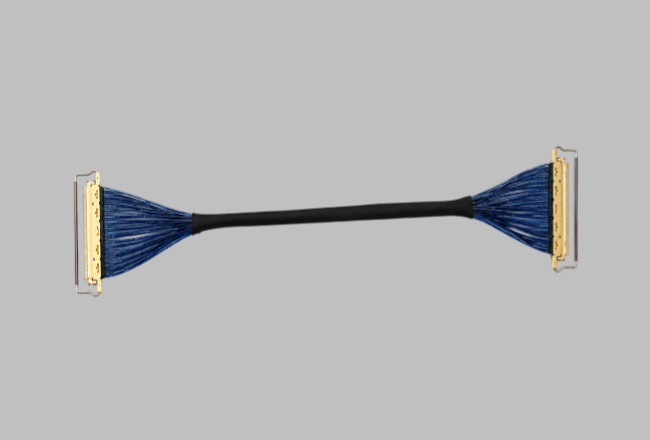
High-speed signal transmission has high requirements for impedance continuity. When the signal passes through cables, connectors, and PCB connection areas, if there are significant impedance differences between different parts, signal reflections may occur, affecting the receiver's accurate identification of the data. In addition, cable length, conductor structure, insulation material, and connector termination method will also affect insertion loss, return loss, and signal transmission quality. Therefore, when replacing cables, one should not only look at the outer diameter and interface but also confirm the impedance requirements and overall electrical performance of the original scheme, to avoid introducing new signal problems due to a seemingly simple replacement operation.
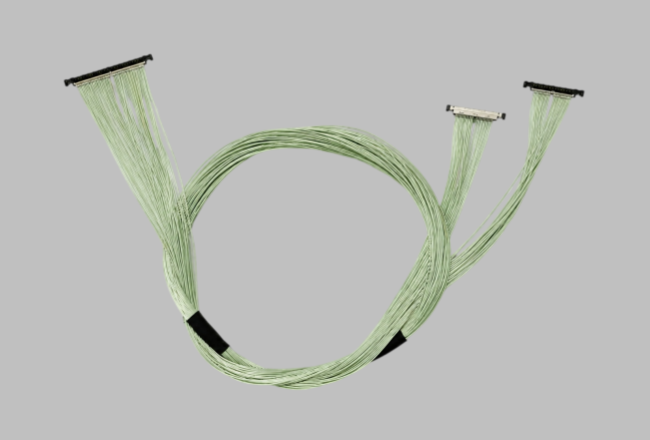
Within high-density electronic devices, multiple signal lines are usually close together, making them susceptible to cross-talk between adjacent signals and external electromagnetic interference. Different cables have varying shielding structures and grounding methods, and even if their external dimensions are similar, their interference resistance may differ. The ultra-fine coaxial cable bundle, composed of a central conductor, insulating layer, outer conductor shielding layer, and outer sheath, can achieve high-speed signal transmission at a smaller outer diameter and provide an independent shielding structure, making it suitable for camera modules, display modules, and other high-speed connection scenarios with limited space. However, in the actual replacement process, attention must still be paid to the continuity of the shielding layer, grounding connections, and the connector termination structure. It cannot be simply assumed that using ultra-fine coaxial cables will always meet all high-speed application requirements.
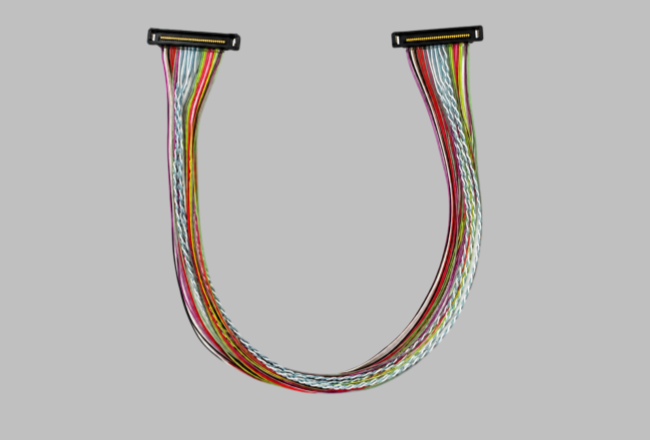
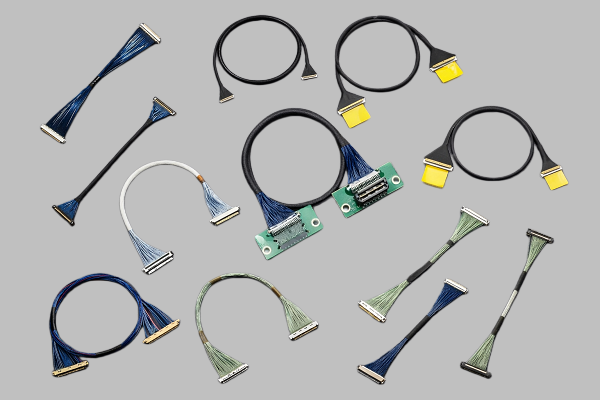
High-speed harness is a component composed of cables, connectors, and termination processes. When replacing a harness, it is not only necessary to confirm the connector model, pin count, spacing, wire sequence, and output direction, but also to check whether the connector supports the target wire specification and the matching situation between the cable and the terminal. Especially for extremely thin coaxial harnesses, the connection between the center conductor and the contact, the handling of the shielding layer, the arrangement of the cable, and the processing accuracy will all affect the final performance. If only similar specification cables are replaced while ignoring the connector termination structure and processing consistency, issues such as impedance discontinuity, signal loss, or reduced connection reliability may still occur. Therefore, when seeking compatible replacements, it is not enough to pursue only the same appearance; it is more important to focus on electrical performance and actual application verification.
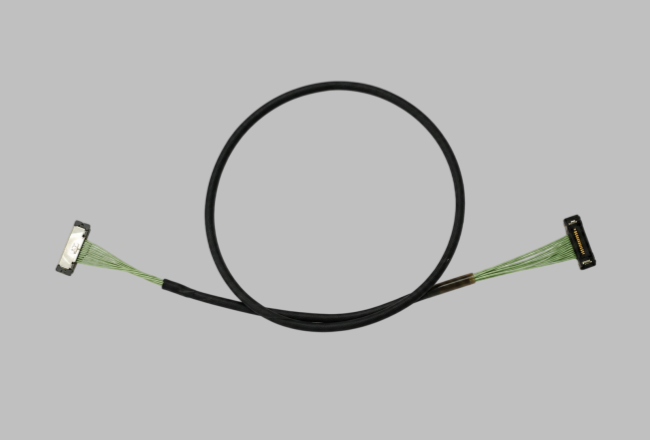
For high-speed internal connection solutions that require replacement or upgrading, it is recommended to first confirm the connector type, cable specifications, AWG wire gauge, length, pin count, wiring sequence, and transmission requirements of the original cables. Then, assess alternative solutions based on product structure and actual application. We specialize in the production, customization, and compatible alternative solutions development of extremely fine coaxial cable assemblies, and can carry out cable selection, connector matching, structural analysis, and component processing according to the original cable model, product drawings, connector specifications, or physical samples provided by the customer. For projects that require domestic alternatives, re-customization, or optimization of the internal connection structure for existing cables, we can also carry out solution evaluation and sample development based on actual needs to help customers meet installation matching while also considering the high-speed signal transmission performance and component reliability.
“Without the consent or authorization of this site, no one shall reproduce, reprint, distribute, cite, change, broadcast or publish the content in whole or in part in any form, nor shall there be any other violation of the copyright of this site.