


Categorization:Product Information
With the continuous increase in data transmission rates of electronic devices, camera modules, display devices, industrial vision systems, and various compact electronic products have higher requirements for internal high-speed interconnection. In the process of product development, connectors are often the focus of engineers and the priority in cost optimization. However, the overall cost of high-speed interconnection systems is not solely determined by the connectors, but also involves multiple aspects such as cables, termination processes, PCB design, assembly processes, testing and verification, and post-maintenance. If cost reduction is achieved only by replacing low-cost connectors, it may lead to issues such as impedance mismatch, increased insertion loss, or crosstalk. Therefore, the cost reduction of high-speed interconnection should not be limited to the connectors themselves, but should be comprehensively evaluated from the entire signal connection chain.
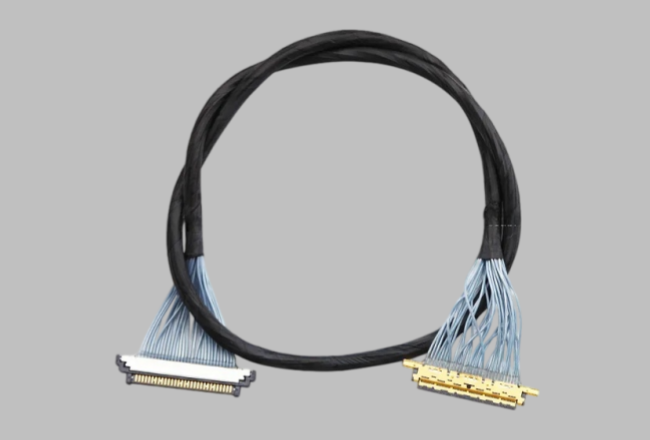
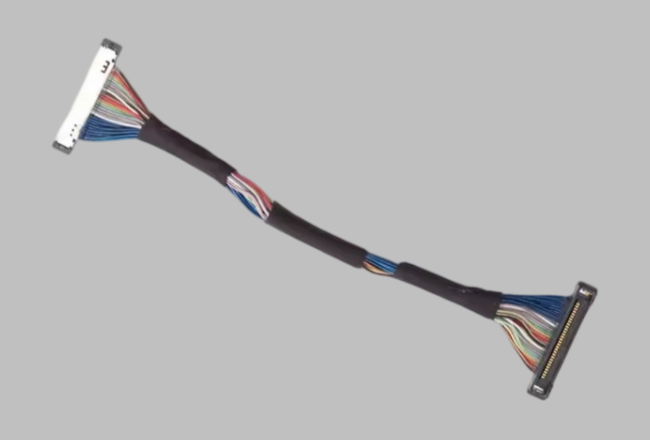
For internal high-speed signal connections, extremely fine coaxial cable bundles not only bear the signal transmission task but also affect the equipment's structural layout, PCB routing, and overall assembly cost. Compared to relying solely on PCB routing for long-distance connections, in appropriate application scenarios, the use of extremely fine coaxial cable bundles can provide more flexible routing for internal wiring and help control the loss of high-speed signal transmission. Especially in multi-channel high-speed signal applications such as camera modules, MIPI interfaces, and display modules, through reasonable design of cable length, AWG wire gauge, shielding structure, and channel configuration, it is possible to meet signal integrity requirements while reducing unnecessary material and structural costs. The complexity of the cable bundle is not the better, the key lies in whether it matches the actual transmission requirements.
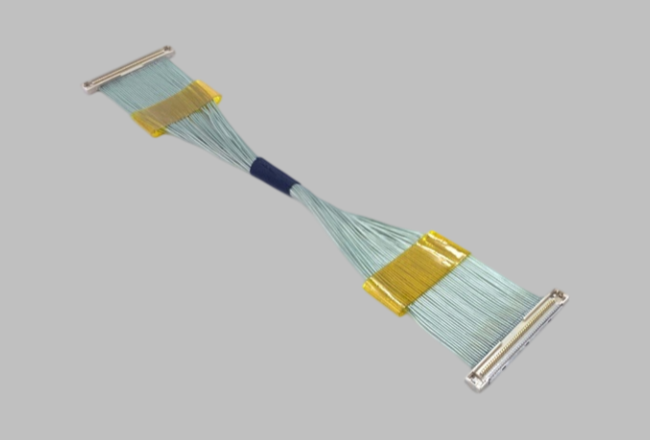
The cost of extremely thin coaxial cable assemblies is not only derived from the wire material and connectors but also closely related to the processing technology, termination methods, and production efficiency. For example, under the premise of meeting electrical performance and mechanical reliability, the cable length can be optimized according to the actual wiring distance to avoid material waste caused by excessive designs; the wire gauge can be reasonably selected based on the number of channels and signal requirements to avoid blindly using higher specification wire materials; the cable arrangement and exit direction can be optimized according to the internal space of the equipment to reduce assembly interference. In addition, connector models, terminal configurations, shielding treatments, and the adaptability of automated processing are also factors worth evaluating. By optimizing the cable structure and production technology, there is an opportunity to improve the overall manufacturing cost without lowering key performance.
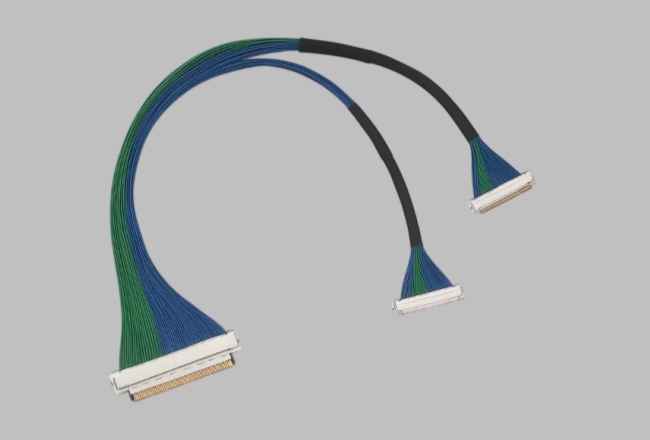
Cost optimization cannot be simply understood as reducing shielding, lowering cable specifications, or replacing with low-cost connectors. For high-speed digital signals, impedance continuity, insertion loss, return loss, crosstalk, and inter-channel timing differences may all affect the final transmission effect. Therefore, when adjusting the ultra-fine coaxial cable bundle scheme, it is necessary to evaluate based on the actual signal rate, transmission protocol, cable length, and installation environment, and verify the optimization effect through appropriate simulation, TDR, VNA, or system eye diagram tests. Particular attention should be paid to the termination matching between connectors and cables, as well as the signal transition at the cable bundle and PCB interface. Only by ensuring that the entire transmission channel meets the design requirements does the cost reduction plan have practical value.
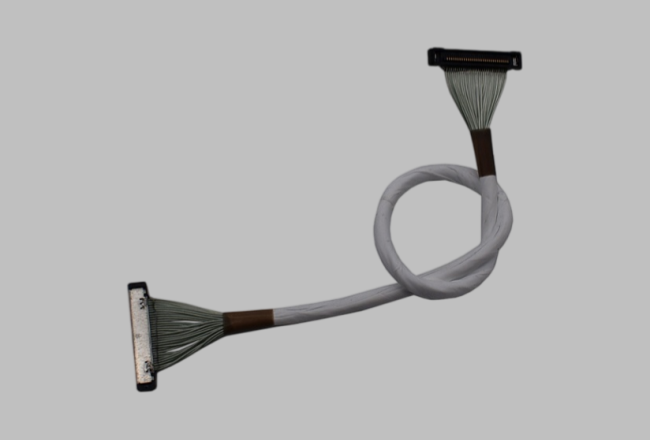
“Without the consent or authorization of this site, no one shall reproduce, reprint, distribute, cite, change, broadcast or publish the content in whole or in part in any form, nor shall there be any other violation of the copyright of this site.