


Categorization:Harness Component

Part 1: Challenges in the Transmission of High-Speed Signals for DisplayPort (DP)
DP adopts a differential transmission structure, relying on paired signal lines for high-frequency data transmission. As the rate increases to several GHz and even higher frequency bands, even minor changes such as line length, impedance deviation, and bending radius of the wire material can cause serious signal degradation, triggering issues such as screen flickering, screen distortion, and training failure. Traditional FPC or twisted pair cables have excessive losses in high-frequency environments, making it difficult to meet the latest DP2.0/2.1 high-speed standards. Therefore, a more stable and accurate transmission medium has become an inevitable demand.
Why ultra-fine coaxial cables are more suitable for high-speed DP transmission
The ultra-fine coaxial cable is composed of a central conductor, insulation layer, independent shielding layer, and outer sheath. Its core advantage lies in the fact that each channel has separate shielding, resulting in extremely low crosstalk and significantly better signal integrity compared to other cable structures. The wire diameter is typically between 0.3mm and 0.5mm, making it easy to pass through compact structures such as laptops and tablets, while also enabling strict differential impedance control (usually 100Ω ±10%), which is highly suitable for DP differential signal consistency requirements. This structure enables it to maintain cleaner eye diagrams, lower losses, and stronger anti-interference performance during high-speed transmission.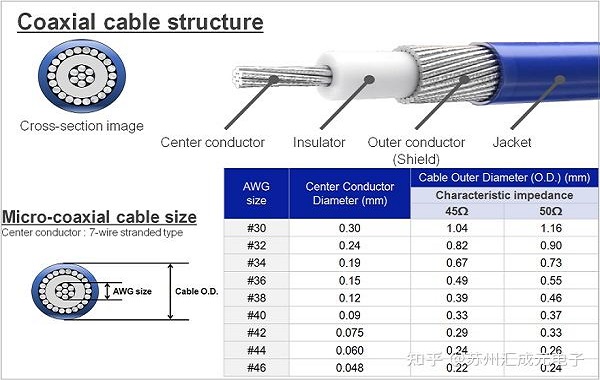
Three, the ultra-fine coaxial cable's support capability for DisplayPort 2.1
DP2.1's speed reaches up to 80Gbps, which puts higher requirements on the cable. High-quality micro coaxial cables can already stably support DP2.0/2.1, the key lies in the improvement of materials and processes, including:
Conductor material optimization: choose silver-plated copper or high-purity copper to reduce high-frequency loss.Medium material upgrade: Low dielectric materials such as FEP, PTFE can reduce delay and frequency loss.
3. Shielding structure reinforcement: Double-layer (aluminum foil + woven) shielding can achieve nearly 90dB of suppression performance.
High-speed eye diagram stability is ensured by strictly consistent wire diameter and impedance control.
Currently, high-end monitors, Thunderbolt expansion docks, industrial AI camera modules, and other products have all widely adopted the micro coax solution to meet the requirements of DP2.1 for high speed and stability.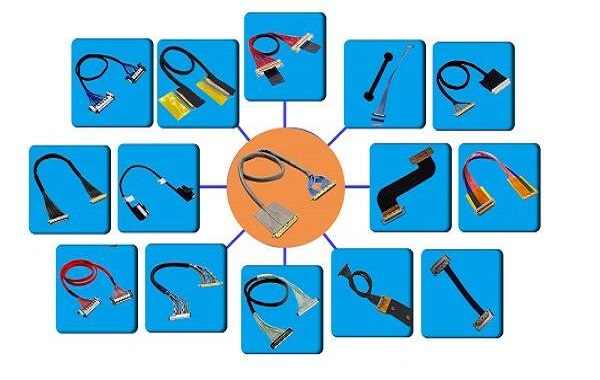
“Without the consent or authorization of this site, no one shall reproduce, reprint, distribute, cite, change, broadcast or publish the content in whole or in part in any form, nor shall there be any other violation of the copyright of this site.