


Categorization:Harness Component
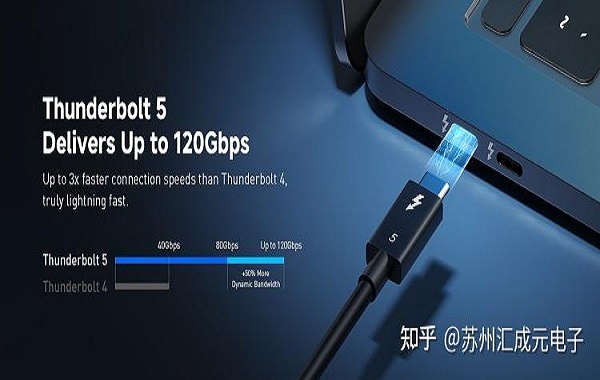
Why high-speed interfaces need to shift from traditional cables to ultra-fine coaxial cables
With the evolution of interfaces such as USB, HDMI, and others towards higher speeds, traditional twisted pair or ribbon cables are difficult to meet the integrity requirements of tens of Gbps-level signals. As the speed increases, impedance fluctuations, crosstalk, insertion loss, and EMI can all lead to signal distortion and communication failure. Thunderbolt 3/4/5's differential high-speed signals are extremely sensitive to the transmission medium, so it is necessary to use extremely thin coaxial cables with symmetrical structure, perfect shielding, and controllable impedance to ensure clear eye diagrams and stable delay during high-speed transmission.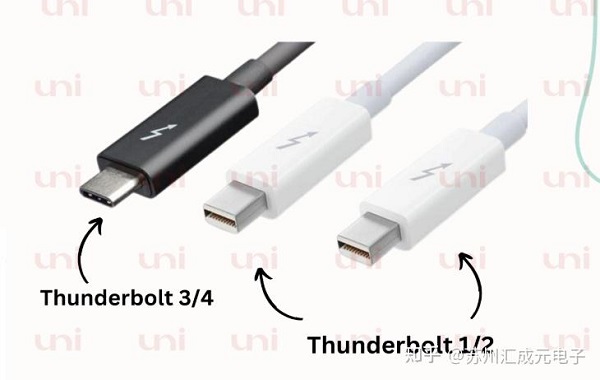
The structural advantages and transmission characteristics of ultra-fine coaxial lines
Extremely thin coaxial cables can be understood as miniature versions of RF structures, consisting of multiple layers including a central conductor, insulating layer, metal shielding, and sheath. Their key advantages include:
Strong shielding capability: Multi-layer metal shielding effectively inhibits external interference and signal leakage.Impedance consistency: Strict geometric structure control allows it to easily maintain 50 Ω or 100 Ω standard impedance.
Extremely low skew deviation: The natural symmetrical structure makes the skew of the differential signal extremely small, ensuring timing consistency.
Small in volume and high in flexibility: Can flexibly route even in compact structures such as laptops and tablets.
A lightning cable usually contains dozens of parallel independent coaxial cores, each bearing the stable transmission task of a high-speed data channel.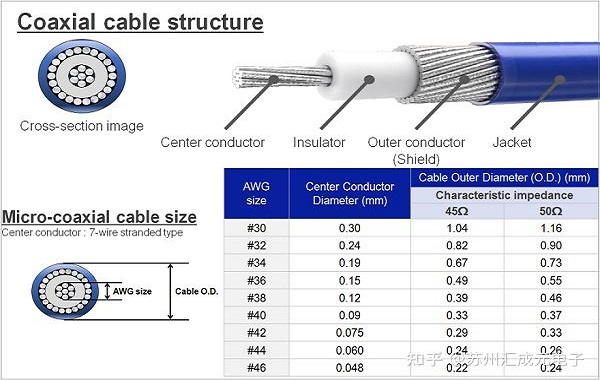
The core reason why Thunderbolt must use a very thin coaxial cable
Meet the ultra-high-speed signal integrity requirements:Thunderbolt's dozens of Gbps speed requires extremely low insertion loss, excellent impedance control, and minimum crosstalk. The coaxial structure has a natural advantage in these indicators.
Support multi-functional mixed transmission:The lightning cable carries data, video, and power supply, with multiple signals transmitted in parallel in a compact space, which must rely on coaxial independent shielding to ensure they do not interfere with each other.
Follow the trend of slim and light devicesExtremely thin wire diameter and flexibility make it the best choice for internal wiring in notebooks, tablets, and other devices.
Future-oriented applications for higher bandwidth:
“Without the consent or authorization of this site, no one shall reproduce, reprint, distribute, cite, change, broadcast or publish the content in whole or in part in any form, nor shall there be any other violation of the copyright of this site.