


Categorization:Harness Component
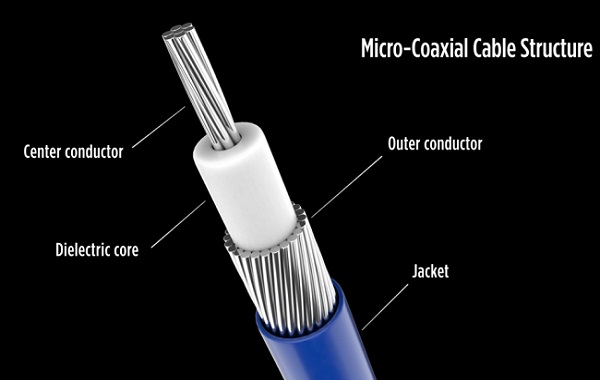
Structural characteristics: Born for high speed
Extremely thin coaxial cables are composed of an inner conductor, a dielectric layer, a shielding layer, and an outer sheath. The wire diameter is typically less than 0.4 mm, and some are even finer, down to 0.2 mm. This precise design enables excellent performance in high-speed transmission. Precise control of the conductor and dielectric dimensions ensures strict characteristic impedance, reducing signal reflection and waveform distortion. The shielding layer provides good anti-interference capability, effectively suppressing external EMI interference and crosstalk, ensuring signal stability. At the same time, the excellent flexibility of the extremely thin wire materials allows for free wiring in confined spaces, making them suitable for high-speed interconnections within modules or between multi-boards. These features make extremely thin coaxial cables the natural choice for high-speed short-distance transmission.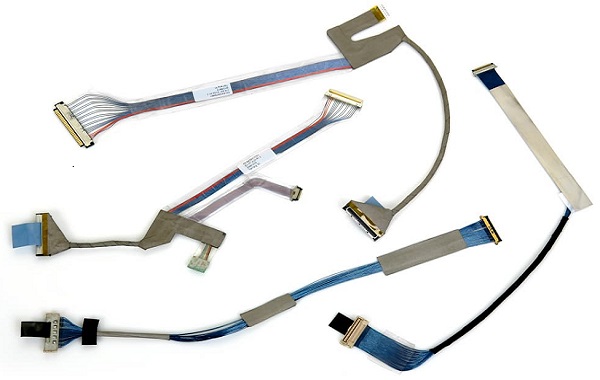
Transmission performance: High-speed advantage is obvious, limited by long distance
From the perspective of signal transmission, extremely thin coaxial cables perform exceptionally well in high-speed applications, but they have physical limitations over long distances. They can support high-speed signals ranging from several Gbps to tens of Gbps, maintaining stable insertion loss and return loss within a range of tens of centimeters to one meter, with clear eye diagrams and low bit error rates. However, due to the small cross-sectional area of the conductor and higher resistance, the signal will experience significant attenuation over long-distance transmission. The effects of dielectric loss and group delay will also increase with the length of the cable, and the impact of environmental electromagnetic interference will be enhanced as well. Therefore, for transmission distances of several meters or more, extremely thin coaxial cables are usually not the best choice, and low-loss thick coaxial cables or fiber optic solutions should be considered.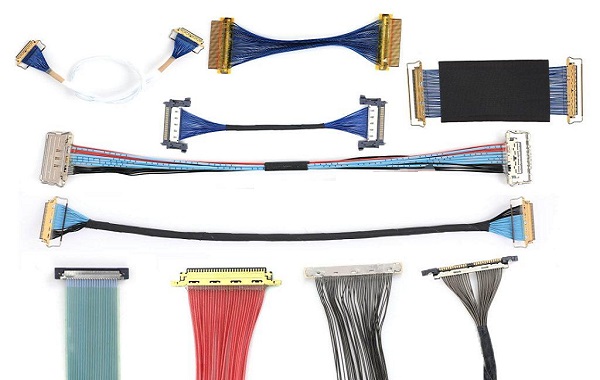
Design Practice: Extending Effective Transmission Distance
Although the ultra-fine coaxial cable was originally designed for short-distance high-speed transmission, it can still extend the effective transmission distance through reasonable design. Using high-conductivity conductors and low-dielectric loss materials can reduce signal attenuation, while optimizing the shielding structure, adopting double-layer braided or copper foil composite shielding can enhance the anti-interference capability. Maintaining impedance continuity at connectors, solder joints, and transition boards helps to avoid local reflections and waveform distortion. For high-speed long chains, signal amplification or retiming modules can also be added for compensation. At the same time, comply with the cable bending radius and installation specifications to avoid impedance突变, thus maintaining good signal integrity within one to two meters.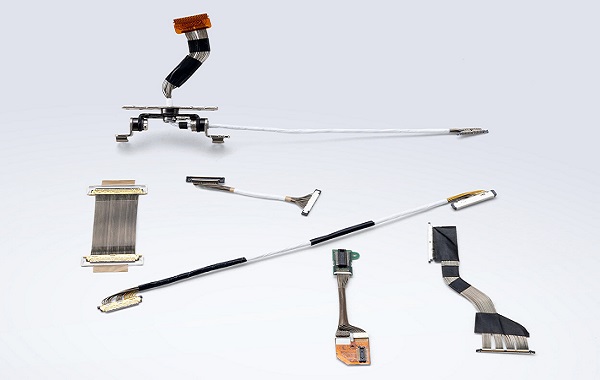
“Without the consent or authorization of this site, no one shall reproduce, reprint, distribute, cite, change, broadcast or publish the content in whole or in part in any form, nor shall there be any other violation of the copyright of this site.