


Categorization:Harness Component
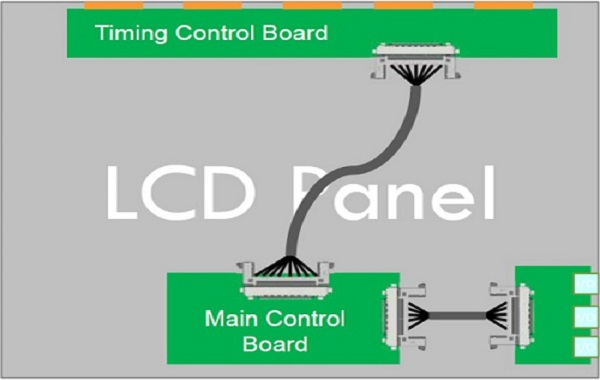
Common Signal Line Types
The connection scheme between the main control board and sub-boards mainly includes FPC ribbon cables, flat ribbon cables (FFC), and ultra-thin coaxial cables. FPC ribbon cables are thin and flexible, but have limitations in terms of high-speed signal and shielding performance. FFC is cost-effective and suitable for low-speed control signal transmission, but has insufficient anti-interference ability. In comparison, ultra-thin coaxial cables have a diameter of less than 0.5 millimeters and have a complete shielding structure, which can effectively support the transmission of high-speed differential signals such as MIPI, USB, and HDMI. They can meet the comprehensive requirements of high bandwidth, high stability, and small space wiring.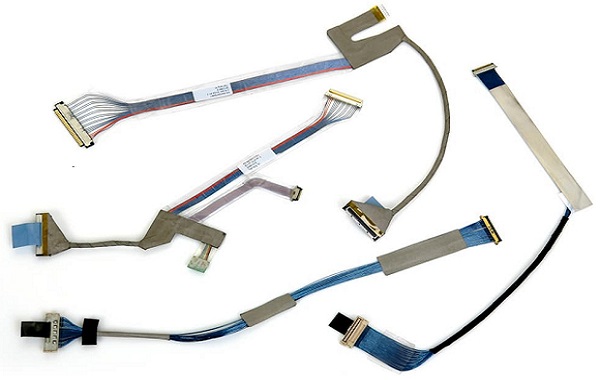
Advantages of ultra-fine coaxial cable束
Extremely thin coaxial cables perform outstandingly in high-speed signal applications. They can support high-frequency signal transmission while maintaining good signal integrity; the coaxial structure comes with a built-in shielding layer, which can effectively isolate electromagnetic interference; at the same time, the cable material is thin, light, and flexible, making it suitable for use in environments with limited space and frequent bending. Their applications cover camera module, display module, and main control chip testing scenarios, ensuring the stability of high-speed interfaces and high-resolution transmission.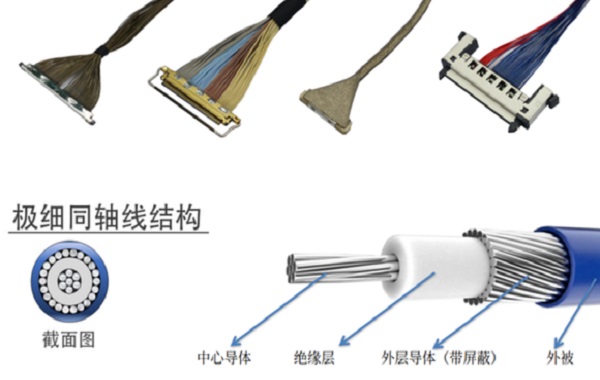
Case Studies in Practice
Between the laptop motherboard and the LCD screen T-CON module, traditional FPC ribbon cables often experience signal attenuation during high-resolution transmission, while extremely thin coaxial cables can ensure stable transmission of high-speed LVDS or EDP signals. In industrial control equipment, extremely thin coaxial cables are increasingly used between the main control board and the sub-board to ensure the reliability of data communication. In scenarios of low-speed control signal transmission, FPC and FFC still have a cost advantage, but for high-speed differential signals, anti-interference requirements, or space-saving designs, extremely thin coaxial cables are a more worthwhile choice.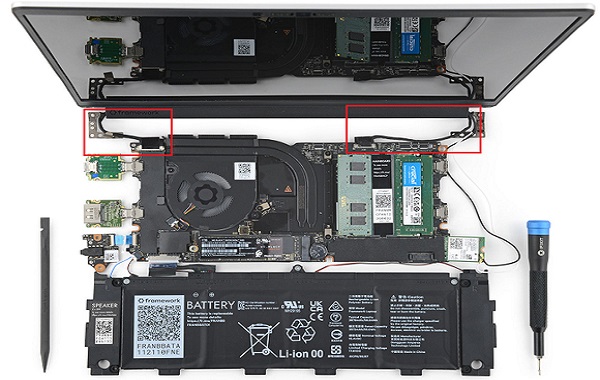
“Without the consent or authorization of this site, no one shall reproduce, reprint, distribute, cite, change, broadcast or publish the content in whole or in part in any form, nor shall there be any other violation of the copyright of this site.