


Categorization:Harness Component
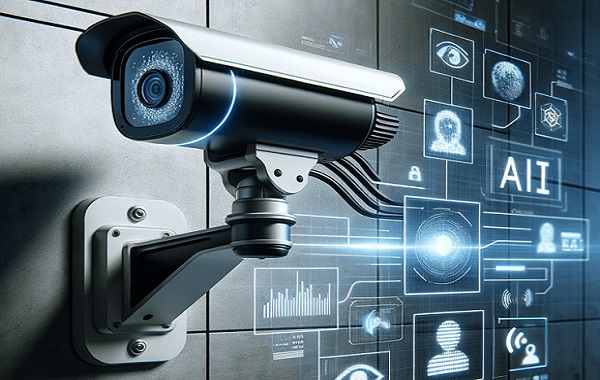
Why is it necessary to use extremely fine coaxial cable bundles?
AI camera modules commonly use MIPI CSI-2 interfaces, with data rates reaching several Gbps, requiring extremely high signal integrity and anti-interference capabilities. In environments where there is a certain distance between the module and the mainboard or strong electromagnetic interference, traditional flat cables tend to experience signal attenuation, crosstalk, and eye diagram closure issues. In addition, the compact space, weight sensitivity, and frequent bending of the application scenarios make it difficult for traditional cables to balance high speed, stability, and flexibility. Therefore, in high-performance AI modules, extremely thin coaxial cables have become an inevitable choice.
The core advantages of ultra-fine coaxial beam束
Extremely thin coaxial cables consist of a central conductor, an insulating medium, and an outer shielding layer, which can effectively isolate electromagnetic interference and maintain signal purity. The coaxial structure is naturally suitable for precise impedance control, meeting the matching requirements of high-speed MIPI signals. In short to medium distance transmission, signal attenuation is low and error rate is low. At the same time, the diameter can be made to sub-millimeter level, lightweight, suitable for module miniaturization design, and still maintain stable performance in dynamic usage scenarios with frequent bending. It is precisely because of these advantages that extremely thin coaxial cables are increasingly widely used in AI camera module.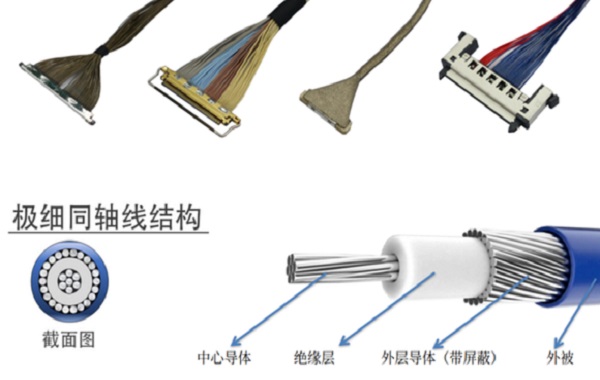
Three, design essentials and application ideas
To fully utilize the advantages of ultra-fine coaxial cables, it is necessary to ensure the impedance continuity between the cables and the PCB to avoid signal reflection and distortion, and at the same time, choose specialized miniature connectors to balance electrical performance and mechanical strength. In high-speed attenuation scenarios, signal optimization can be achieved through equalizers or driver compensation, while it is also essential to ensure continuous grounding of the shielding layer to prevent common-mode interference. After the design is completed, reliability needs to be verified through environmental tests such as bending, vibration, and temperature to ensure that the cables remain stable during long-term operation. Through these design measures, ultra-fine coaxial cables can become a reliable high-speed channel between AI camera modules and the mainboard.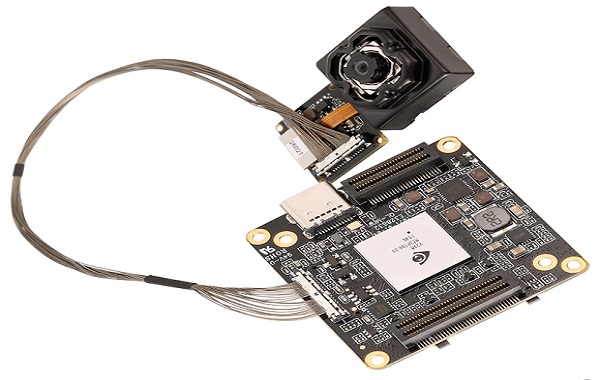
“Without the consent or authorization of this site, no one shall reproduce, reprint, distribute, cite, change, broadcast or publish the content in whole or in part in any form, nor shall there be any other violation of the copyright of this site.