


Categorization:Harness Component
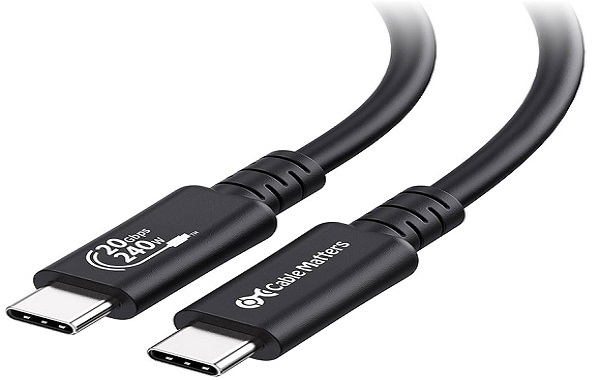
The necessity of transmission rate and miniature coaxial cables
USB4 and Thunderbolt 5 interfaces have bandwidths of up to 40Gbps or 80Gbps, which is difficult for ordinary multi-strand twisted wires to maintain such high speeds over long distances. If a cable claims to support full-speed USB4 or Thunderbolt protocols, its key differential pairs are likely to use extremely thin coaxial cables to effectively reduce crosstalk and signal attenuation, thereby ensuring high-speed stable transmission.
Diameter, flexibility and hand feel
High-speed cables with extremely fine coaxial cores usually have an outer diameter slightly larger than that of ordinary USB cables, but they are more flexible. The shielding layer and dielectric material of the micro coaxial cable are highly consistent, making the cable feel smooth when bending and allowing for more flexible cabling. Compared to multi-strand twisted wires, the micro coaxial cable performs more stably and reliably in small spaces and high-density cabling.
Section 3: Interface Function and Internal Structure Characteristics
Cables supporting the complete Thunderbolt protocol can achieve the three-in-one function of data, video, and power supply, and this multi-signal mixed transmission is an advantageous application scenario of extremely thin coaxial cables. Disassembling the cable reveals that the USB4/Thunderbolt cable set with micro coaxial cable contains numerous independent insulated micro coaxial cables wrapped in shielding layers, with diameters generally around 0.3~0.5mm, arranged closely to ensure high bandwidth and stability.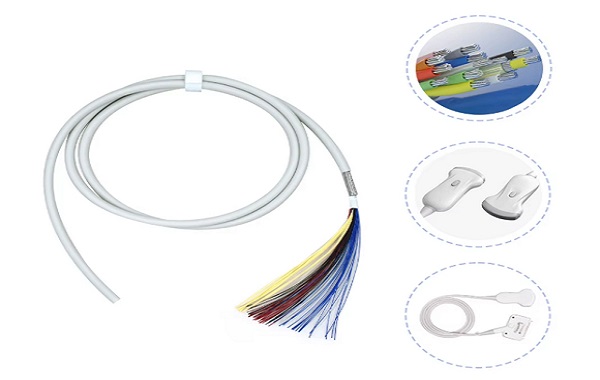
“Without the consent or authorization of this site, no one shall reproduce, reprint, distribute, cite, change, broadcast or publish the content in whole or in part in any form, nor shall there be any other violation of the copyright of this site.