


Categorization:Harness Component
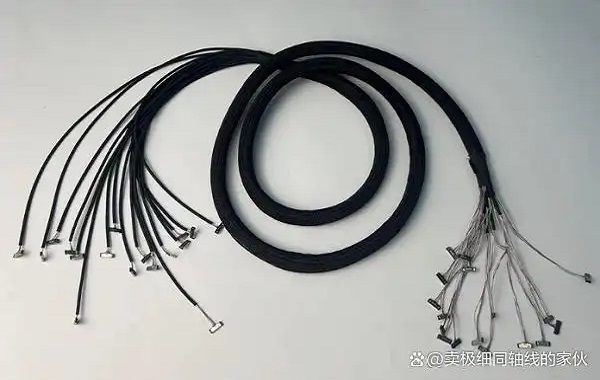
Strong anti-interference ability, ensuring stable signal
Robot joints usually contain motors, power supplies, and multiple sensor signal lines simultaneously, leading to complex electromagnetic interference. The extremely thin coaxial cable bundles use a shielding design, which can effectively suppress external electromagnetic noise and ensure the accuracy and stability of sensor data. This is crucial for achieving high-precision motion control in robots, ensuring that each movement command is executed precisely.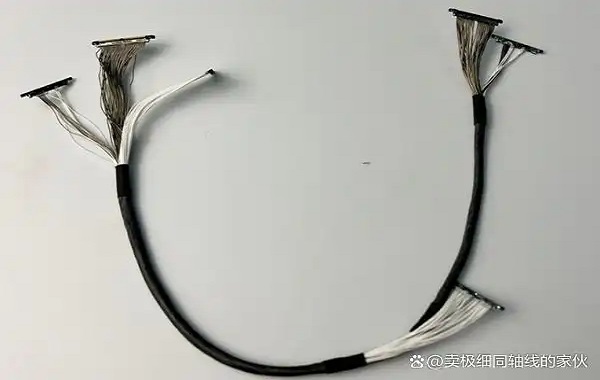
High-speed transmission, meeting real-time control requirements
Modern robots have extremely high requirements for the real-time nature of signals, such as visual recognition and force control feedback, which typically need to be completed within milliseconds for data exchange. Extremely thin coaxial cable bundles, with their coaxial symmetrical structure and low impedance characteristics, achieve low-latency transmission of high-speed differential signals within limited spaces, providing robots with reliable and real-time data support, ensuring the timeliness and accuracy of motion response.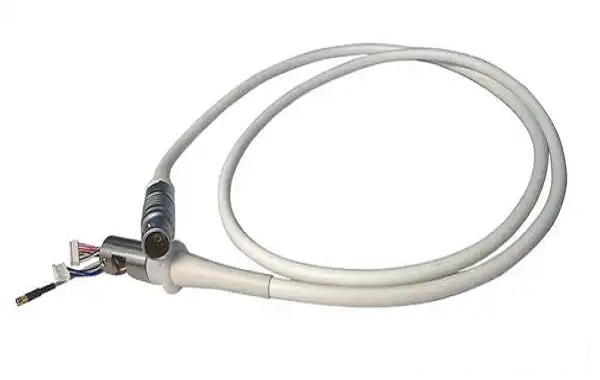
Flexible and bendable, adapting to the dynamic movement of joints
Robot joint will frequently bend, twist, and rotate during operation, which puts high requirements on the flexibility and durability of the cables. Extremely thin coaxial cable bundles have small diameters and good flexibility, allowing for flexible wiring in narrow cavities and withstanding long-term dynamic bending, thereby extending the overall lifespan of the robot. At the same time, the miniaturized characteristics meet the trend of robot lightweighting and compact design, balancing performance and spatial layout.
“Without the consent or authorization of this site, no one shall reproduce, reprint, distribute, cite, change, broadcast or publish the content in whole or in part in any form, nor shall there be any other violation of the copyright of this site.