


Categorization:Harness Component
Next and FEXT: Key Interference Sources in High-Speed Interconnects
NEXT (Near-End Cross Talk) refers to interference generated near the transmitting end due to electromagnetic coupling between adjacent cables; FEXT (Far-End Cross Talk) is the interference formed at the receiving end after the signal propagates to the far end and couples into adjacent lines. As data rates increase to several Gbps and even higher, both types of crosstalk will significantly degrade the eye diagram and increase the error rate, making them critical issues that must be controlled in high-speed cable design.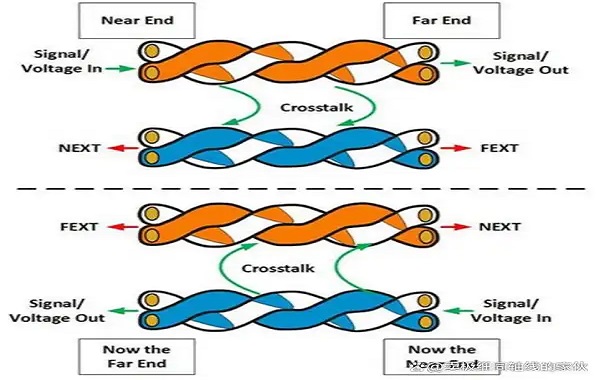
The structural advantages of ultra-fine coaxial lines
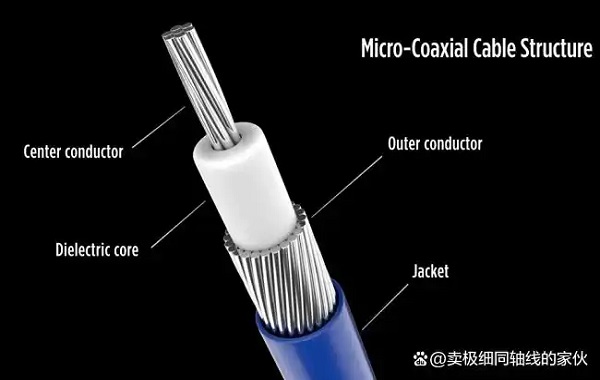
The extremely thin coaxial cable is composed of an inner conductor, an insulating layer, a shielding layer, and an outer sheath. Its coaxial structure strictly confines the signal electric field and magnetic field between the inner and outer conductors, making it neither easy to leak outward nor susceptible to external interference. Each signal line has independent shielding, which is equivalent to providing a natural electromagnetic isolation environment for high-speed signals, and this is the structural basis for its interference suppression.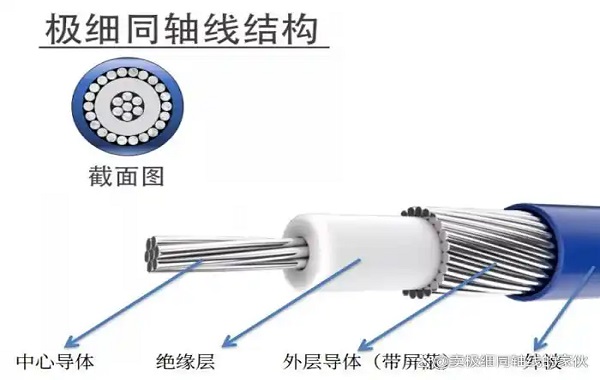
Why can it effectively suppress NEXT and FEXT
Extremely thin coaxial cables reduce crosstalk through multiple mechanisms: the independent shielding layer significantly weakens electromagnetic coupling between lines, greatly reducing NEXT; the closely matched signal and return paths concentrate the magnetic field within the coaxial cable, effectively suppressing FEXT; precise impedance control reduces reflections and standing waves, avoiding additional interference sources; at the same time, the physical isolation structure of each line effectively increases the distance between lines, reducing the risk of coupling from a geometric perspective. In engineering applications, as long as shielding grounding, cable layout, interface transition, and manufacturing accuracy are reasonably handled, these advantages can be fully released.
“Without the consent or authorization of this site, no one shall reproduce, reprint, distribute, cite, change, broadcast or publish the content in whole or in part in any form, nor shall there be any other violation of the copyright of this site.