


Categorization:Harness Component
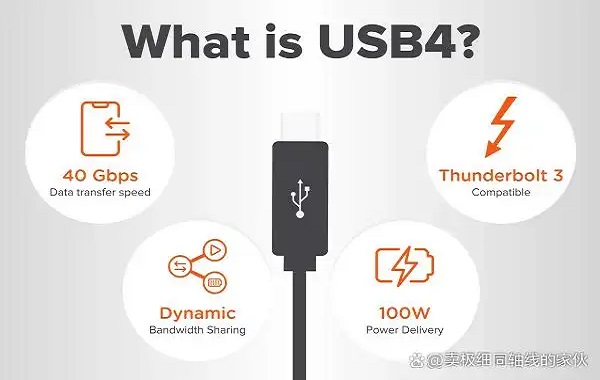
High-speed transmission brings signal challenges
USB4 requires simultaneous transmission of video, data, and power signals, with high transmission speed and wide bandwidth. Any slight signal attenuation, reflection, or interference can lead to data errors. In traditional ribbon cables or twisted wire structures, the spacing between wire cores is unstable and the impedance fluctuates greatly, which is prone to crosstalk and signal distortion. As the signal frequency reaches tens of GHz, the internal structure of the cable must have extremely high geometric consistency and electrical stability, which is why ordinary cables are unable to meet this requirement. This is also the fundamental reason why extremely thin coaxial cables must be used in the USB4 system.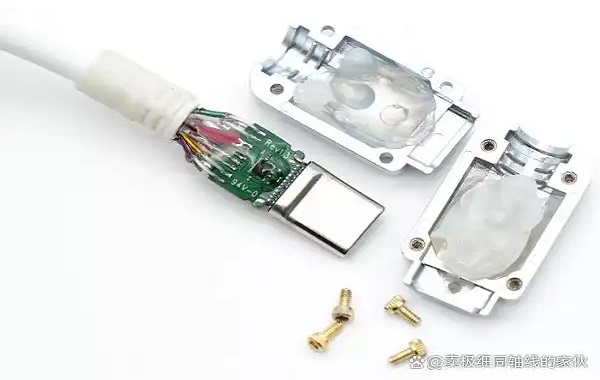
The structural advantages of ultra-fine coaxial lines
Extremely thin coaxial cables are composed of a central conductor, an insulating layer, a shielding layer, and an outer sheath. The outer diameter is typically only 0.3~0.5mm, allowing for high-density wiring. Their structure ensures that the geometric center of the conductor and the shielding layer are aligned, ensuring constant impedance and stabilizing the signal waveform. At the same time, the outer metal shielding effectively resists external electromagnetic interference and prevents signal radiation. In high-frequency transmission environments, extremely thin coaxial cables can significantly reduce signal attenuation while maintaining signal integrity. Their flexibility and bend resistance characteristics are suitable for internal narrow spaces in laptops, docking stations, and mobile devices, ensuring stable performance during bending or winding. In addition, extremely thin coaxial cables support precise automated stripping, welding, and testing processes, guaranteeing high consistency in mass production and meeting the official certification requirements of USB4 and strict manufacturing process standards.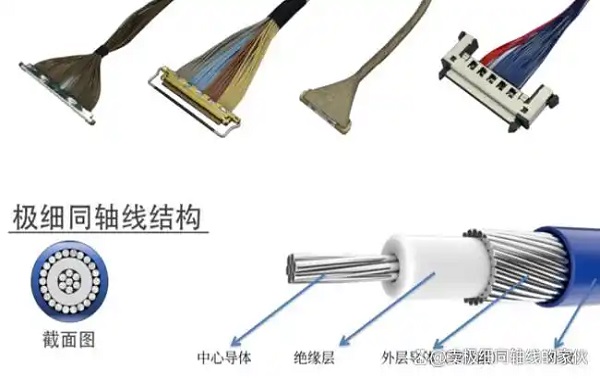
III. Key Applications of USB4
In the USB4 system, the ultra-fine coaxial cable undertakes the core task of high-speed signal transmission. It can maintain signal integrity and stability in complex electromagnetic environments, ensuring that high-speed transmission is not disturbed. Its thin and flexible design adapts to the bending requirements of laptop hinges, docks, and internal spaces of mobile devices, while also ensuring constant impedance and low signal attenuation, allowing long-distance transmission to still maintain high bandwidth and high speed. The ultra-fine coaxial cable supports precision manufacturing processes, ensuring the consistency of each cable in mass production and fully meeting the USB4 high standard certification requirements. With the popularization of future USB5, 8K video transmission, and AI terminal devices, the demand for high-frequency signal cables will continue to increase, and the application prospects of ultra-fine coaxial cables will also be more extensive.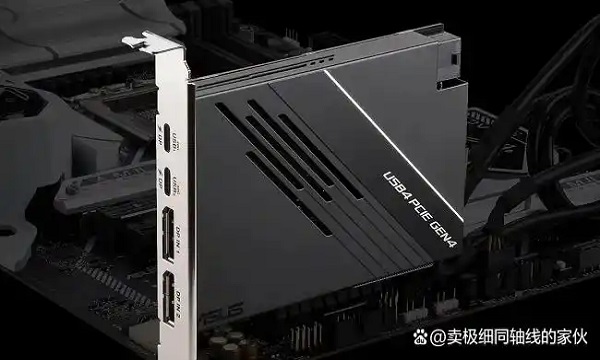
“Without the consent or authorization of this site, no one shall reproduce, reprint, distribute, cite, change, broadcast or publish the content in whole or in part in any form, nor shall there be any other violation of the copyright of this site.