


Categorization:Harness Component
For laptops, AI terminals, high-performance display devices, industrial vision equipment, and high-speed computing equipment, the internal interconnection space is becoming increasingly limited. At the same time, high-speed interfaces such as USB4, Thunderbolt, DisplayPort, and eDP are continuously raising the requirements for signal integrity. Traditional wiring solutions are facing more challenges in terms of space, high-frequency transmission, and anti-interference. The I-PEX CABLINE®-UM series is an ultra-thin coaxial cable connection solution specifically designed for such high-density, high-speed internal interconnection needs. The product model introduced in this article is I-PEX 82675-100B-01-D, which belongs to the CABLINE®-UM 30Pin, 40AWG Micro-Coaxial Cable ultra-thin coaxial cable assembly, with a cable length of 200MM, and uses a 1-1 Pin Assignment structure. The connector model used with the cable end is 20878-030T-01. This series of connectors adopts a 0.4mm ultra-fine pitch, vertical right-angle out-of-line structure, with a height of about 2.2±0.15mm, and has ZenShield® full EMI shielding and mechanical locking design features, enabling high-density, high-reliability high-speed signal connections in limited device internal spaces.
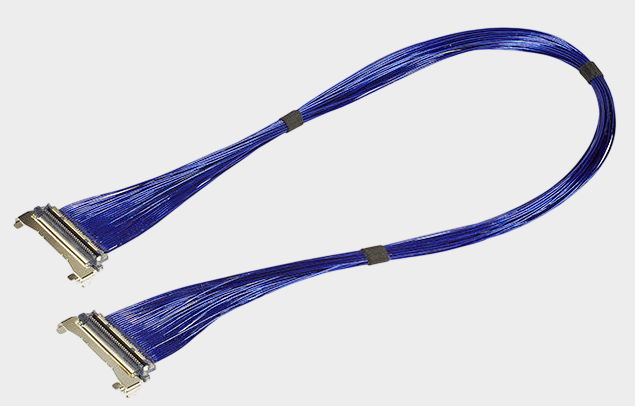
In the design of extremely thin coaxial cable bundles, the insulating material is not merely a simple "wrapper for the conductor," but directly participates in determining the cable's electrical performance, mechanical properties, and long-term reliability. Particularly in high-speed signal transmission environments, the dielectric properties, dielectric constant stability, loss characteristics, thickness consistency, and temperature resistance of the insulating layer will affect the characteristic impedance, signal attenuation, crosstalk, and signal integrity of the ultra-thin coaxial cable. For engineers, even if the outer diameter of the wire material is close to the original design, if there are significant differences in the insulating material system, insulating thickness, or structure control, it may cause changes in high-speed signal performance. Therefore, when developing compatible alternative cable assemblies similar to I-PEX 82675-100B-01-D, the "conductor-insulating layer-shielding layer-external structure" should be evaluated as a whole. It should be particularly noted that the CABLINE®-UM information you provided focuses on the AWG specification, connector structure, and high-speed transmission capability, but does not explicitly disclose the specific insulating material used in the original 82675-100B-01-D wire material. Therefore, it is not appropriate to directly identify the original product as using a specific type of plastic based solely on the model information; actual development of alternatives should select an appropriate insulating material system based on the requirements for target impedance, high-frequency loss, temperature resistance, flexibility, outer diameter, and reliability.
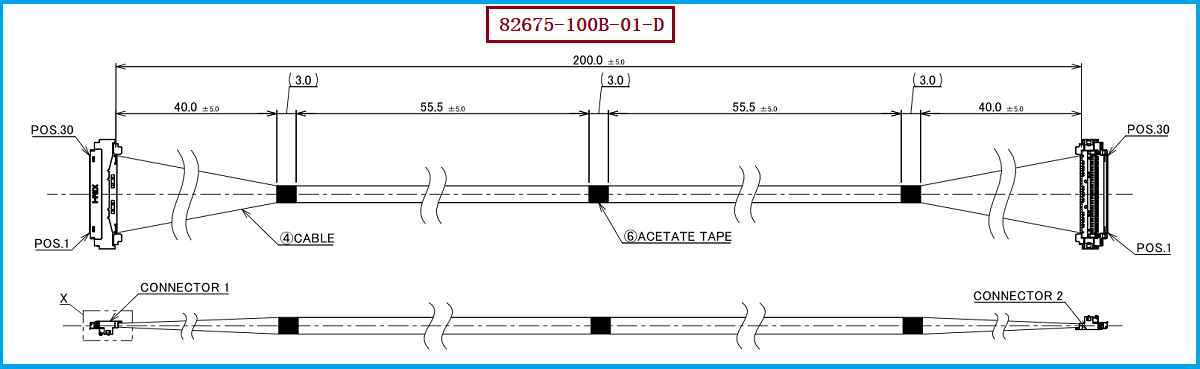
For engineers, the compatibility and alternative of I-PEX 82675-100B-01-D cannot be solely judged by "30Pin, 200MM, connector can be inserted." This product uses extremely thin AWG40 coaxial cable, while the CABLINE®-UM platform supports various Micro-Coax specifications such as AWG36, AWG38, AWG40, AWG42, and AWG44. Among them, AWG40 corresponds to the rated current reference value of 0.3A/contact; at the same time, the CABLINE®-UM platform is aimed at the highest 40Gbps/lane PAM3 high-speed transmission and adopts ZenShield® full shielding and multi-point grounding design. Therefore, from the perspectives of procurement and engineering verification, the alternative cable harness should focus on confirming the 30Pin definition, 200MM length, AWG40 specification, 1-1 connection relationship, connector interface match, as well as impedance, attenuation, crosstalk, shielding continuity, and high-frequency signal integrity indicators. Especially when the cable harness is applied to high-speed display, industrial vision, or high-speed data equipment, the structural match of the cable end connector 20878-030T-01, the terminal crimping/connection quality, and the reliable connection between the shielding layer and the connector should be included in the sample verification and mass production quality control.
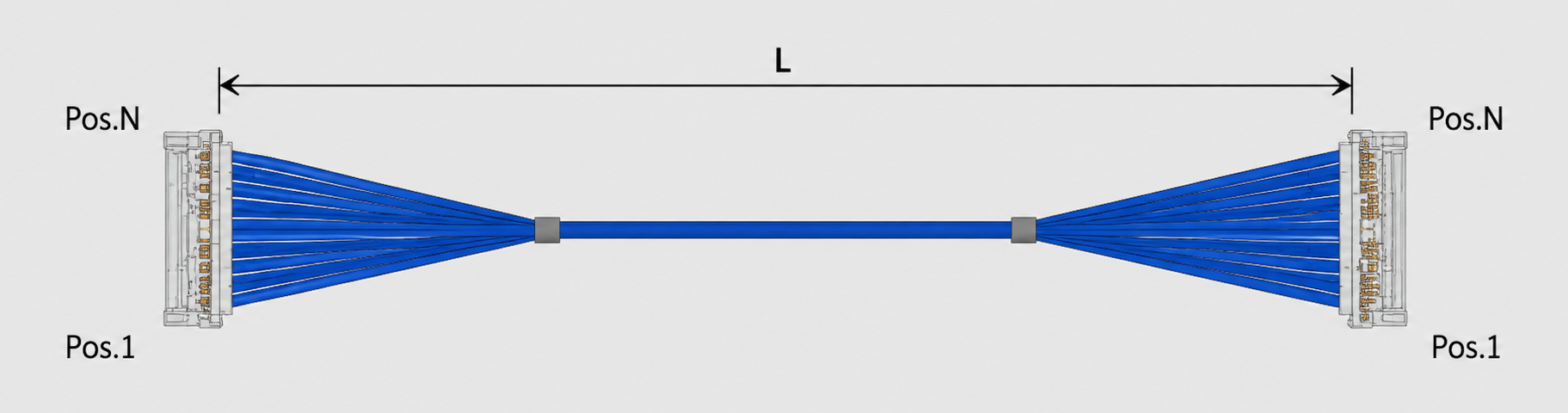
If procurement personnel are looking for a domestic, second supplier, or compatible alternative solution for I-PEX 82675-100B-01-D, it is recommended to first confirm the complete details such as "connector model + pin count + wire gauge + length + pin assignment + electrical performance + mechanical dimensions", rather than replacing it based solely on the product name. The key target parameters of this solution can be focused on 30Pin, AWG40 fine coaxial cable, 200MM, 1-1 structure, and 20878-030T-01 cable end connector, while further verifying the impedance and signal integrity based on the actual working frequency and interface protocol of the terminal equipment. For insulation materials, it is recommended to choose suitable materials and structures according to the equipment temperature, bend requirements, wire outer diameter, and high-speed transmission performance, and confirm the electrical and mechanical compatibility between the alternative product and the original design through actual testing. For customers who need to reduce procurement costs, enhance the autonomy and controllability of the supply chain, or need to find a second supplier due to factors such as lead time from the original factory and procurement channels, our company can provide: I-PEX 82675-100B-01-D compatible alternative cable solution. This solution can be customized for the production and alternative development of ultra-fine coaxial cable束 according to the actual equipment structure, connector requirements, cable length, and electrical performance requirements of the customer, and provide support for engineers' selection verification and supply chain replacement for procurement.
“Without the consent or authorization of this site, no one shall reproduce, reprint, distribute, cite, change, broadcast or publish the content in whole or in part in any form, nor shall there be any other violation of the copyright of this site.