


Categorization:Harness Component
For high-speed display, MIPI camera, industrial vision, AI terminal, and high-performance computing equipment, internal signal connections have gradually shifted from "connectable" to "high-speed, stable, low crosstalk, and miniaturized." The I-PEX 82676-100B-01-D introduced this time belongs to the CABLINE®-UM series 30Pin, 1-1 Pin Assignment ultra-thin coaxial cable harness solution, using AWG#40 ultra-thin coaxial wire, and the matching cable end connector model is 20878-030T-01. From the perspective of engineering applications, this type of Micro-Coaxial Cable Harness can complete multi-channel high-speed signal transmission within limited internal space of the equipment, while also considering flexible wiring, signal integrity, and EMI control requirements. The CABLINE®-UM connector uses a 0.4mm Contact Pitch, Vertical Right Angle structure, with a height of about 2.2±0.15mm, and adopts ZenShield® full EMI shielding and mechanical locking design, making it suitable for high-speed electronic products with high requirements for space, signal quality, and connection reliability. For engineers, in addition to focusing on basic parameters such as "30Pin, AWG#40," they should also further confirm the actual interface protocol, transmission speed, impedance matching, wire length, and PCB end connector layout; for procurement personnel, they need to pay attention to the corresponding relationship between the original factory part number, connector compatibility, wire specifications, processing technology, and bulk supply capacity.
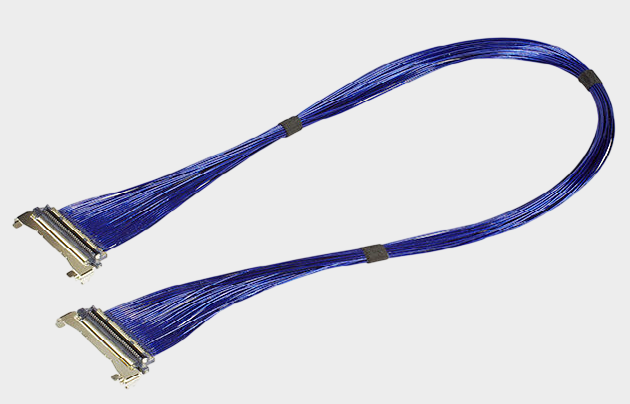
During the selection process of ultra-fine coaxial cables, AWG does not only represent the thickness of the wire material; it also affects resistance, capacitance, attenuation, impedance control, current carrying capacity, and high-speed signal integrity. A smaller AWG value usually indicates a thicker conductor; for example, AWG#40 is thicker than AWG#42 and AWG#44. Therefore, under the same material and structural conditions, AWG#40 typically has lower conductor resistance and better current carrying capacity. However, the increased wire diameter also affects the overall cable bundle's space occupancy, bending characteristics, and high-density wiring. For high-speed digital signals, it is more important to consider the structural design of the entire ultra-fine coaxial cable, including the transmission characteristics formed by the center conductor, insulation layer, shielding layer, and outer sheath material, rather than simply understanding that "thicker wire equals faster transmission speed." The product information of I-PEX CABLINE®-UM indicates that this connector is compatible with different Micro-Coax specifications such as AWG36, AWG38, AWG40, AWG42, and AWG44, among which AWG#40 offers a good balance of size and electrical performance. Taking the I-PEX 82676-100B-01-D scheme as an example, the use of AWG#40 ultra-fine coaxial cable can meet the high-density 30Pin connection requirements while also considering high-speed signal transmission, electrical performance, and cable assembly manufacturability, thus providing a good comprehensive matching value for engineers when laying out MIPI, display, or other high-speed differential signals.
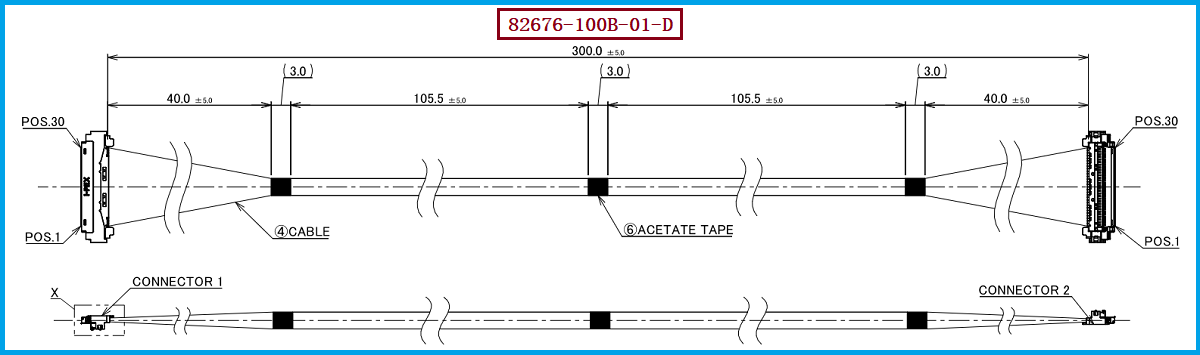
For engineers, when selecting ultra-fine coaxial cables, it is not enough to only consider the "AWG#40" parameter. They should evaluate the entire high-speed link. First, they need to confirm the model and Pin definition of the connectors at the motherboard end and the device end. In this scheme, the cable end uses 20878-030T-01, corresponding to the 30Pin CABLINE®-UM structure. Secondly, they need to combine the actual high-speed interface signal rate for impedance and signal integrity verification. The ultra-fine coaxial cable uses an independent shielding structure, which can more effectively control the crosstalk between adjacent signals compared to ordinary multi-core cables or some traditional ribbon cable schemes, and reduce the impact of the external electromagnetic environment on high-speed signals. For high-speed differential signal applications such as MIPI camera modules, display modules, etc., attention should also be paid to the cable length; the longer the cable, the more important it is to pay attention to insertion loss, return loss, and signal attenuation issues. Therefore, AWG#40 can be a balanced choice after considering the comprehensive size, electrical performance, and processing difficulty, but the actual project still needs to be verified according to the interface rate, channel count, cable length, bending path, connector layout, and system impedance requirements. For purchasers, it is recommended that in the quotation and supplier introduction stage, the "connector model + Pin count + AWG specification + cable length + Pin Assignment + termination method" be confirmed as a complete specification combination, and not to purchase only according to the "30Pin ultra-fine coaxial cable assembly" to avoid the situation where mechanical compatibility exists but electrical performance does not match.
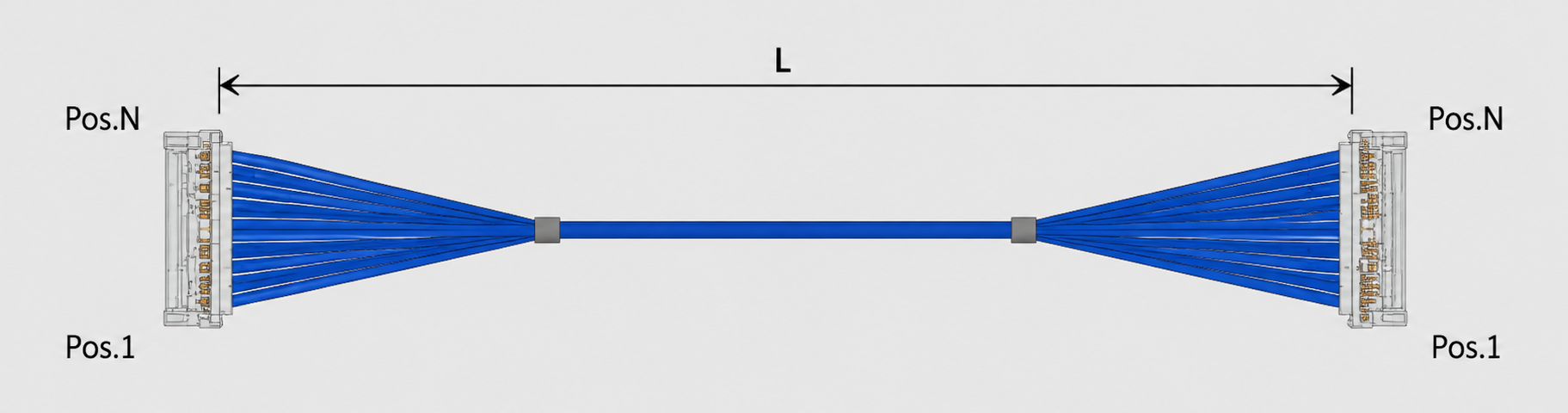
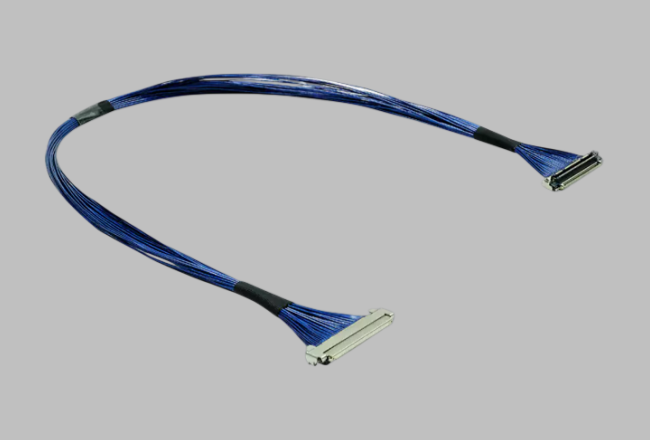
If the project is looking for a compatible or alternative cable assembly for I-PEX 82676-100B-01-D, engineers and procurement personnel are advised to closely check the complete specifications of the connectors and both ends of the cable. This model belongs to a 30Pin, 1-1 Pin Assignment, AWG#40 ultra-thin coaxial cable assembly, and uses 20878-030T-01 as the cable end connector. The original scheme length is 300mm, therefore, the alternative solution should at least ensure that the connector series, Pin quantity, Pin Assignment, cable AWG, cable length, termination direction, and electrical performance are consistent or meet the project requirements. It is particularly important to note that the same appearance of connectors does not necessarily mean that the cable can be directly interchangeable; it is necessary to further confirm the terminal arrangement, Ground distribution, signal definition, shielding structure, and impedance requirements. For bulk procurement, if there are issues with lead time, cost, or supply stability with the original factory cable assembly, it can be verified for domestication or compatible alternative through suppliers with the ability to manufacture ultra-thin coaxial cable assemblies. Our company can provide a compatible alternative cable assembly solution for I-PEX 82676-100B-01-D, which can be developed and produced around key specifications such as 30Pin, AWG#40, 20878-030T-01 connector, and 1-1 Pin Assignment, and can be matched with the actual length, cable exit direction, termination requirements, and application environment of the customer's equipment. This helps engineers reduce the difficulty of alternative design and also provides procurement personnel with more supply chain options.
“Without the consent or authorization of this site, no one shall reproduce, reprint, distribute, cite, change, broadcast or publish the content in whole or in part in any form, nor shall there be any other violation of the copyright of this site.